Electric Rigitrac SKE 40 arrives in Netherlands at €190,000
Importer Hissink launches the ground-up electric Rigitrac SKE 40 in the Netherlands at €190,000, claiming 4-6 hours of work per charge thanks to a purpose-designed driveline.
- Entered
- Plot
- 1.2 ha
- Record
- 472 words
- Walk-through
- 2 min
DrillSprayHarvestCurrent stage
Agronomist’s notes
- The Rigitrac SKE 40 Electric starts at €190,000 without attachments.
- The tractor works 4 to 6 hours per battery charge, according to importer Hissink.
- The machine was announced in 2020 and is now in series production, with one unit operating in the Netherlands.
- It offers two driving ranges: up to 25 km/h and up to 40 km/h.
- The hydraulics and PTOs each have their own dedicated electric motors.
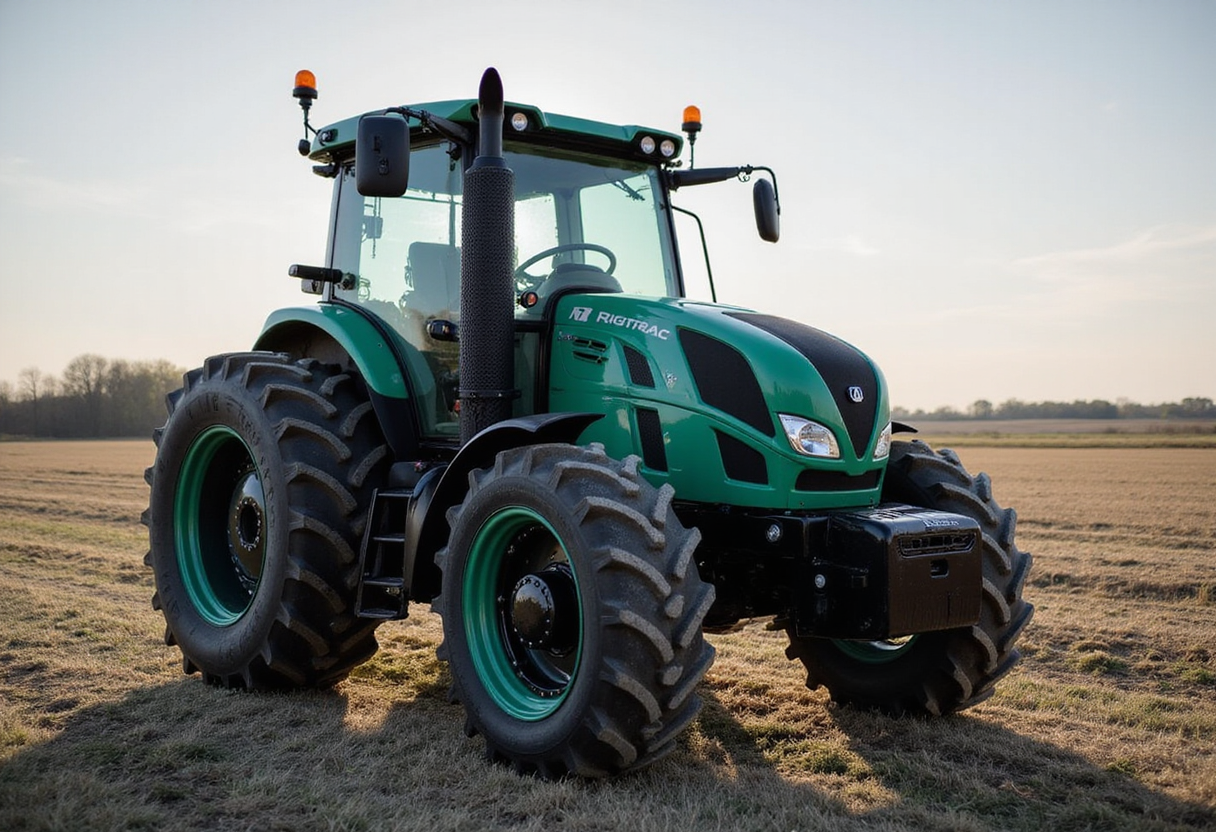
A starting price of €190,000, without attachments, is what Dutch farmers will pay for the Rigitrac SKE 40 Electric, the Swiss-built tractor that importer Hissink of Oeken, Gelderland, is now bringing to the Dutch market. The machine, first announced in 2020, is in series production and one unit is already working in the Netherlands.
The SKE 40 stands apart from most electric tractors on the market for one reason: Rigitrac designed it as an electric machine from the ground up rather than converting an existing diesel model. That design choice, according to Hissink, is the key to the tractor's claimed working window of 4 to 6 hours per battery charge — even when pulling a mower or other implement.
Why does the driveline matter?
Hissink points to the driveline as the main difference. Converted electric tractors typically keep the transmission parts and hydraulic components of the diesel machine they were built from. Every retained gearbox stage, shaft and pump introduces friction and energy loss, which eats into battery range.
Rigitrac threw that approach away. The company started with a completely new design for the SKE 40. The manufacturer did retain mechanical axles: an electric motor transfers drive to the front and rear axle through a distribution mechanism. The result is a simplified power path with fewer losses between battery and wheel.
The tractor offers two driving ranges — one up to 25 km/h and one up to 40 km/h.
How does it cut hydraulic losses?
The hydraulics get their own dedicated electric motor, and the pump runs only when hydraulic power is actually needed. On a conventional tractor, and on many conversions, the hydraulic pump turns continuously regardless of demand. Hissink says limiting those standby losses is central to reaching the stated 4 to 6 hours of operating time.
The PTO shafts follow the same logic. Electric motors drive them separately, so PTO power draws only what the implement requires rather than dragging on the driveline the whole time.
What does it cost and when can you see one?
The SKE 40 Electric is now in series production. Hissink reports that one unit is currently operating in the Netherlands. The tractor can be ordered without attachments at a starting price of €190,000, and interested farmers can request a demonstration directly from the importer in Oeken.
For growers weighing an electric machine, the SKE 40's case rests on efficiency per kilowatt-hour rather than raw battery capacity. If the 4 to 6 hour claim holds up in Dutch mowing and loader work, the purpose-built driveline approach could set the benchmark other electric tractor makers have to match. Farmers considering a switch should watch how the first Dutch unit performs through a full season — and whether Hissink publishes real-world runtime figures with a mower on the back.
via hissink-oeken.nl (Original)
More from Daniel Okafor
Nearby records
- VF 83Massey Ferguson Partners with International Tractors Ltd on CompactsSeptember 30, 2026
- RS 95Agrifac's hybrid Vanguard 55 halves diesel use in sprayer trialsOctober 10, 2026
- LZ 31Steyr explores hydrogen power with Hytrac tractor projectOctober 10, 2026
- LD 81Steyr explores hydrogen power for tractors in Hytrac projectSeptember 30, 2026
- TZ 58Daedong to distribute Deutz-Fahr high-horsepower tractors in KoreaOctober 1, 2026