Farm equipment collision takes MAVAC ambulance out of service
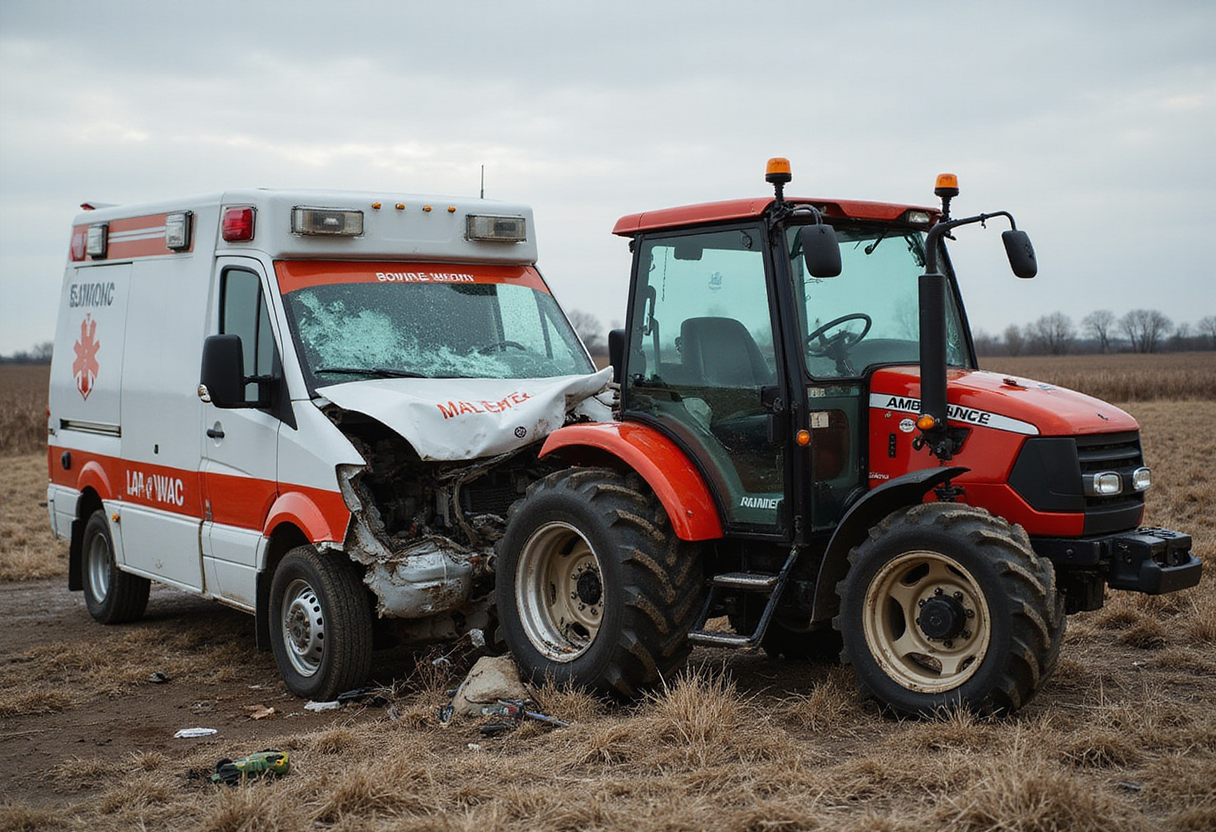
A MAVAC ambulance is out of service after colliding with farm equipment, with the volunteer corps confirming the crash has affected its ability to respond to calls.
- Entered
- Plot
- 1.0 ha
- Record
- 414 words
- Walk-through
- 2 min
DrillSprayHarvestCurrent stage
Agronomist’s notes
- A MAVAC ambulance was damaged in a collision with farm equipment.
- MAVAC says its service operations are affected while the vehicle is unavailable.
- The exact location, timing and type of machinery involved have not been released.
- No details have been published on injuries or the expected repair timeline.
- MAVAC is the volunteer ambulance corps serving the Morrisville, New York area.
A MAVAC ambulance is off the road after colliding with farm equipment, and the volunteer ambulance corps says the crash is already affecting its ability to answer calls.
The collision, reported by WBNG, involved one of the agency's ambulances and a piece of agricultural machinery. The vehicle sustained damage in the impact. Details on the exact location, the time of the incident, and the type of machinery involved have not been released by investigators.
MAVAC — the volunteer ambulance corps serving the Morrisville area of New York — confirmed that its service operations are affected while the damaged vehicle is unavailable. The organisation has not said how long the ambulance will be out of commission or whether repairs or a full replacement are on the table.
No information has been released on injuries to the ambulance crew, the equipment operator, or any patients who may have been aboard at the time of the incident.
What does this change for farmers?
It's a fair question, and the answer is practical rather than dramatic. Rural roads in dairy and crop country are shared corridors. Tractors, manure tankers, forage wagons and self-propelled harvesters move slowly, take wide corners and occupy more lane than a sedan ever will. Emergency vehicles, by contrast, move fast and assume the road is clear.
That combination is how collisions like this happen. A damaged ambulance in a volunteer-served rural area doesn't just mean a workshop bill. It means one fewer unit answering calls across a coverage area that may already be stretched thin, with response times for the next farm injury, cardiac event or accident now depending on mutual aid from neighbouring squads.
For operators moving equipment between fields this season, the takeaway is straightforward. Wide-load escorts, hazard lighting, and the slow-moving vehicle emblem are not bureaucratic decoration. Neither is picking travel times that avoid school runs and shift changes, where the math of closing speeds gets ugly.
What happens next?
Watch for three things: the accident report, which should clarify the road, the machinery involved and who had right of way; MAVAC's own statement on how it is covering its territory while the vehicle is repaired; and any follow-up from local authorities on farm-equipment routing in the area.
A single crash doesn't rewrite rural traffic law. It does, briefly and pointedly, remind everyone what a stretch of road shared by a harvester and an ambulance actually costs when the sharing goes wrong.
via Google News: agricultural machinery (Source)
More from Priya Raman
Show full bio
Senior reporter covering technology and product news in production farming and field operations at Arable Wire.
129 articles
Nearby records
- SX 96Two critically injured in Ionia County crash with farm equipmentSeptember 30, 2026
- KC 48Woman killed in Clinton County crash involving farm machineryOctober 11, 2026
- CJ 83Farm Safety Week targets life-changing injuries, not just deathsSeptember 30, 2026
- XJ 58Man seriously injured in Malta farming machinery accidentOctober 10, 2026
- LJ 59Told he may never walk again: farm safety warning lands hardOctober 12, 2026