Forage maize yields top 20t/ac as Ireland's 2026 harvest wraps up
Yields above 20t/ac on heavier soils, dry matters and starch set to top 30%, and a 10% jump in Ireland's maize area — the key numbers from harvest 2026.
- Entered
- Plot
- 1.6 ha
- Record
- 652 words
- Walk-through
- 3 min
DrillSprayHarvestCurrent stage
Agronomist’s notes
- Forage maize yields topped 20t/ac fresh weight on heavier soils; lighter south-east land averaged around 18t/ac.
- An estimated 60,000ac of maize was grown in Ireland in 2026, up 10% on 2025.
- Dry matters and starch values are expected to exceed 30%, per Maizetech's John Foley.
- Fodder beet and potatoes, hit by July-August drought, have recovered after recent rains.
- Excellent ground conditions have kept open the prospect of planting winter wheat after beet and potatoes.
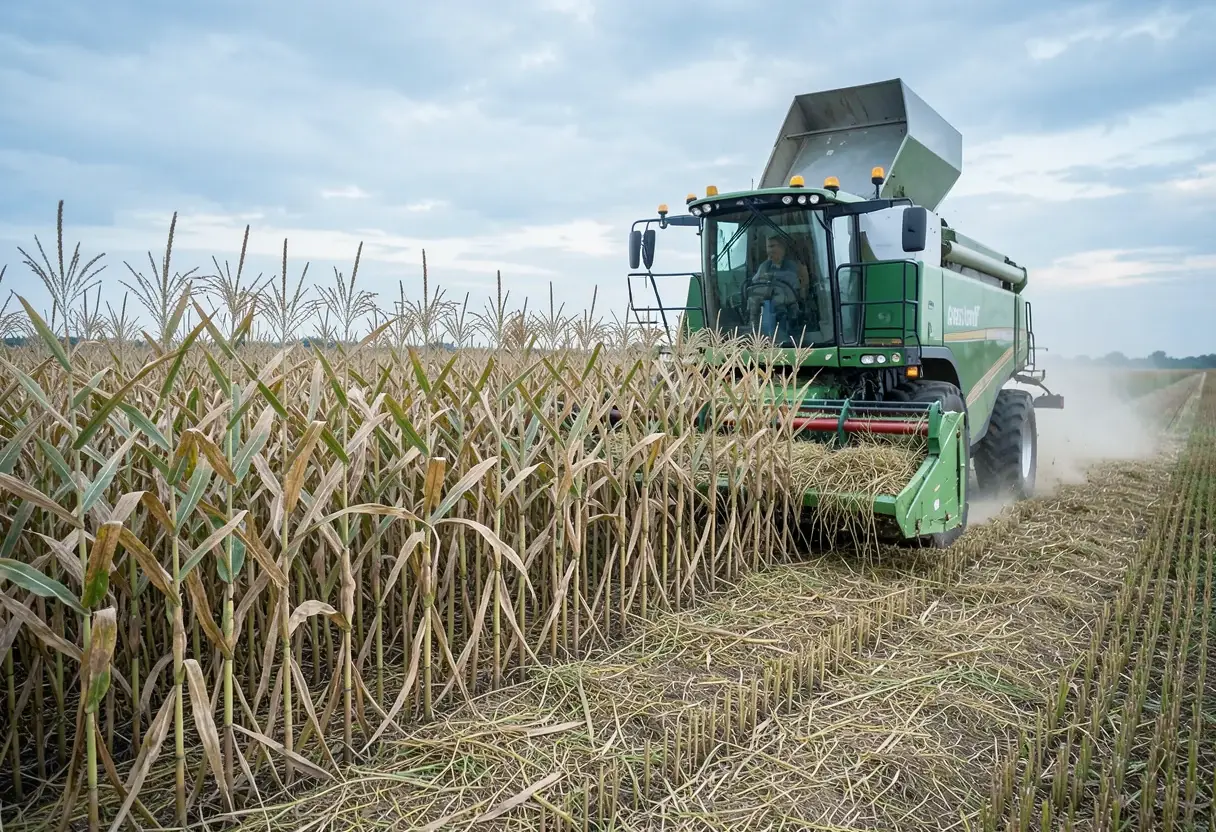
Forage maize yields topped 20t/ac fresh weight this year, according to John Foley of Maizetech, as the 2026 harvest draws to a close with only very small parcels of land left to cut in parts of the country.
The strongest crops came from areas where heavier soils predominate. Lighter land told a different story, particularly in the south-east.
"The drought did impact yields in parts of the south-east where soils are that little bit lighter," Foley said. "But even here overall yields were coming in at around 18t/ac."
That gap matters for growers deciding where the crop fits next season. A two-tonne-per-acre difference between soil types, delivered in the same weather, points to rooting depth as the deciding variable in a dry year.
What is the national picture?
An estimated 60,000ac of maize was grown in Ireland in 2026. Foley put the change in context: "That's up 10% on 2025. And there is very prospect of the area figure for the crop growing again in 2027."
A 10% expansion in one year is a significant shift for a fodder crop. It reflects grower confidence after a season in which maize delivered under pressure.
The experience gained in 2026 confirms that maize crops, particularly those grown on slightly heavier soils where root growth is not restricted, will perform well in dry, warm conditions.
That performance carried weight because of the weather the crop faced after planting. The first three weeks of May were very cool and wet across most of the country — a start that would normally knock a heat-loving crop back.
Instead, the crop recovered and finished strong. For farmers weighing maize against repeated grass silage cuts in unpredictable summers, that resilience is the argument.
What about feed quality?
Sample analysis results are not yet back from the labs. But Foley said the direction of travel is already clear.
"It is already pretty evident that both dry matters and starch values will exceed 30%," he said.
Dry matter (the proportion of the crop that is not water) above 30% points to well-ripened, highly fermentable forage. Starch above 30% lifts the energy density of the ration, which matters directly for milk output and daily liveweight gain over the winter.
How do beet and potatoes look?
With maize in the clamp, fodder beet and potatoes are the last crops of note to harvest in 2026. Both were hit significantly by the drought conditions of July and August.
Recent rains have since boosted crop rates. Growers now report that final yields may not be as disappointing as previously predicted.
The fodder position sharpens the value of this year's maize. Forage maize and beet stocks will help dairy and beef farmers whose own grass silage stocks have been seriously depleted get through the coming winter months.
Potato growers, meanwhile, are looking at reasonable yields against the backdrop of potential potato shortages in the UK and mainland Europe. How markets react to those converging trends over the coming weeks and months will set the tone for the 2027 crop.
What should farmers watch next?
One universal upside of harvest 2026 has been ground conditions. Excellent soils underfoot have allowed all field operations to run in a stress-free manner — a contrast with the compaction and stubble damage that wet autumns usually inflict.
With the weather continuing to cooperate, the prospect of planting winter wheat after beet and potatoes remains very real. Growers not usually comfortable following root crops with a cereal may get a rare window this autumn.
The immediate markers to watch are the full starch and dry matter analysis results, expected in the coming weeks, and confirmation of harvest outcomes for beet and potatoes. Beyond that, Foley's expectation of further area growth in 2027 suggests seed demand for maize varieties suited to heavier soils will tighten — a point worth noting before ordering.
via cdn.agriland.ie (Original)
More from James Calloway
Show full bio
Correspondent covering regulation, policy and their impact on production farming and field operations at Arable Wire.
149 articles
Nearby records
- YL 32US corn harvest tops 17.6 t/ha as weather disrupts seasonOctober 11, 2026
- MZ 32South Antrim maize hits 18t/ac as Northern Ireland harvest deliversOctober 9, 2026
- GT 42Poor Yields, Not Prices, Drive Tight Tillage Margins: TeagascSeptember 30, 2026
- SK 17US Corn Harvest at 33%, Six Points Behind NormalOctober 16, 2026
- RD 29U.S. corn harvest hits 18%, soybeans 17% in USDA crop progressOctober 10, 2026