Giant miscanthus offers a 12-foot winter crop for US farms
More than 20,000 acres of 12-foot miscanthus now grow in the US. Its winter harvest, low inputs and biomass potential appeal, but contracts and two to three years of establishment still matter.
- Entered
- Plot
- 2.2 ha
- Record
- 893 words
- Walk-through
- 4 min
DrillSprayHarvestPlanning window
Agronomist’s notes
- More than 20,000 acres of miscanthus are grown in the United States.
- Eric Rund planted 40 acres nearly 20 years ago; over the last four years, miscanthus has been his most profitable crop.
- Giant miscanthus often reaches 12 feet and moves no more than about 1 foot.
- Switchgrass yields are typically about 60% of miscanthus yields.
- Miscanthus takes two to three years before its first harvest; established stands need no herbicide or pesticide.
By Priya Raman
Farmers in the United States now cultivate more than 20,000 acres of miscanthus, according to crop sciences professor Emily Heaton, with acreage expanding on Maryland’s eastern shore for poultry bedding.
Some of that crop is in Illinois. The University of Illinois Urbana-Champaign hosted the first international miscanthus summit there in October, bringing researchers, farmers and policymakers together in east central Illinois. The university has studied the grass for more than 20 years.
Heaton said the summit’s next job is to test whether miscanthus can fit beside Illinois’ productive corn and soybean system rather than compete with it. The goal is economic infrastructure: contracts, infrastructure and dependable buyers.
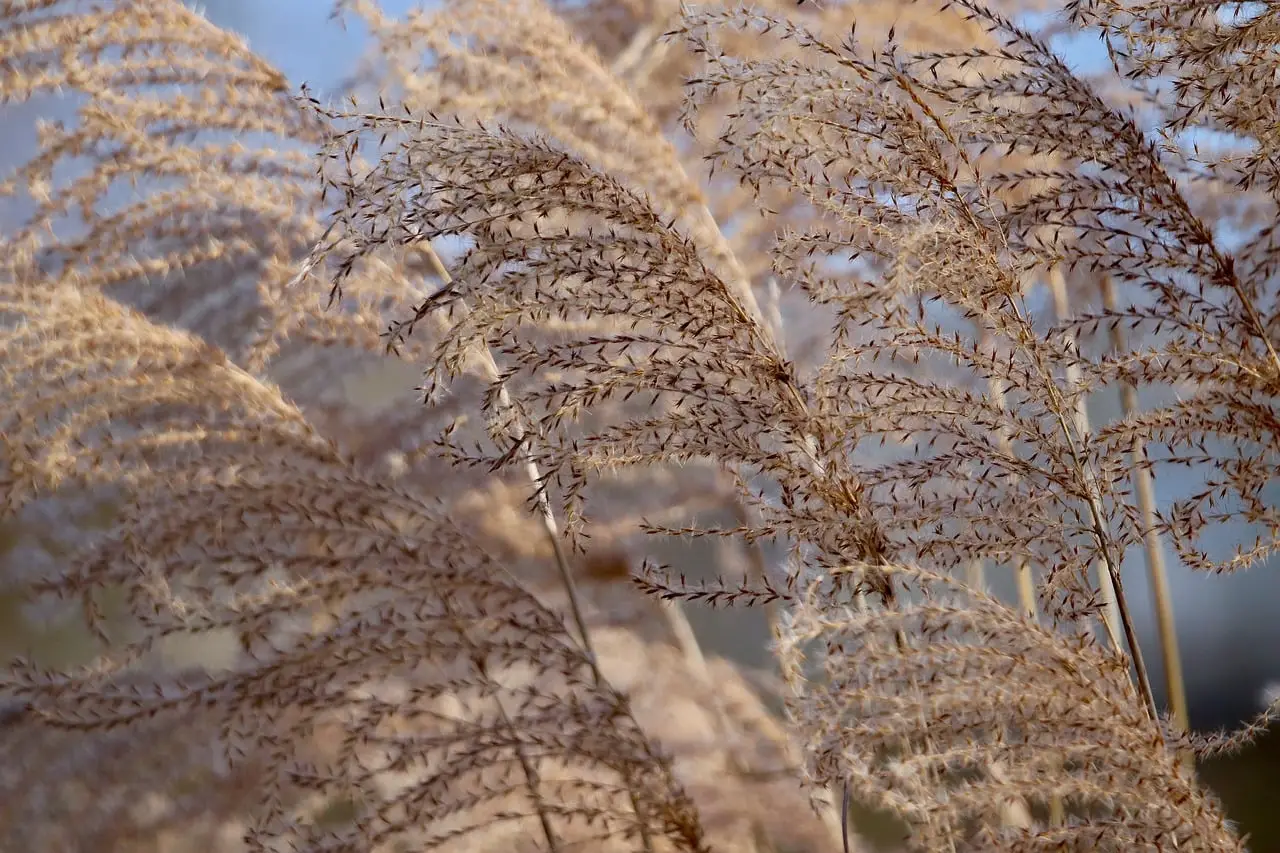
Giant miscanthus often reaches 12 feet, has feathery white plumes and regrows each year without replanting. Farmers harvest it in winter, often at the end of February or in the first days of March, when the main grain harvest does not compete for labor or equipment.
What does miscanthus change for a corn and soybean farm?
Nearly 20 years ago, Eric Rund took 40 acres of poor corn ground out of production on his east-central Illinois farm. He planted miscanthus for extra income and healthier soil, then found buyers among turkey farmers for bedding.
“Once it’s established, that’s it. You do nothing. No herbicide. No pesticide,” Rund said. He harvests in late February or early March, when he has no other farm work.
Rund sells directly to turkey farmers. Farmers can also burn miscanthus for heat and power, making it a renewable energy source, or use it in building materials. Rund says it has been his most profitable crop for the last four years. A farmer’s result, not a guarantee.
Heaton calls giant miscanthus a naturally occurring hybrid of miscanthus species, the mule of the plant world; it cannot reproduce on its own. Unlike common roadside miscanthus, the giant variety is not invasive. It moves no more than about 1 foot, so it can grow in rows without traveling beyond them.
Giant miscanthus grows well alongside soybeans and corn and towers over native perennial grasses. Heaton said switchgrass, a Midwest native with potential as sustainable aviation fuel, typically yields about 60% as much as miscanthus. Since economics limit adoption, biomass per unit of land and fertilizer should carry weight.
Her verdict was blunt: “It’s not miscanthus over our native grasses. It’s miscanthus with our native grasses.” Researchers continue testing native grasses as biofuel crops.
For farms under tight margins, the winter harvest diversifies revenue without displacing the main grain harvest.
The agronomic case
Toby Kellogg, a scientist at the Donald Danforth Plant Science Center, said miscanthus’s deep roots improve soil health and prevent erosion. It needs little fertilizer, reducing exposure to high fertilizer costs. Its dense canopy can shade weeds and provide its own weed control.
Andy VanLoocke, an agronomy professor at Iowa State University, has found the grass reliable across weather, soils and fertilizer rates. His yields broadly match those reported by colleagues in Europe.
Drought response adds planning value. Unlike corn and soybeans, which suffer almost immediately, miscanthus can lose no yield in the first drought year. Its largest effect may arrive the following year or the year after that, although overall yields remain stable. Biomass buyers should allow for that delayed dip.
Katarzyna Glowacka, a biochemistry professor at the University of Nebraska-Lincoln, is studying how miscanthus survives low temperatures. Chilling tolerance is rare in warm-season C4 grasses. She hopes the mechanism can inform cold-tolerant corn and other grains, as well as a taller cold-tolerant miscanthus.
Varieties already grow well in cold regions worldwide but remain smaller than warm-climate types. Earlier planting could extend the growing season; Glowacka said starting two weeks earlier can materially increase perennial biomass.
Research moves into controlled environments
The University of Illinois houses one of the world’s largest miscanthus germplasm collections, with entries from Russia to the equator. Researchers worldwide have spent decades working out the complete DNA of miscanthus and its parent species and developing gene-editing techniques.
The team can now tweak genomes to make new varieties and routinely transform the plant to create versions for testing in controlled environments. Heaton said the university is ready to work with industry partners, farmers and policymakers on economic development and expanding Midwest acreage.
The market test
Farmers want the same information they expect for any crop: where the market is, what infrastructure exists, how contracts work and who buys the output. Miscanthus must grow for two to three years before its first harvest.
Someone must keep that land out of production while the crop establishes. Cash flow may decide whether a farm can carry the wait. Illinois State Sen. Paul Faraci of Springfield, a miscanthus champion, argued that farmers and policymakers must share a new crop’s risk, with a visible payoff, to secure legislative buy-in.
Rund advises farmers to check the market first and plan for the long haul. It is harder, he says, and something to learn again.
Farmers should watch two linked thresholds next: whether controlled-environment breeding produces varieties that earn field adoption, and whether contracts, infrastructure and shared risk support the first commercial harvest after two to three years. Until then, a 12-foot stand remains promising agronomy with an unresolved balance sheet.
via Google News: soil health farming (Source)
More from Priya Raman
Show full bio
Senior reporter covering technology and product news in production farming and field operations at Arable Wire.
200 articles
Nearby records
- JJ 37Soybeans Done, Corn at 200–250 bu/ac: Iowa Harvest RollsOctober 19, 2026
- EB 43No-till soybean stands: seedbed shear strength emerges as top suspectOctober 3, 2026
- YP 91Heavy Rains Stall US Corn Belt Harvest as Flooding PersistsOctober 10, 2026
- GT 40US Corn Harvest Reaches 8% as Soybean Combines Begin RollingOctober 19, 2026
- LM 87USDA's 181.2 bpa corn yield meets farmer skepticism in Corn Belt surveyOctober 28, 2026