Heavy Rainfalls Are Shrinking Prairie Farmers' Spraying Windows
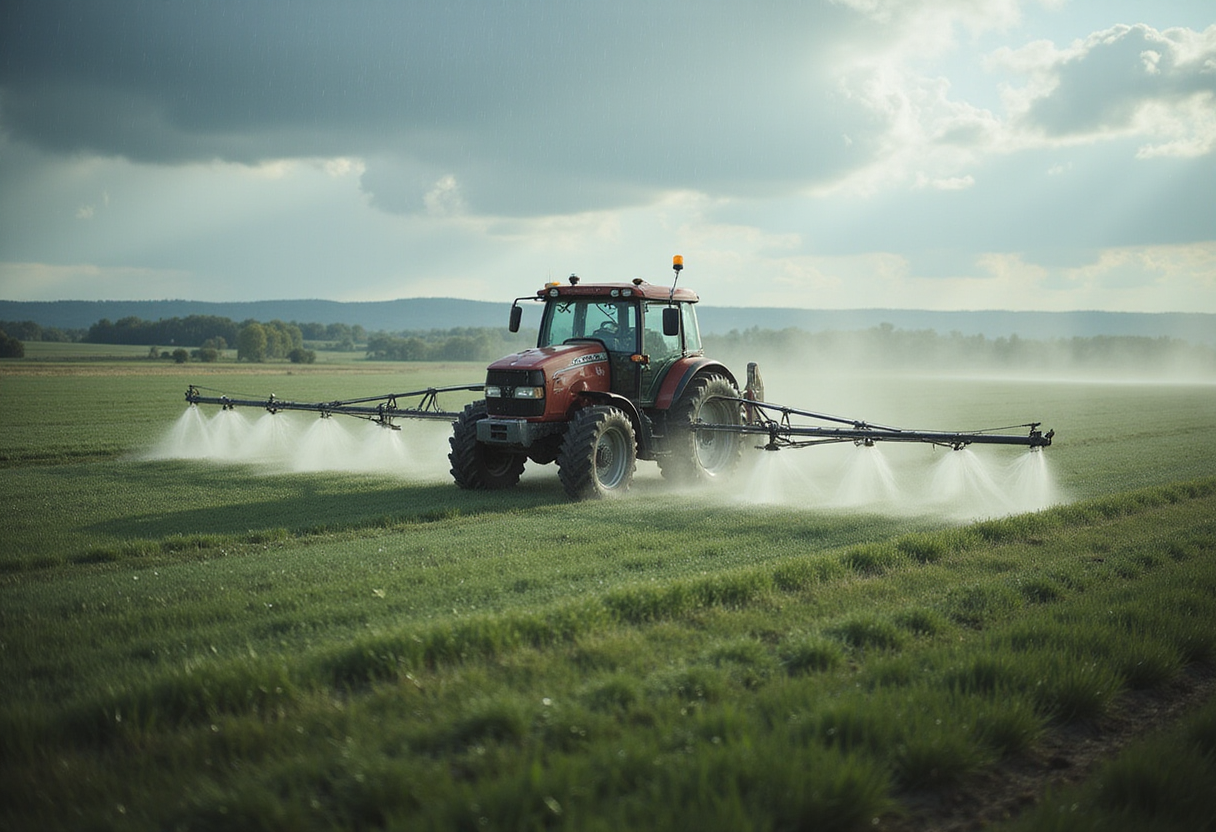
Heavy rainfalls are shrinking Prairie farmers' spraying windows, compressing herbicide and fungicide timing and turning every workable field day into a yield-critical decision.
- Entered
- Plot
- 1.3 ha
- Record
- 528 words
- Walk-through
- 3 min
DrillSprayHarvestCurrent stage
Agronomist’s notes
- Heavy rainfalls have shrunk Prairie farmers' spraying windows, The Western Producer reports
- Wet weather cuts workable spray days while pushing crops and weeds past optimal treatment stages
- Missed herbicide and fungicide passes carry yield and weed-seedbank consequences for future seasons
Heavy rainfalls have shrunk Prairie farmers' spraying windows, according to a report from The Western Producer, tightening one of the most time-sensitive operations in Western Canadian crop production.
The headline finding is simple and stark: persistent wet weather is cutting the number of workable days growers have to apply herbicides, fungicides and desiccants across the Prairie provinces. For a region where spray timing already runs on tight agronomic clocks, every lost pass day carries a cost.
Why the spray window matters so much
Spraying is not a flexible chore. Herbicide applications must hit weeds at the right growth stage, typically early in the crop's development, before competition steals yield. Fungicide windows are narrower still, often a matter of days around flag leaf or flowering, depending on the disease target.
Rain compresses that calendar in two directions at once. First, it keeps sprayers out of the field: saturated soils can't carry a self-propelled rig or even a pull-type unit without rutting, compaction and stuck equipment. Second, it pushes crops and weeds through their growth stages faster than growers can respond, so the window closes even where a machine could physically travel.
That double squeeze is what makes a wet season different from a merely inconvenient one.
What growers lose when windows shrink
Missed or delayed herbicide passes let weeds set back yield and, worse, go to seed. That builds the seedbank for future seasons, converting one bad spray year into a multi-year problem.
Delayed fungicide is arguably costlier. A spray applied after the infection window has passed protects nothing, so the input spend is wasted outright. Skip it and, in a wet year — precisely the year disease pressure runs highest — the crop goes into grain fill unprotected.
Wet conditions also narrow the product choices available. Many labels restrict application to certain crop stages, and rain fastness intervals (the time a product needs before rainfall to stay effective) determine whether a pass is even worth making between showers.
How farmers are responding
Growers facing compressed windows typically move to larger, faster equipment and longer working days, running sprayers through the night when field conditions allow. Larger tank volumes and wider booms mean fewer refill stops, squeezing more treated hectares out of each workable hour.
Others shift to aerial application, which sidesteps soil traffic entirely, though capacity is limited and cost per acre runs higher than ground rigs.
Product selection shifts too. In tight windows, growers favour formulations with shorter rainfast periods and broader stage tolerances, trading some precision for flexibility.
What to watch next
The core weather risk isn't going away. Growers across the Prairies should track local precipitation forecasts against their crops' growth stages now, prioritise fields by weed pressure and disease risk rather than convenience, and pre-stage water, product and parts so every workable hour counts. The operations that protect yield in wet years are the ones that treat a two-day spray window as a plan, not a scramble.
Editor's note: This report is based on headline information from The Western Producer. Follow the outlet's full coverage for field-level detail on affected regions.
By Daniel Okafor
via Google News: spraying season farm (Source)
More from Daniel Okafor
Show full bio
Market editor covering money, funding and market shifts around production farming and field operations at Arable Wire.
117 articles
Nearby records
- MU 27Weed pressure mounts in southern Minnesota as spray window closesOctober 3, 2026
- VV 96Farm Progress highlights two free weather tools for farmersSeptember 30, 2026
- MM 64Wet Season Drives Surge in Manitoba Fungicide SprayingOctober 3, 2026
- BY 18Saving Time and Maximizing Resources on Spray ApplicationsOctober 3, 2026
- DW 64Grasshopper spraying: label rates and thresholds decide the economicsOctober 3, 2026