Michigan harvest running behind last year and five-year average
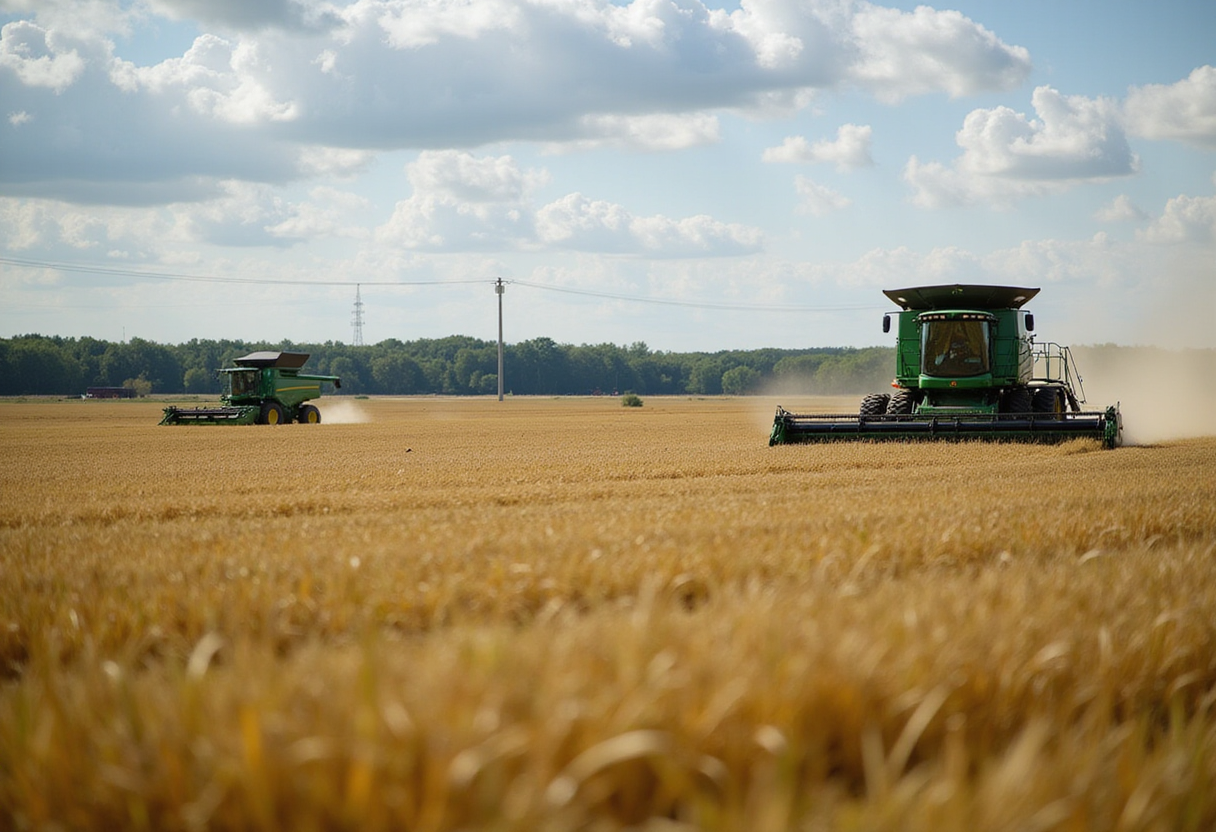
Michigan's harvest is trailing both last year's pace and the five-year average, Brownfield Ag News reports, compressing fall fieldwork windows for growers.
- Entered
- Plot
- 0.7 ha
- Record
- 265 words
- Walk-through
- 1 min
DrillSprayHarvestCurrent stage
Agronomist’s notes
- Michigan harvest progress is behind last year's level, per Brownfield Ag News
- Progress also trails the five-year state average
- Delayed harvest compresses fall tillage, fertilizer and cover-crop windows
Michigan's harvest is progressing more slowly than both last year's pace and the state's five-year average, according to Brownfield Ag News.
The report signals that growers across Michigan are facing a compressed window to bring crops out of the field. For farmers weighing decisions on drying costs, storage logistics and autumn fieldwork, the gap versus historical progress matters more than the raw weekly numbers: a delayed harvest compresses tillage, fertilizer and cover-crop planting into a shorter period, and raises the risk that wet weather removes fieldwork days entirely.
Why a behind-average harvest changes decisions now
When harvest lags the five-year benchmark, the practical consequences show up quickly:
- Higher drying bills, as later-cut grain and forage come off wetter
- Tighter windows for fall tillage, lime and fertilizer spreading
- Reduced odds of establishing cover crops before soils cool
- Greater exposure of unharvested acreage to early frost and rain events
Michigan growers will be comparing their own progress against the state figures to judge whether to prioritise drying-capable crops first, shift to earlier hybrids or varieties next season, or book additional drying and hauling capacity now rather than during the crunch.
What to watch next
The weekly progress numbers will show whether the deficit narrows or widens over the coming weeks. A stretch of dry, warm weather could close the gap rapidly; sustained rain would compound it. Growers should track the state's subsequent crop progress reports for confirmation of recovery, and monitor local elevator schedules and drying capacity, which tighten first when harvest crowds into fewer fieldwork days.
via Google News: harvest report wheat (Source)
More from Tom Whitfield
Show full bio
Staff writer covering marketplaces and e-commerce at Arable Wire.
103 articles
Nearby records
- FV 45Corn Harvest Falls Behind Average Across 11 US StatesOctober 9, 2026
- GV 98Dry Spell Speeds U.S. Harvest as Gulf Rains Signal New RisksOctober 10, 2026
- RK 67U.S. Winter Wheat Harvest Outpaces Average PaceOctober 3, 2026
- EF 12Arkansas rice harvest hits record pace as soybean cutting tops 40% completeOctober 3, 2026
- FU 78Harvest operations drawing to a close for more farmersOctober 9, 2026