Quarry byproduct repositioned as soil health input
A report from Africa Sustainability Matters reframes crushed quarry limestone as a soil health asset, spotlighting the quarry-to-crop supply chain for acidity correction. Full details sit behind the aggregator link.
- Entered
- Plot
- 0.7 ha
- Record
- 273 words
- Walk-through
- 1 min
DrillSprayHarvestCurrent stage
Agronomist’s notes
- Africa Sustainability Matters ran a report headlined 'Quarry to crop: transforming limestone into a soil health asset'
- Only headline-level detail is available through the Google News feed; no figures were published in the source excerpt
- The story frames crushed quarry limestone as a soil health input rather than a mining byproduct
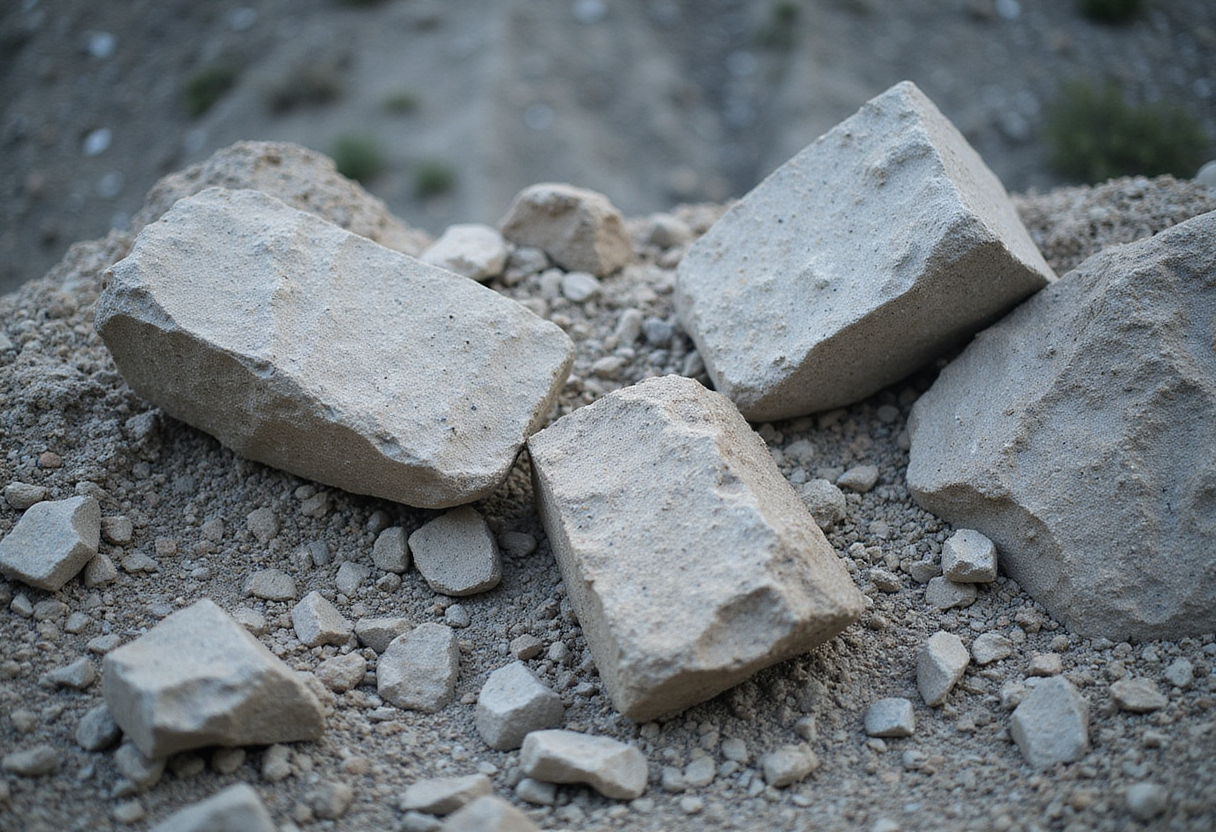
A story circulating under the headline "Quarry to crop: transforming limestone into a soil health asset" has drawn attention to a practice long familiar to growers: putting crushed quarry limestone to work on acidic soils.
The original report, aggregated via Google News from Africa Sustainability Matters, positions limestone not as a waste product of aggregate mining but as an input with measurable value for soil health. Only the headline-level detail is available from the feed; the full article sits behind the aggregator link. On that basis, here is what the framing signals for farmers and why it matters.
Why does limestone from quarries interest growers?
Limestone is the standard material for correcting soil acidity. Quarries produce it in volume as crushed aggregate, and the finer fractions unsuited to construction can be screened and sold for agricultural liming. For operations near a quarry, haulage is the dominant cost of liming, so a local source changes the economics of a spreading programme.
Acidic soils lock up phosphorus and restrict root growth. Correcting pH unlocks nutrients already in the soil and improves the return on fertiliser spend. That is why liming is treated as foundational soil husbandry rather than an optional extra, and why a quarry-to-field supply chain is a genuine asset rather than marketing language.
What should farmers watch next?
The underlying article, available through the Google News link from Africa Sustainability Matters, carries the specific figures, locations and named operations behind the headline. Growers evaluating liming plans should watch quarry-adjacent supply developments in their region and compare delivered cost per tonne against spreading requirements for their next soil test results.
via Google News: soil health farming (Source)
More from Olivia Hart
Show full bio
News editor covering marketplaces and e-commerce at Arable Wire.
116 articles
Nearby records
- JX 95Precision Data Bridges Soil Health and Crop EconomicsOctober 3, 2026
- BK 79Kenyan Farmers Urged to Test Soil Before Buying FertilizerSeptember 29, 2026
- EF 23Cover Crops, Grazing and Wood Chips Anchor Award-Winning No-Till SystemOctober 9, 2026
- EE 38USDA launches program paying farmers to test their soilSeptember 30, 2026
- ML 12CU Boulder Engineers Low-Cost Sensor for Continuous Soil pH MonitoringOctober 1, 2026