Silage effluent BOD at 80,000 mg/L raises winter pollution stakes
Silage effluent carries a BOD of 80,000 mg/L — over four times cattle slurry — and September cuts at 12% DM could push run-off well above 100L a tonne on some farms this winter.
- Entered
- Plot
- 1.5 ha
- Record
- 618 words
- Walk-through
- 3 min
DrillSprayHarvestCurrent stage
Agronomist’s notes
- Silage effluent registers a BOD of 80,000 mg/L, compared with 18,000 mg/L for cattle slurry and a 2,500 mg/L ceiling for soiled water
- Grass cut at 18% DM produces up to 150L of effluent per tonne, against roughly 25L per tonne at 25% DM
- PastureBase Ireland recorded September dry matter readings ranging from 12% to 24%
- Teagasc recommends a settled silage pit height of 2.1m-2.4m, with large herds commonly reaching 3m
- Settled silage drops about 1.2m from the original fill height of fresh grass
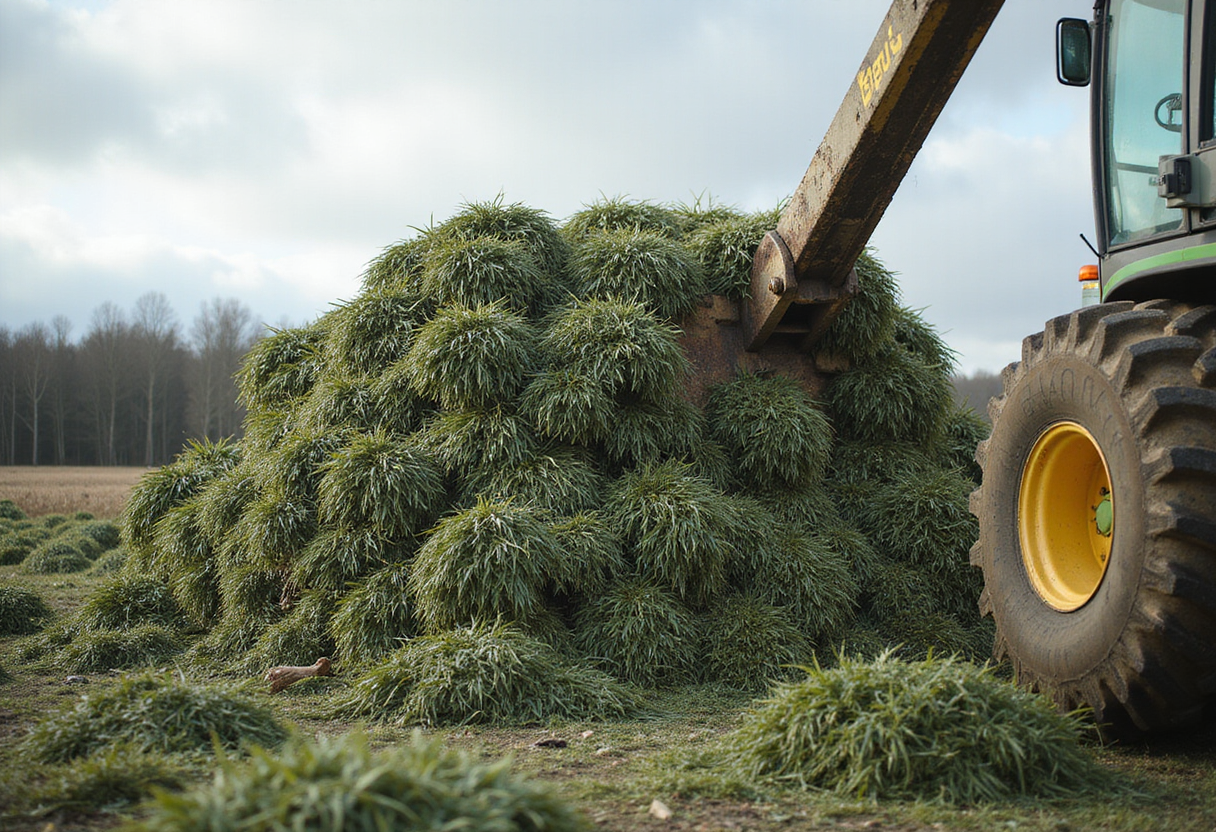
Silage effluent carries a biochemical oxygen demand of 80,000 mg/L — more than four times cattle slurry's 18,000 mg/L and over 32 times soiled water's 2,500 mg/L ceiling. Teagasc farm buildings and infrastructure specialist Tom Fallon told farmers that the figure puts pit run-off in a class of its own for water pollution.
"It has a biochemical oxygen demand (BOD) of 80,000 mg/L," Fallon said. Cattle slurry sits at 18,000 mg/L. Soiled water must stay below 2,500 mg/L and under 1% dry matter. A single spill from a silage pit therefore does more damage to a watercourse than almost any other farmyard release.
The risk this winter is amplified by a split silage season. Early crops came in wet. A long dry spell followed, then late cuts ran into late September, again landing in the pit wetter than target.
PastureBase Ireland recorded September dry matter readings from 12% to 24% across the month. That range drives very different effluent volumes in the yard, and explains why some clamps will weep for months while others barely dampen the channel.
How much effluent does silage actually produce?
- Grass at 18% dry matter: up to 150 litres of effluent per tonne.
- Grass at 25% dry matter: around 25 litres per tonne.
The gap changes storage planning. A 1,000-tonne clamp cut at 13% DM can release roughly seven times the run-off of one cut at 24% DM. Tanks sized for an average year may not hold the volume coming off the wettest pits this winter.
Why are pits getting too high?
Herd expansion across the past decade outpaced capital investment on many farms, Fallon argued. Parlour upgrades, slurry storage, roadways and additional land all took precedence. The same silage pit built in the 1990s now feeds far more cows.
Contractors sit closer and closer to the piler. The only place for grass to go is up. Fallon noted that as pits rise beyond their working height, they grow harder to roll and compact, the wastage at the shoulders climbs, and machinery operators plus the staff covering and uncovering the sheet face a real safety risk.
Wastage on top of the pit also feeds pollutants towards drains, undoing the buffer-zone and water-quality work farmers have invested in elsewhere on the holding.
What pit height should farmers target?
Fallon recommends 2.1m to 2.4m of settled silage, excluding the ramp. Large herds commonly push 3m. Farmers should also allow for a 1.2m drop between the original fill height of fresh grass and the settled face, and tighten covers accordingly to keep air out and effluent in.
How should effluent be channelled and stored?
- Every pit or bale pad needs channels directing run-off to its own storage tank.
- Channels must be cleared out after filling and kept clear of obstructions for the rest of winter.
- Walls and floors need an annual inspection for cracks before the next cut goes in.
- Bale stacks without channels and adequate storage cannot exceed two bales high.
- Field-stored bales should sit within 20m of a gate and at least 20m from any surface water.
- Every farm needs a farmyard manure store for waste silage.
- A tractor-mounted brush and bucket should handle regular pit and yard cleaning.
The bigger fix is structural. Farms that expanded cow numbers over the last decade should weigh a second clamp or a wider concrete apron ahead of the 2026 cuts, putting silage storage alongside the parlour and slurry upgrade work rather than at the bottom of the investment list. Inspect channels, check for cracks and budget extra tank capacity before Christmas.
via cdn.agriland.ie (Original)
More from Daniel Okafor
Nearby records
- DA 52Slurry closed period starts October 8 — two days left to spreadOctober 10, 2026
- UK 97Adding cattle can improve soil health, Farm Progress reportsSeptember 29, 2026
- UX 60Kerry dairy farmer William Dennehy named Environmentally Sustainable Farmer of the YearOctober 2, 2026
- CN 54On-Farm Storage Could Pay Dividends for Wet, Damaged CropsSeptember 30, 2026
- WS 52Five-site Prairie trial links soil moisture to fall nitrogen lossesOctober 10, 2026