Spring Weather Whiplash Forces Farmers Into Stop-Start Planting
US farmers are opening the planting season in stop-start fashion as weather whiplash alternates rain, cold and warmth, compressing planting windows.
- Entered
- Plot
- 0.9 ha
- Record
- 379 words
- Walk-through
- 2 min
DrillSprayHarvestCurrent stage
Agronomist’s notes
- Farm Progress reports farmers facing spring 'weather whiplash' at the start of planting season
- Alternating wet and dry conditions are compressing planting windows
- Growers must balance soil readiness against calendar-driven yield penalties
- Weekly crop progress reports will show national planting pace versus the five-year average
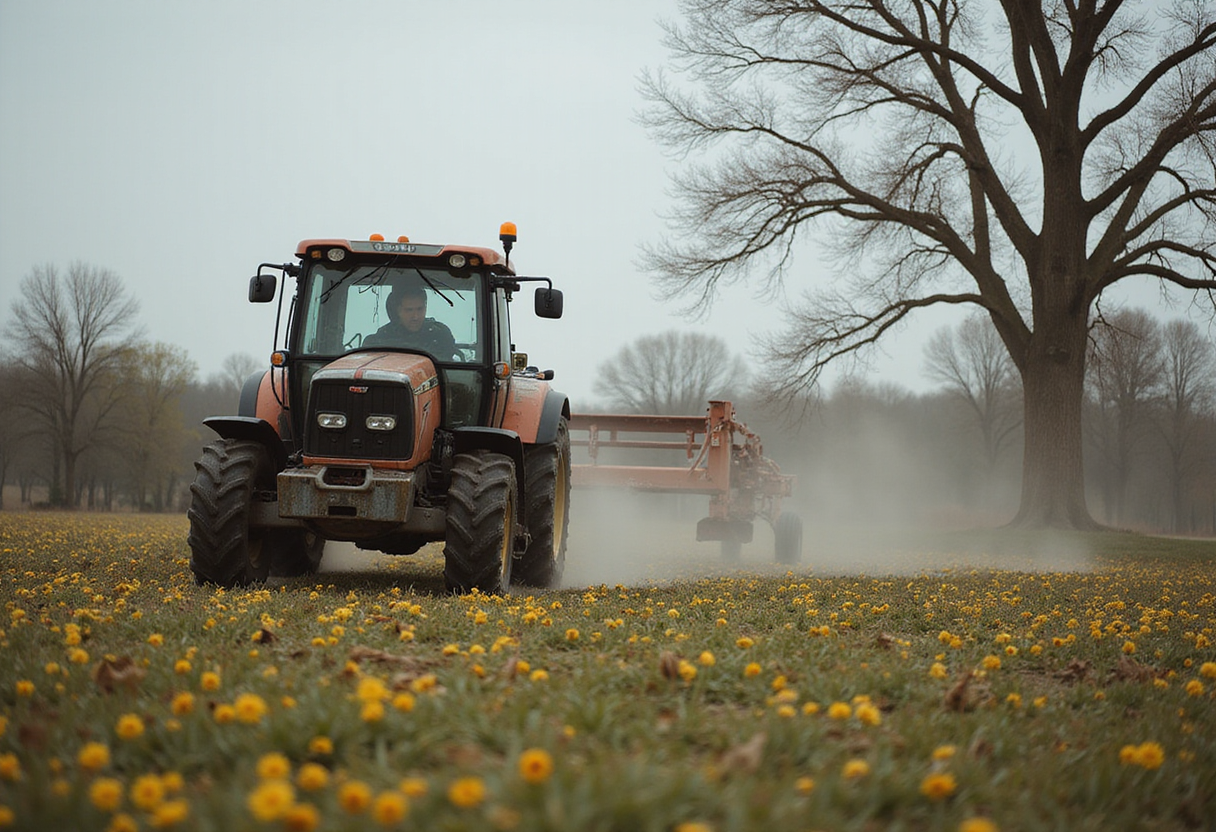
US farmers are opening the planting season under weather conditions that swing from one extreme to another, forcing stop-start fieldwork and compressed planting windows, Farm Progress reports.
The phrase "weather whiplash" captures the core problem: alternating stretches of rain, cold and unseasonable warmth that leave soils either too wet to work or drying out faster than planters can cover ground. Growers who wait for a perfect window risk losing yield potential; those who push into marginal conditions risk compaction, uneven emergence and replanting costs.
What does spring whiplash mean for planting decisions?
The practical effect is a series of short, unpredictable fieldwork windows rather than a steady planting progression. That changes machinery and agronomy decisions in several ways:
- Larger planters and higher-capacity rigs become more valuable, because the whole season may rest on a few good days.
- Seed treatments and early-planted hybrids carry more weight, since cold, wet soils after planting raise disease and emergence risks.
- Tillage plans get cut back, as every pass through wet fields costs time and damages soil structure.
Agronomists have long warned that planting into poor conditions often costs more in stand loss and uneven emergence than a short delay costs. The whiplash pattern tests that rule repeatedly within a single season, because the "good window" may not return for weeks.
Why compressed windows raise the stakes
When planting stretches over several weeks, later-planted acres typically yield less. The penalty grows as calendars advance, so farmers facing whiplash weather must constantly weigh soil readiness against the calendar. Quick decisions on hybrid or variety maturity switches, planting depth adjustments and replant assessments become part of the routine rather than the exception.
The pattern also strains labour and logistics. Fuel, seed and fertiliser deliveries timed for a steady season instead bunch up around each dry spell, and custom operators face backlogs as every client wants the same three days.
What should growers watch next?
Watch weekly crop progress reports for planting pace against the five-year average — the clearest signal of how much the whiplash pattern is biting nationally. Field-level, growers should monitor soil temperature and moisture at planting depth before each pass, and be ready to reassess stands for replant decisions once emergence reveals what the variable conditions left behind.
via Google News: farming weather (Source)
More from Priya Raman
Nearby records
- LC 69Wisconsin farmers face weather whiplash after wet springOctober 10, 2026
- TB 32Utah County farmers count losses from a fruitless, weather-hit harvestOctober 10, 2026
- JX 83Soil health practices pay dividends, but only on a long horizonSeptember 29, 2026
- XC 32Mixed weather and cooler air to test arable fieldwork this weekOctober 10, 2026
- AQ 41Early Rain and Humidity Curb Start of 2026 Kansas Wheat HarvestOctober 10, 2026