Stihl built tractors: the rare 1962 381S diesel now sits in Missouri
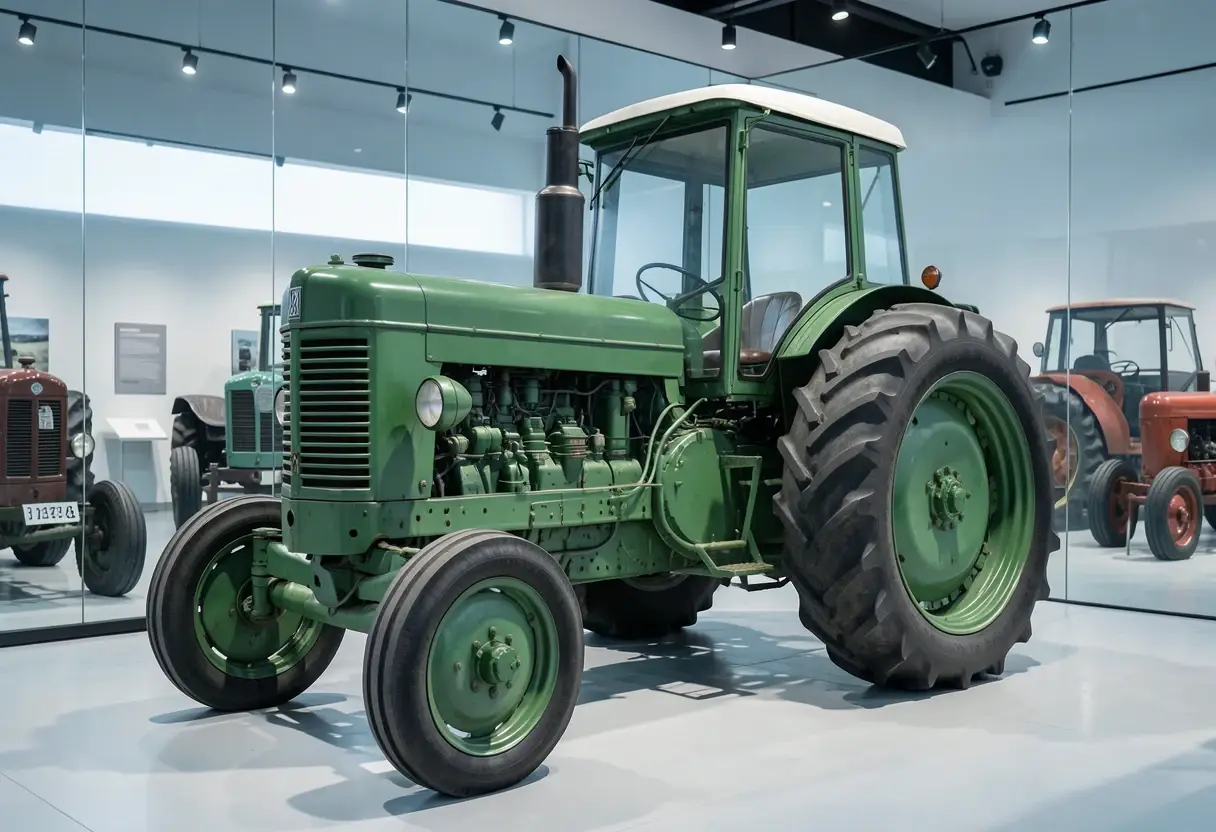
A lime green 1962 Stihl 381S diesel tractor, built 1959-1963 with a 15 hp single-cylinder two-stroke engine, is on display at the American Tractor Museum in Perryville, Missouri.
- Entered
- Plot
- 1.3 ha
- Record
- 524 words
- Walk-through
- 3 min
DrillSprayHarvestCurrent stage
Agronomist’s notes
- Stihl built the 381S tractor from 1959 to 1963 on its 381 platform, produced 1957-1960.
- The machine's single-cylinder, air-cooled, two-stroke diesel produced about 15 hp.
- A 1962 Stihl 381S is displayed by Kenny Buchheit at the American Tractor Museum in Perryville, Missouri.
- The tractor was imported from Europe in 1966 by Bill and Angela Byers of Alaska.
- Allied forces arrested founder Andreas Stihl in 1944 and seized assets until denazification trials concluded.
Stihl, the chainsaw maker, built tractors for exactly four years — and a surviving lime green 1962 Stihl 381S is now on display at the American Tractor Museum in Perryville, Missouri.
Farm broadcaster Max Armstrong spotlighted the machine this week, owned and exhibited by Kenny Buchheit. "I have tractors and chainsaws on my mind … What in the world do they have in common?" Armstrong asked his audience.
The answer is more common than most farmers would guess.
Why did a chainsaw company build tractors?
Companies known for chainsaws have frequently made other things. Armstrong cited Ryobi, which produced fishing tackle and printing presses, and Husqvarna, which manufactured motorcycles and sewing machines alongside its saws. Stihl belongs on that list too.
"Did you know that in addition to chainsaws, they made tractors?" Armstrong said. "Yeah, for a period of a few years, and here's one to show you. It's in captivity in Missouri."
The 381S was produced from 1959 until 1963, built on Stihl's 381 tractor platform, which ran from 1957 to 1960. The German-made machine drew roughly 15 hp from a single-cylinder, air-cooled, two-stroke diesel engine.
What does wartime history have to do with it?
The tractor venture grew directly out of the Second World War. Throughout the conflict, Stihl produced heavy-duty forestry clearing equipment for the Nazi German government, scaling rapidly to meet wartime quotas. Allied bombing ended production as the war turned.
When the Axis powers fell in 1944, the Allies arrested founder Andreas Stihl and seized company assets. Control was not returned until the denazification trials concluded years later.
Rebuilding for civilian buyers, Stihl diversified. The company adapted its mechanical expertise toward farm equipment, and the 381S targeted German and Western European family farms working to recover small-scale operations after the war.
What could the 381S actually do?
Its open configuration suited everyday light utility work. Tasks included:
- pulling hay rakes
- powering belt pulleys
- row-crop seeding and cultivation
The machine served farms that needed cheap, simple power rather than horsepower-heavy row-crop tractors. For context, 15 hp put it far below the mainstream American tractors of its era from John Deere, International Harvester, Allis Chalmers, Minneapolis-Moline and J.I. Case — brands Armstrong named as the familiar anchors of antique tractor collecting.
How did a German tractor reach Missouri?
The 381S is rare, especially in the United States. Stihl's tractor venture was short lived, and the company soon pivoted back to its core business: forestry equipment.
The Perryville machine has a documented chain of ownership. Bill and Angela Byers of Alaska imported it after spotting one while traveling Europe in 1966. Randy Longnecker, a power equipment dealer from Washington, bought it three years later, in 1969. From there it made its way to Missouri, where Buchheit now displays it.
For collectors, the takeaway is straightforward. A four-year production run, a single-cylinder two-stroke diesel and decades of transatlantic movement make the 381S one of the scarcer survivors in American tractor preservation. Anyone tracing others should watch estate auctions and European listings, where the remaining examples most plausibly surface.
via Farm Progress (Source)
More from Olivia Hart
Show full bio
News editor covering regulation, policy and their impact on production farming and field operations at Arable Wire.
186 articles
Nearby records
- HS 87Rostselmash unveils 580 hp 3580 articulated tractor at AgrosalonOctober 13, 2026
- UL 76New Holland debuts 3 new Workmaster compact utility tractorsOctober 10, 2026
- YD 47Voltrac to build 96 Thor autonomous tractors a year in ValenciaOctober 10, 2026
- VF 83Massey Ferguson Partners with International Tractors Ltd on CompactsSeptember 30, 2026
- ZT 38Zoomlion unveils 1,600 hp articulated tractor, claiming world power recordOctober 28, 2026