Two in critical condition after Ionia County farm equipment crash
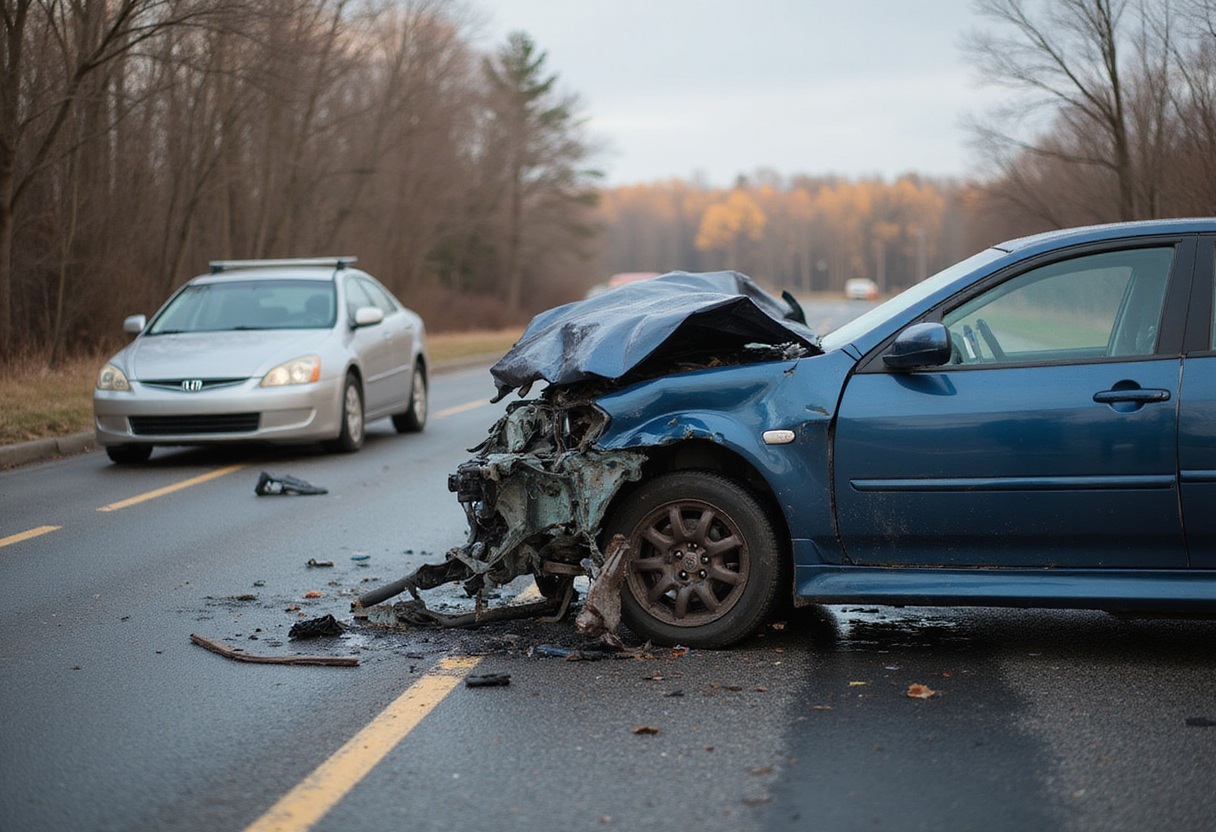
Two people are in critical condition after a farm equipment crash in Ionia County, Michigan, the Lansing State Journal reports. Names, road, equipment type and cause remain unconfirmed.
- Entered
- Plot
- 1.7 ha
- Record
- 699 words
- Walk-through
- 3 min
DrillSprayHarvestCurrent stage
Agronomist’s notes
- Two people sustained critical injuries in the crash, per the Lansing State Journal dispatch.
- The incident involved farm equipment in Ionia County, in mid-Michigan between Grand Rapids and Lansing.
- The initial headline carries no road, intersection, equipment type, time of day or cause.
- US-131 and M-66 bisect Ionia County, and rural two-lane roads carry tractor and combine traffic through planting and harvest peaks.
- If the Michigan State Police Traffic Crash Reconstruction Unit is engaged, a full crash report typically takes four to six weeks.
Two people remain in critical condition after a farm equipment crash in Ionia County, Michigan, the Lansing State Journal reported in an initial dispatch.
The headline — "2 critical after Ionia County crash involving farm equipment" — carries the only available detail. Names, road, equipment type, time and cause remain unreleased at the time of writing.
What do we know so far?
- Two individuals sustained critical injuries.
- The crash involved farm equipment.
- The location is Ionia County, in Michigan's mid-Michigan region between Grand Rapids and Lansing.
- The Lansing State Journal, the regional daily covering Greater Lansing, filed the initial report.
What remains unconfirmed?
The dispatch does not identify the road, intersection, equipment type, time of day, lighting or cause. Investigators typically release the responding agency, preliminary cause and condition updates within 24 to 48 hours of a serious-injury crash. Full reconstruction reports, where the state police unit is engaged, take considerably longer — often two months or more before final disposition.
Why does Ionia County sit in the ag-equipment corridor?
Ionia County sits squarely within Michigan's mixed cash-crop and dairy belt. US-131 and M-66 bisect the county, and the section-line road grid common across southern Michigan places slow-moving implements in direct contact with high-speed passenger traffic at uncontrolled intersections and field entrances. Rural two-lane roads across the county carry tractor, combine, sprayer and grain-cart traffic between fields and on-farm storage through the planting and harvest windows. Heavy-equipment movement in this corridor peaks from May into June and again from late September through November, with secondary peaks during manure-hauling and forage-chopping cycles.
What pattern drives farm-equipment crashes?
Police reports on farm-equipment incidents across the Midwest typically identify the same leading pre-crash factors: turning movements into field entrances, lane encroachment on narrow two-lane roads and the speed gap between implements and passenger vehicles. A tractor-and-implement combination operating below 40 km/h on a road posted at 90 km/h compresses reaction time sharply. On curves where standing crops, hedgerows or roadside tree lines shorten sight distance, that gap grows more dangerous. Wet road surfaces, gravel shoulders and dust thrown up by towed implements add further layers of risk, particularly during twilight hours when SMV emblems are harder to read from distance.
Michigan law requires the slow-moving vehicle emblem on every implement of husbandry operated on public roads, with amber flashers required after dark and in reduced visibility. Pilot vehicles are not mandatory for most tractor-and-wagon combinations, but many large operators run one voluntarily during the busiest weeks of harvest. Some road commissions post advance "farm equipment" warning signs on known corridors during the planting and harvest windows. None of those measures, however, eliminate the underlying physics of mismatched masses and speeds.
Why does this matter beyond the dispatch?
A serious farm-equipment crash typically pulls a working operation off the road for the rest of the day, sometimes longer. For contractors running custom-harvest crews, a single incident can ripple across dozens of farms waiting on a chopper or combine. Insurance and liability exposure for both the equipment operator and any passenger-vehicle driver involved runs high; Michigan's no-fault auto insurance framework does not extend to implements of husbandry, which fall under a separate commercial policy structure. That separation matters when the crash report is filed and damages are tallied.
What should farmers and rural commuters watch?
Lansing State Journal reporters covering Ionia County are expected to update the dispatch with identities, hospital condition updates and the responding agency's preliminary findings. Farmers operating in the county, haulage contractors moving equipment between fields and rural commuters using M-66 and the US-131 service roads should monitor the Ionia County Sheriff's Office and Michigan State Police social channels for closure notices and detour information. Watch for the responding agency's first release — that release will indicate whether the Michigan State Police Traffic Crash Reconstruction Unit has been called in. That assignment typically signals a four-to-six-week timeline before a full crash report is filed, and is often the first hard indication of cause.
via Google News: agricultural machinery (Source)
More from Olivia Hart
Show full bio
News editor covering marketplaces and e-commerce at Arable Wire.
116 articles
Nearby records
- SX 96Two critically injured in Ionia County crash with farm equipmentSeptember 30, 2026
- XF 55114 crashes and counting as Michigan harvest gets underwaySeptember 30, 2026
- FG 16Michigan Logs 114 Farm Equipment Crashes So Far This YearOctober 2, 2026
- QS 96Thumb health partnership flags harvest-season hazards for farmers and motoristsOctober 10, 2026
- RE 15Michigan State Police reissue farm equipment road safety reminderOctober 10, 2026