Wet-Field Traffic Could Trigger 10% to 20% Yield Losses in Iowa
Iowa State data show harvest axles above 10 tons, while wet-soil compaction can cost 10% to 20% in yields. Here is how to limit first-pass damage before and during harvest.
- Entered
- Plot
- 2.1 ha
- Record
- 841 words
- Walk-through
- 4 min
DrillSprayHarvestPlanning window
Agronomist’s notes
- November 4, 2026: Iowa State guidance warned that wet harvest traffic can trigger lasting soil compaction.
- 10% to 20%: potential yield-loss range from wheel-traffic compaction.
- 60% to 80%: share of soil compaction that can occur during the first wheel pass.
- More than 10 tons per axle: measured load on harvest and grain equipment, above the recommended limit for minimizing deep compaction.
- 12-row, 400-bushel combine: about 22 tons on the front axle without the header and 31 tons per axle with it; a 1,100-bushel grain cart carries about 26 tons per axle.
Wheel-traffic compaction can cut yields by 10% to 20%, and Iowa State University field measurements show harvest gear exceeds the 10-ton-per-axle limit recommended to minimize deep compaction. The November 4, 2026 guidance arrives as Iowa’s July, August and September precipitation ran above average.
Harvest is often a race against time. Delays can increase grain losses, reduce grain quality and add weather risk. Yet some wet-soil wheeling may be unavoidable this fall, especially as combines and grain-handling systems move heavy loads through fields whose top and subsoil layers have weak bearing capacity.
What changes for a wet harvest?
Mehari Tekeste, an Iowa State University associate professor in Agricultural and Biosystems Engineering, and Arora, an ISU Extension and Outreach field agricultural engineer, put it plainly: "The best way to manage severe compaction is to prevent it."
That advice matters because Iowa and Midwest research links random traffic on wet soils to reduced yields over time, while a heavy axle can leave damage that persists for years. It can also compact soil below the usual tillage depth, creating layers that restrict crop roots.
Compaction raises penetration resistance, restricts air and water movement, and changes the size and continuity of soil pores. The result is slower infiltration, restricted internal drainage and a resistant soil profile. Crops can suffer long after the combine leaves, especially in dry seasons when roots struggle to reach moisture and nutrients deeper in the profile.
Actual losses depend on soil, weather, crop, traffic pattern and severity. Once compaction degrades soil structure and function, the consequences can continue through later seasons. A wet harvest, in other words, can bill several future crops.
The loads behind the risk
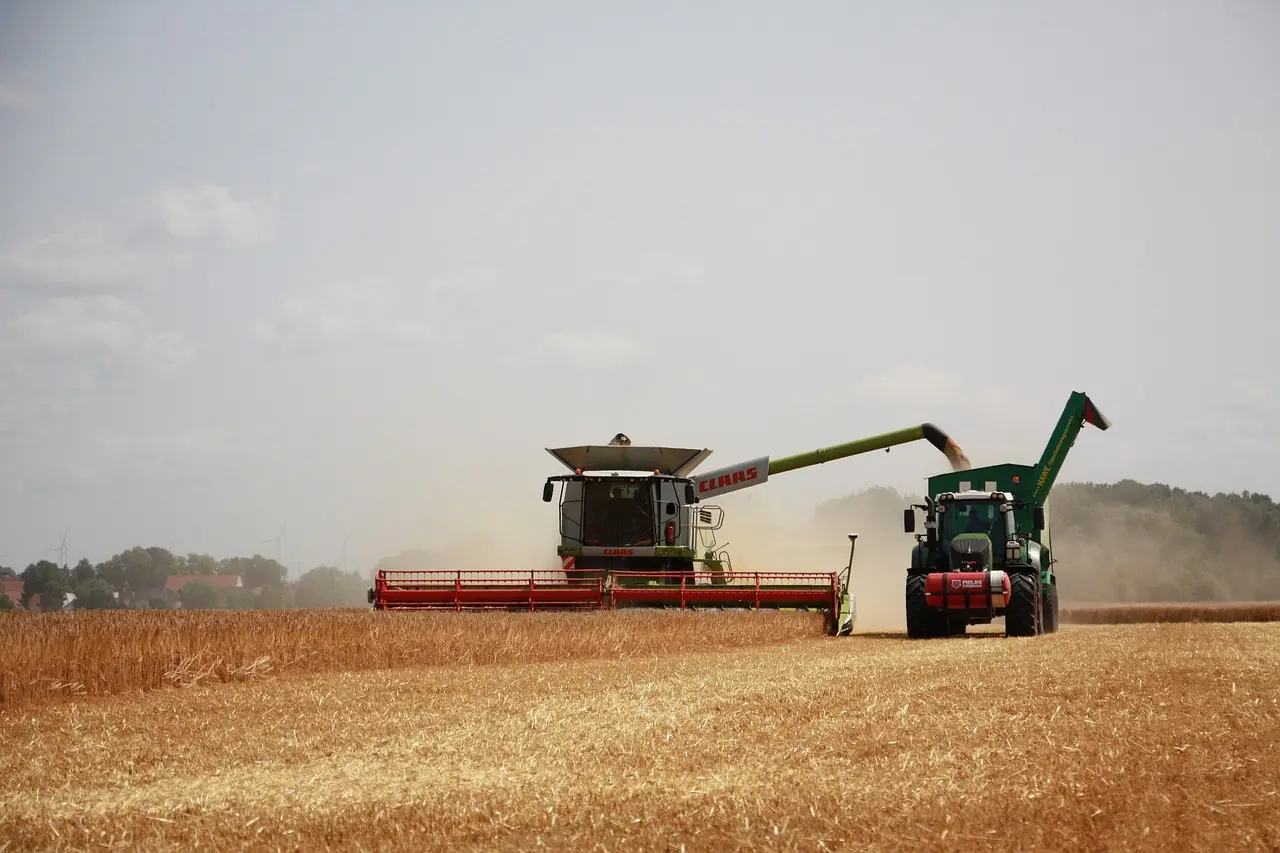
Modern harvesting and grain-handling systems move grain quickly, but they put substantial weight on two-axle pneumatic tire or track systems. Under field conditions, ISU measured loads above 10 tons per axle on harvest and grain equipment.
Examples make the arithmetic less comforting. A 12-row combine with a 400-bushel grain tank places about 22 tons on its front axle without the header, and about 31 tons per axle with the header. A single-axle, 1,100-bushel grain cart is listed at about 26 tons per axle.
Those weights do not automatically produce the same damage in every field. Soil wetness controls how much an axle deforms the soil. Near field capacity or under saturation, the soil has less load-bearing capacity. Even modest visible rutting can conceal stress spreading into subsoil horizons.
Why the first pass matters
About 60% to 80% of soil compaction can occur during the first wheel pass; repeated traffic is not necessary to create major damage. That finding turns every unnecessary pass through a wet field into a poor agricultural bet.
Dedicated grain-cart lanes can leave most of a field outside the cart’s traffic while concentrating damage in one smaller strip. Keeping grain-handling and semitrailer activity near the field exit also reduces heavy movement deep into the field.
In wet conditions, confining the heaviest equipment to controlled lanes may do more good than trying to repair compaction across the whole field with deep tillage afterwards.
A field check before entry
Farmers can take a few minutes to assess moisture with the ribbon soil-molding method. Take soil from about 4 to 6 inches deep and try to form a ribbon.
- Low compaction risk: The soil fragments before it rolls into an approximate 1/8-inch-thick ribbon.
- Too wet for heavy traffic: The ribbon stretches to that thickness and then begins to crack. The soil is close to the plastic limit and susceptible to compaction.
What operators should change
If harvest must continue, match tire size and inflation pressure to the manufacturer’s load and speed recommendations. Larger tires at appropriately lower pressures create a larger footprint and reduce surface contact pressure. Low-ground-pressure tracks spread the load across a broad area. The aim is to carry the required load over the largest practical footprint the soil can bear.
Before committing heavy equipment:
- Check soil moisture and perform the ribbon soil test.
- Map routes for the combine, grain cart, tractor and grain-handling equipment.
- Match tires or tracks, tire size and inflation pressure to actual field loads, following manufacturers’ load and speed limits.
- Keep the heaviest traffic in controlled lanes and remove unnecessary passes.
- Avoid carrying full loads through the wettest parts of the field when practical.
Tillage after harvest
Disk-ripper equipment and subsoilers rupture compacted soil better when conditions are dry. Tilling wet soil can smear it along the points and create additional compaction, while adding fuel use, time and field passes. When conditions allow rupture, setting the maximum tillage-tool depth to one inch below the hardpan could help break the compacted layer.
After this fall’s harvest, watch subsequent crops for restricted rooting and keep controlled lanes ready before the next wet traffic window. One pass can do most of the damage; a good lane plan gives that pass less to ruin.
via Farm Progress (Source)
More from Priya Raman
Show full bio
Senior reporter covering technology and product news in production farming and field operations at Arable Wire.
197 articles
Nearby records
- QN 55Wet September Leaves Iowa Farmers Behind on HarvestOctober 10, 2026
- UZ 72Drier Weather Could Restart Southwest Iowa HarvestOctober 10, 2026
- FR 39Saturated Fields Stall Iowa Corn and Soybean Harvest in OctoberOctober 10, 2026
- XS 49Wet Weather Slows U.S. Corn Harvest Across 11 States in 2026October 10, 2026
- KN 15Rain Threatens Indiana and Ohio Harvest as Wet Fields Slow CombinesOctober 10, 2026