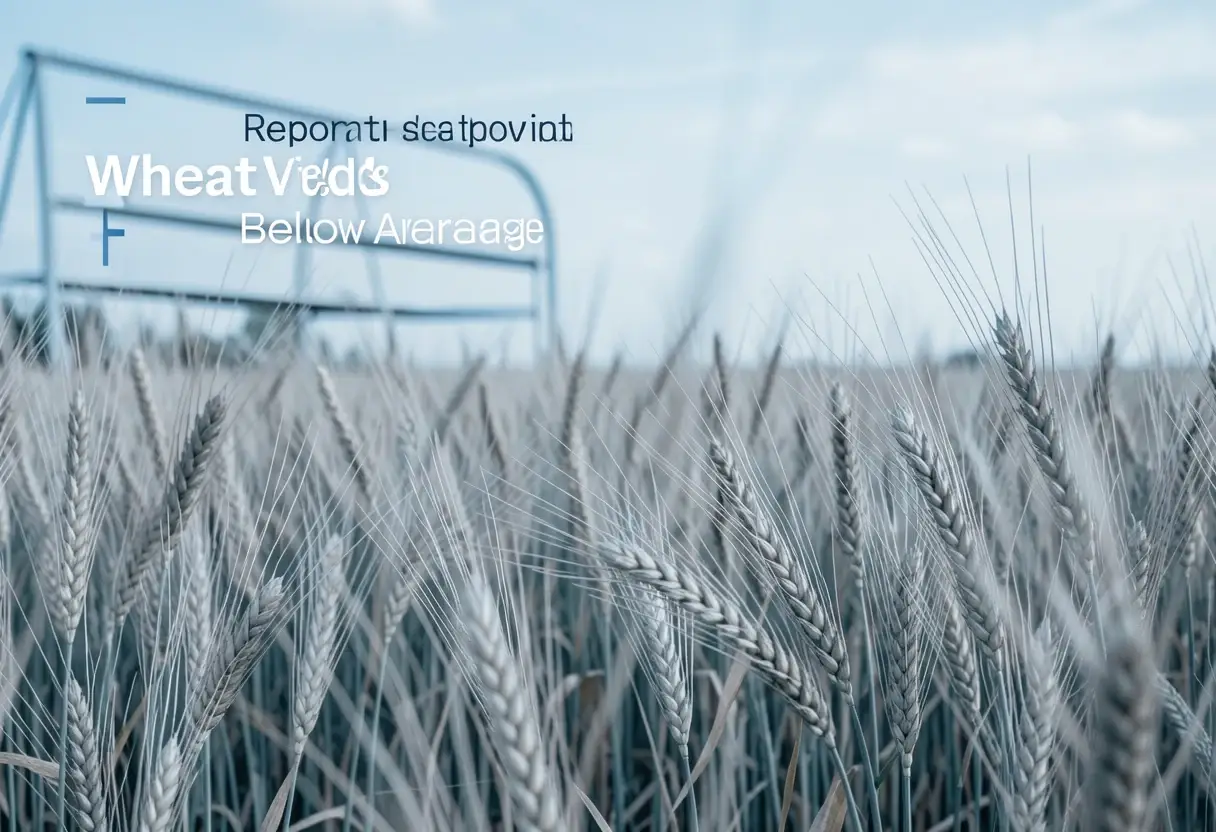
Wheat yields fall below average on 90% of farms, report finds
A report shows wheat yields came in below farm averages on 90% of holdings this season — a near-universal shortfall with supply and pricing implications.
- Entered
- Plot
- 1.3 ha
- Record
- 506 words
- Walk-through
- 3 min
DrillSprayHarvestCurrent stage
Agronomist’s notes
- Report finds wheat yields below average on 90% of farms
- Result points to a near-national wheat supply shortfall this season
- Broadly short crop expected to support wheat prices into autumn
- Farmers Weekly carried the report's headline finding
Nine out of ten farms — 90% — recorded wheat yields below their average this season, according to a new report highlighted by Farmers Weekly. That is not a marginal miss on a handful of struggling holdings. It is a shortfall spanning almost the entire surveyed base.
What does this change for growers?
Plenty, and mostly on the marketing side. When 90% of farms come in under their own average, the shortfall stops being an individual farm's problem and becomes a national supply question. Millers, merchants and compounders will have noticed too. Tighter UK wheat supply typically translates into firmer spot prices and keener competition for the quality grades that did make the cut.
Growers with grain still to move may find the market is suddenly more interested in talking to them. Those who priced early, or sold forward aggressively, may be watching the rally from the wrong side of the fence. It happens.
Why the breadth matters more than the depth
A bad year on 10% of farms is weather. A below-par year on 90% of farms is a pattern, and patterns invite questions. Was it the same pressure — disease, drilling conditions, a difficult harvest — hitting everyone at once, or several different problems landing in the same season? The report's headline doesn't say, and that detail matters for anyone planning next year's input spend.
If the cause was agronomic and repeatable, the response is varietal, chemical or rotational. If it was simply a season nobody could have fixed, the response is financial — insurance, storage, and marketing discipline. Distinguishing between the two is the difference between spending money wisely and spending it hopefully.
The benchmarking angle
A figure like this also resets the benchmark. If a farm's five-year average was, say, built on stronger seasons, then "below average" this year may still be a respectable result in context. Conversely, farms that held near their average in a year when 90% of peers didn't have just had a genuinely good year, whether or not it felt like one at the time.
Benchmarking clubs and discussion groups will have a field day with this data, in the strictly literal sense. Comparing performance across a season this uneven is where group agronomy earns its keep.
What farmers should watch next
Watch three things. First, the detailed breakdown of the report itself — which regions, soil types and varieties bucked the 90% trend, because that is where the lessons hide. Second, the AHDB's harvest estimates and end-of-season quality survey, which will put hard numbers on tonnage and Hagberg levels against this farm-level picture. Third, the new-crop price curve; a broadly short wheat crop tends to support values into autumn, which makes the timing of any remaining old-crop sales a genuinely live decision.
For now, the headline number stands on its own. Nine farms in ten below average is not noise. It is the season talking, and growers would be wise to listen before they book seed for next autumn.
via Google News: harvest report wheat (Source)
More from Priya Raman
Show full bio
Senior reporter covering technology and product news in production farming and field operations at Arable Wire.
156 articles
Nearby records
- FZ 78West Midlands farmers brace for 'terrible' 2026 harvestOctober 10, 2026
- FV 892026 harvest: cereals yields stay below historic levelsOctober 10, 2026
- SQ 15Winter Wheat Planting Advances as Pasture Conditions SlideOctober 14, 2026
- HL 67Oklahoma Wheat Harvest Reaches 35% Amid Yield Swings and DroughtOctober 10, 2026
- BW 40Wheat Harvest Gains Momentum Across RegionSeptember 29, 2026