775 hp and a 567-bushel tank: the 2027 machinery arms race explained
New Holland's 775 hp CR11, John Deere's MY2027 8 Series, JCB's Fastrac 6300 and Case IH's AF Series all chase the same prize: more acres per operator.
- Entered
- Plot
- 2.3 ha
- Record
- 909 words
- Walk-through
- 5 min
DrillSprayHarvestPlanning window
Agronomist’s notes
- New Holland CR11 Twin Rotor: up to 775 hp, 567-bushel grain tank, six bushels-per-second unload rate
- John Deere MY2027 8 Series spans 250 to 410 hp; 9RX 710, 770 and 830 offer higher horsepower, all autonomy-ready
- JCB Fastrac 6300 delivers up to 335 hp, 66 km/h transport speed and 108 gpm hydraulic flow; 2027 delivery in Canada
- Case IH AF Series rotors are 37 to 40 per cent longer; AF11 runs dual 24-inch rotors at 775 hp
- Case IH Harvest Command uses 18 sensors to self-adjust threshing, sieves and fan speed for grain quality
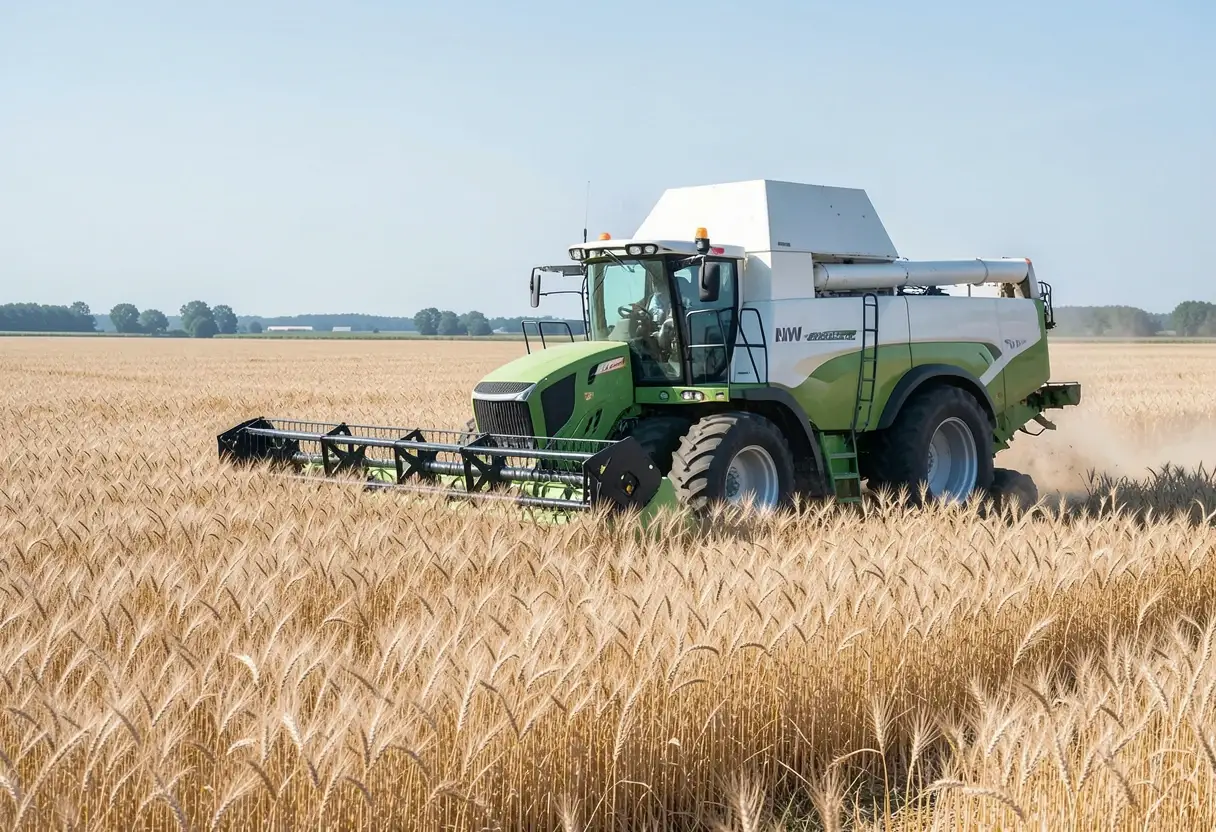
Two 775-horsepower combines from rival manufacturers — New Holland's CR11 and Case IH's AF11 — headline the 2027 equipment cycle, and both share one calculation: one big machine, one operator, fewer people to hire.
That's the common thread across the newest releases from New Holland, John Deere, JCB North America and Case IH. Every OEM is selling capacity and automation as the answer to labour shortages and shrinking weather windows. Warren Feist, territory business manager for New Holland in Saskatchewan, doesn't mince words about it.
"Farmers in Western Canada, specifically, have lots of challenges that come up with seasonality and harvest management. They are looking for more harvest efficiencies, and the CR11 is one of those combines that really help the situation on the farm when it comes to labour shortages and driving down the cost of harvesting."
What does the CR11 actually change in the field?
The CR11 Twin Rotor produces up to 775 hp with a 567-bushel grain tank, and it unloads at six bushels per second. Its sibling, the CR10, delivers up to 634 hp with a 455-to-567-bushel tank. Both succeed the CR8.90, CR9.90 and CR10.90, but Feist calls the CR11 an all-new combine in how it operates: fewer belts, no drive chains, and a 396-gallon fuel tank that cuts refuelling stops.
The point is arithmetic, not glamour. "When you have a bigger capacity combine, you can do more acres with less labour essentially, so the CR11 in some cases are replacing two combines on some farms," Feist says. Grain loss, he adds, impresses even competitive customers at demos — more grain in the tank, less out the back. He pegs the CR11 as the combine of choice for heavy wheat and canola crops in northern Alberta, northern Saskatchewan and Manitoba.
John Deere: comfort, connectivity and autonomy-ready hardware
For model year 2027, John Deere's 8 Series spans 250 to 410 hp, built on the 8R, 8RT and 8RX platform. Reactive Command Steering (RCS) on select 8R models returns the wheel to centre automatically and lets operators tune steering response for tighter field turns. A new CommandARM Console offers CommandX, CommandX Plus or CommandX Pro transmission drive levers.
Sarah Daniels, product marketing manager at John Deere, says the in-cab experience is now integrated across the whole 8 Series portfolio, making it "easier for the customer to be able to get up and get ready for their day."
The spec sheet for plugged-in growers:
- 56-volt electric offboard power for planting precision
- G5 display, StarFire receiver and JDLink modem using field and machine data
- JDLink Boost, an aftermarket satellite kit for spotty cell coverage, streaming data into the John Deere Operations Center
The 9RX 710, 770 and 830 remain the high-horsepower play. Daniels frames it plainly: pull wider implements or work faster, and "you're going to get more done in less time." Both series are autonomy-ready, which Daniels suggests could let a tractor run tillage while the farmer attends a kids' T-ball game.
JCB Fastrac 6300: built for the commute
JCB's Fastrac 6300 brings up to 335 hp and a 66 km/h maximum transport speed to Western Canadian grain operations. Product sales manager Sam Ullyott says it's designed for machines that travel long distances between fields and power demanding implements all day.
Hydraulics deliver up to 108 gpm of flow — enough, Ullyott says, for today's larger planters and air seeders. An optional Central Tire Inflation System adjusts pressures from the cab, softening the impact of every pass during planting and spraying. The enhanced ICON touchscreen operating system speeds up display setup, while hydro-pneumatic suspension, a mid-mounted cab with 50:50 weight distribution and four-wheel steering with optional Twin Steer guidance tackle long-day fatigue.
Ullyott insists the series wasn't built to be flashy but in response to customer feedback, filling a new horsepower class. The goal, in his words: spend less time travelling and adjusting, more time covering acres. Orders are open in Canada now for 2027 delivery.
Case IH AF Series: sensors doing the thinking
Case IH's AF Series — AF9, AF10 and AF11 — extends the axial-flow lineage with rotors 37 to 40 per cent longer for more threshing and separation area. The AF9 is a single rotor rated at 578 hp with a 455-to-567-bushel tank; the AF10 is a single rotor at 775 hp and 567 bushels; the AF11 runs dual 24-inch rotors, 775 hp, 567 bushels.
Product specialist Trent Nowosad says the dual-rotor AF11 handles tough, wet harvest conditions best. A wider feeder throat feeds rotors matched to a bigger cleaning shoe, a new Cross Flow Plus cleaning system, and increased elevator and tank capacity. "Not only are we able to bring more material in... we're able to thresh it, separate it, clean it, and transport it to the grain tank," he says.
Harvest Command comes standard, using 18 sensors tracking ground speed, rotor speed, fan speed, sieve settings and cage vane angles to self-adjust for grain quality. Optional radar spread automation monitors residue spreading on each side, compensating for crosswinds and keeping straw out of uncut crop.
Nowosad's forecast for what's next: "continued integration of technology, smart technology... that allows the farmer to do more with less." Expect the automation trickle to become a flood by 2027.
via Top Crop Manager (Source)
More from Priya Raman
Show full bio
Senior reporter covering technology and product news in production farming and field operations at Arable Wire.
222 articles
Nearby records
- JM 42US tractor sales fall 16.4% in September as combine demand slidesOctober 22, 2026
- HS 87Rostselmash unveils 580 hp 3580 articulated tractor at AgrosalonOctober 13, 2026
- UL 76New Holland debuts 3 new Workmaster compact utility tractorsOctober 10, 2026
- CM 32Deutz-Fahr adds 156 hp 6145C to its 6C tractor seriesSeptember 29, 2026
- ZD 79JCB, Bobcat, Kubota unveil 2026 loaders aimed at farm workOctober 20, 2026