April planting dates drive record soybean yields, Soybean Watch finds
Soybean Watch reports record-breaking regional soybean yields, crediting April planting dates and timely late-season rains that converted early canopy into full pods.
- Entered
- Plot
- 1.3 ha
- Record
- 519 words
- Walk-through
- 3 min
DrillSprayHarvestCurrent stage
Agronomist’s notes
- Soybean Watch reports record-breaking soybean yields across the region this season
- April planting dates are identified as a key driver of the record results
- Timely late-season rains converted established crop potential into final yield
- Soybean Watch follows planted fields from drilling through harvest as a season-long programme
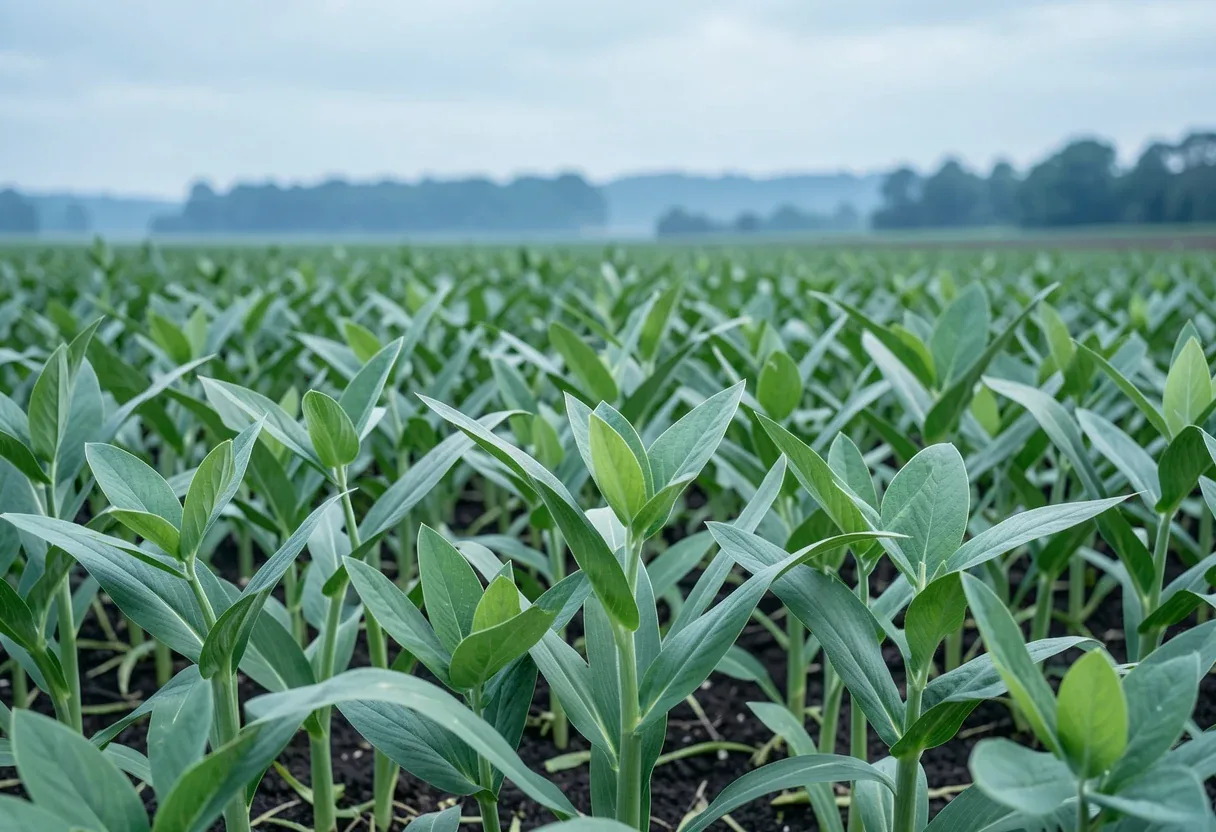
Soybean Watch is reporting record-breaking yields across its region this season, and the programme's own verdict credits two things above all: April planting dates and rains that arrived late but arrived on time.
That second phrase deserves a moment. Late-season rainfall is the agronomic equivalent of a tax rebate — pleasant, but only useful if the paperwork was already in order. The paperwork here was done in April.
Why does planting date carry this much weight?
Because soybeans set their yield ceiling early. Every day a crop spends building canopy before the summer solstice is a day of intercepted sunlight the plant converts into nodes, pods and, ultimately, beans. Plant in April and the crop banks that photosynthetic capital before heat and shortening days arrive.
Plant in May or June, and you're asking the plant to do the same work with less daylight and more stress. It usually manages. It usually also yields less.
Soybean Watch's season-long observation — the programme follows planted fields from drilling through harvest and reports what actually happened, not what the manual predicted — has now supplied regional evidence for what trial agronomists have argued for years: the April window is not a nice-to-have. It's the window.
What does this change for growers?
The practical question is worth asking plainly: what does a record-yield season actually change on-farm?
It sharpens the case for rearranging spring operations. If soybeans are on the roster, the drilling queue should put them ahead of crops that tolerate a later start without penalty. That may mean a shift in how seedbeds, pre-plant burndown and planter logistics are sequenced, particularly in seasons when soils are slow to warm.
April planting does carry risk, of course. Cold soils, crusting and uneven emergence all punish a crop that goes in too eager. The record yields Soybean Watch recorded came from growers who hit the window, not growers who gambled on it. Soil temperature and forecast, not the calendar alone, decide which of those two you are.
The rain that finished the job
Early planting built the factory. The late-season rains supplied the electricity.
Soybeans fill grain during the back half of the season, when moisture demand peaks and reserves tighten. Timely rain in that stretch converts established yield potential into harvestable tonnes; its absence converts the same potential into small beans and lighter test weights. This season, the rain came.
Growers shouldn't read one cooperative rainfall pattern as a plan. What it demonstrates is the payoff structure: plant early, and the crop enters grain fill with the machinery to use whatever moisture shows up. Plant late, and even generous rain is partly wasted on a canopy still under construction.
What to watch next
Growers weighing 2026 rotations should watch Soybean Watch's follow-up reporting through the off-season, when the programme typically consolidates its field observations into season summaries. The number worth tracking in your own operation is your April-planted versus May-planted yield gap — if you don't already measure it separately, this is the year to start.
via Farm Progress (Source)
More from Priya Raman
Show full bio
Senior reporter covering technology and product news in production farming and field operations at Arable Wire.
150 articles
Nearby records
- PT 87Late-season rain pushes Indiana soybean yields toward recordOctober 10, 2026
- EF 12Arkansas rice harvest hits record pace as soybean cutting tops 40% completeOctober 3, 2026
- RN 42USDA: Corn 18% Harvested, Soybeans 17% as of Sept. 27October 3, 2026
- WW 93Soybean Harvest Advances Slowly, Farm Progress ReportsOctober 3, 2026
- ZJ 33USDA Crop Progress: US Corn and Soybean Harvests Running Ahead of Five-Year PaceOctober 10, 2026