USDA Crop Progress: US Corn and Soybean Harvests Running Ahead of Five-Year Pace
USDA's latest Crop Progress report shows US corn and soybean harvests advancing ahead of the five-year average pace. IndexBox carries the weekly data covering 18 major producing states.
- Entered
- Plot
- 1.4 ha
- Record
- 571 words
- Walk-through
- 3 min
DrillSprayHarvestCurrent stage
Agronomist’s notes
- USDA Crop Progress report shows US corn harvest ahead of five-year average pace
- Same report shows US soybean harvest ahead of five-year average pace
- USDA tracks 18 major producing states in the weekly Crop Progress survey
- IndexBox carried the headline summary of the latest USDA data
- Weekly Crop Progress reports run through the autumn harvest window and update each Monday afternoon
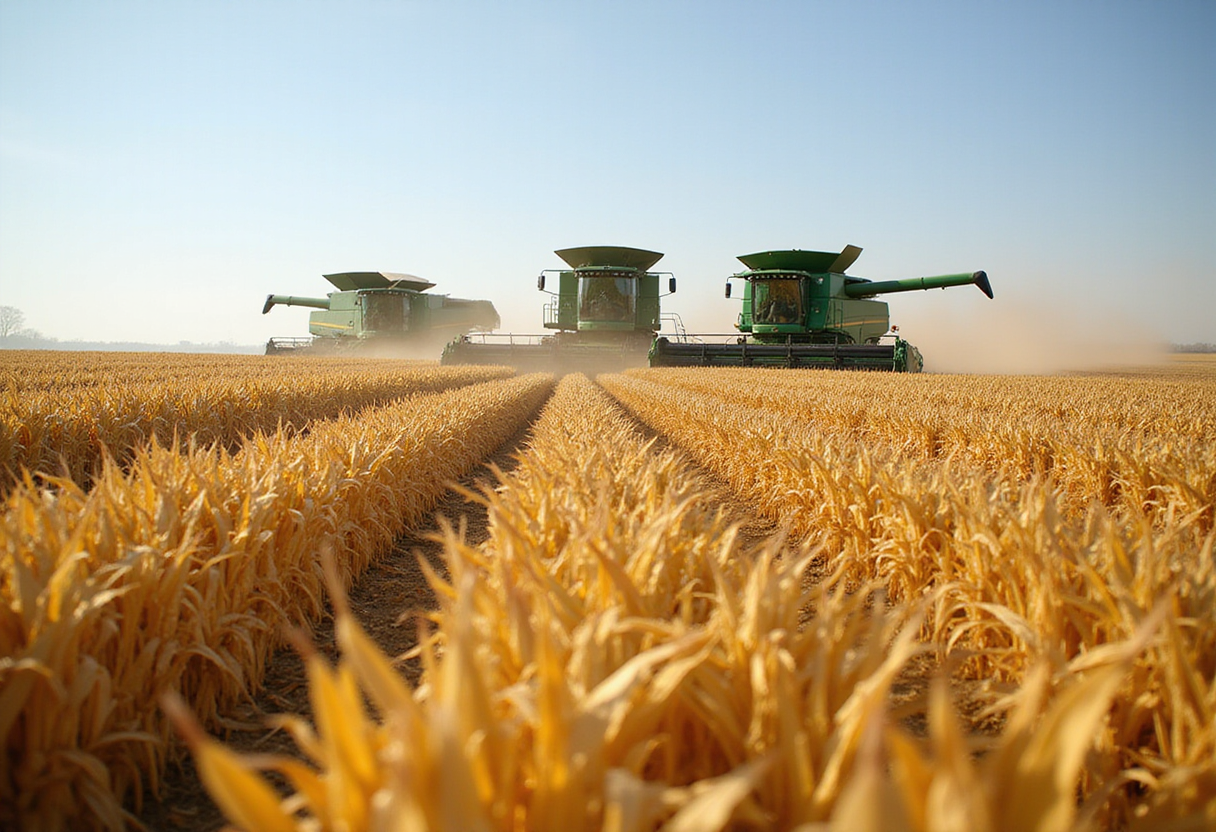
US corn and soybean harvests are running ahead of the five-year average pace, according to the latest USDA Crop Progress report carried by IndexBox.
What does the USDA Crop Progress report measure?
USDA's National Agricultural Statistics Service publishes the Crop Progress report weekly during the US growing season. It tracks planting, emergence, crop condition, and harvest progress for corn, soybeans, cotton, rice, sorghum, peanuts, and winter wheat across 18 top-producing states. State agricultural statisticians collect the data from farmer and operator surveys each Sunday, with results published late on Monday afternoons during the season.
The "five-year average" comparison built into every weekly table is the benchmark traders, grain buyers, and agronomists use to judge whether a crop is racing, matching, or lagging the typical calendar. A reading above the five-year average signals that combines are rolling earlier than usual; a reading below signals delays, often tied to weather, planting setbacks, or late-season moisture.
What does "ahead of pace" mean for this year's row crops?
IndexBox's headline summary flags both corn and soybean harvests as ahead of the historical benchmark. For corn, the US Department of Agriculture tracks the percentage of acreage harvested at the national level and in major producing states including Iowa, Illinois, Nebraska, Minnesota, and Indiana. For soybeans, the equivalent harvest percentage is tracked across the same core belt, with Louisiana, Mississippi, Arkansas, and Missouri typically the earliest states to finish.
An ahead-of-pace finish usually reflects three things: an early-start planting window in spring, fast accumulation of growing-degree days through summer, and dry harvest weather in September and October. The combination lets combines cover more acres per day and lets growers finish fields before the late-autumn rains that can dent grain quality.
Why does it matter for farmers and buyers?
Earlier harvest completion changes the timing of grain deliveries to elevators, river terminals, and export channels. Growers running on-farm storage have more flexibility on sale decisions when the crop is off early, which can translate into stronger basis bids at local buyers competing for early-season bushels. End users — ethanol plants, soybean crushers, and feed mills — usually welcome early deliveries because new-crop supply lower their dependence on dwindling old-crop stocks.
For input retailers, an early finish also shifts the window for fall fieldwork such as tillage, cover-crop drilling, and fertilizer applications. The earlier combines clear the field, the wider the window for those decisions.
What should farmers and markets watch next?
The next weekly Crop Progress release will confirm whether the pace holds into the final stretch of the harvest window. Watch the soybean numbers first: soybeans typically finish ahead of corn, and the gap between the two crops matters for logistics planning. Watch the northern states, where later planting in spring can still produce a lag even when southern states are finished.
Grain merchandisers will read the same report for signals on old-crop versus new-crop basis, while livestock producers track it for clues on corn silage availability and feed-cost relief. Anyone buying or selling based on this report should pair it with USDA's monthly WASDE supply-and-demand update, which converts the harvest pace into concrete production estimates.
The full IndexBox summary, including state-by-state harvest percentages and crop-condition ratings, is available through the IndexBox news and statistics feed linked from the original USDA release.
via Google News: harvest report wheat (Source)
More from Daniel Okafor
Nearby records
- RN 42USDA: Corn 18% Harvested, Soybeans 17% as of Sept. 27October 3, 2026
- DR 45U.S. corn rated 54% good-to-excellent as soybeans hold at 57%October 10, 2026
- EF 12Arkansas rice harvest hits record pace as soybean cutting tops 40% completeOctober 3, 2026
- TD 78USDA Crop Progress: Corn Reaches Dough Stage Ahead of AverageOctober 10, 2026
- GF 74US Corn Harvest 18% Complete, Soybeans at 12%September 30, 2026