Dead or Alive, Soil Microbes Signal Regenerative Gains Early
Microbes, dead or alive, act as early indicators of soil health under regenerative farming, giving growers feedback long before organic matter shifts, Phys.org reports.
- Entered
- Plot
- 1.8 ha
- Record
- 710 words
- Walk-through
- 4 min
DrillSprayHarvestCurrent stage
Agronomist’s notes
- Research reported by Phys.org finds soil microbes, dead or alive, serve as early indicators of soil health under regenerative farming.
- Microbial residues persist in soil and record past biological activity, offering a faster read than total organic matter.
- Living microbial communities respond to management changes within seasons rather than years.
- Early biological indicators could support verification for regenerative contracts and carbon programs.
Soil microbes signal the success of regenerative farming whether they are alive or dead, according to new research reported by Phys.org, and their residues can flag improvements in soil health years before conventional measures register a change.
The finding matters because the central problem in regenerative agriculture has always been verification. A farmer who stops tillage, covers the ground, or rotates livestock wants to know whether the biology underneath is responding. Traditional soil tests move slowly. Organic matter percentages shift over seasons and often decades, which leaves growers making expensive decisions on faith.
Microbes close that gap.
Why dead microbes matter
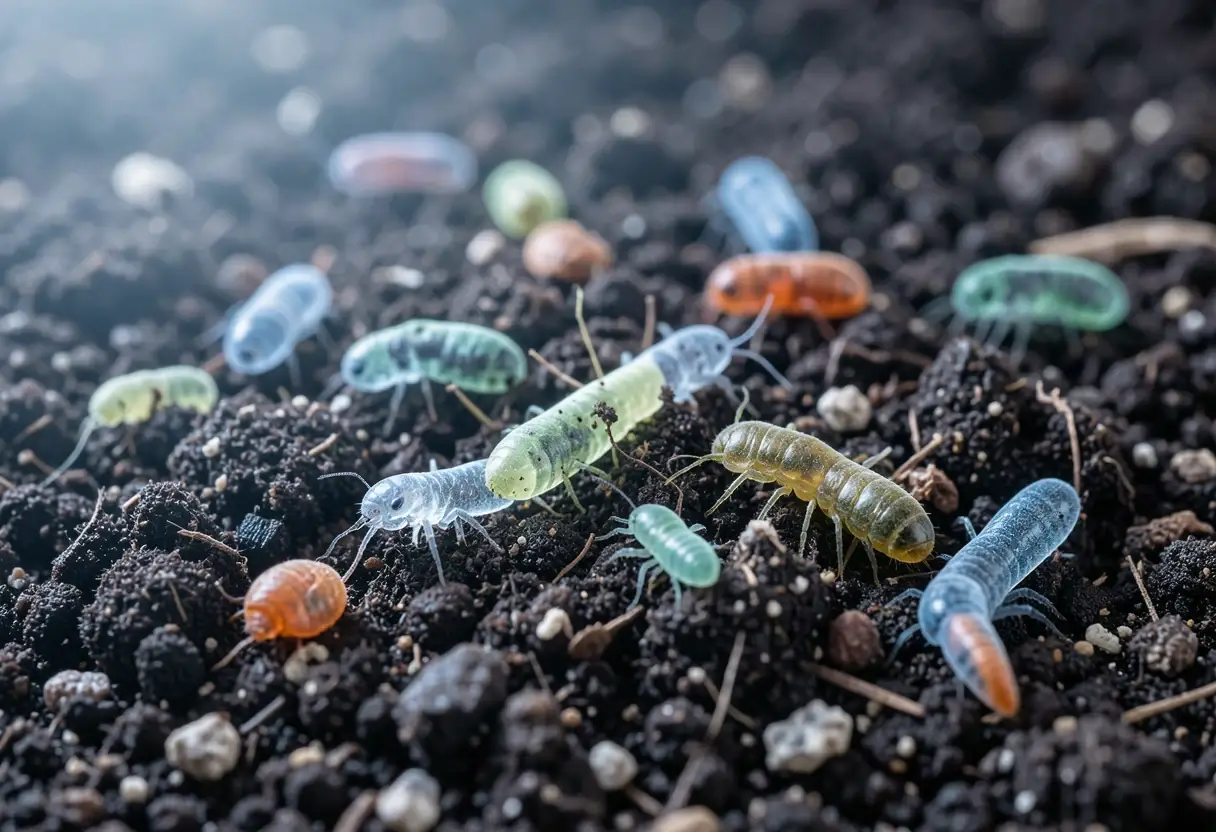
The research draws attention to both living microbial communities and the residues left behind when those organisms die. The dead material, sometimes called microbial necromass, persists in soil and accumulates as organic matter. Scientists have increasingly argued that this necromass, rather than plant debris alone, forms a large share of stable soil carbon.
That gives dead microbes a dual role. They are a memory of past biological activity, and they are a building block of future soil structure. If a regenerative practice feeds the microbial population, the residue record shows it.
Living microbes tell the other half of the story. Active communities cycle nutrients, decompose residue, and interact with crop roots. Measuring their numbers and function gives a near-real-time read on whether a field's biology is accelerating or stalling.
What does this change in the field?
For growers, the practical promise is earlier feedback. Instead of waiting for slow-moving indicators to move, farmers and agronomists could use microbial markers to judge whether a change in practice, such as cover cropping, reduced disturbance, or diversified rotations, is working within a shorter horizon.
That matters commercially. Regenerative supply chains, carbon programs, and premium contracts all depend on demonstrated improvement. Early, credible indicators reduce the risk that a farmer commits five years to a system without evidence it is delivering.
The research position, as summarized by Phys.org, is direct: microbes, dead or alive, function as early indicators of soil health under regenerative farming. The dead fraction provides the durable record. The living fraction provides the current signal.
Why verification is the bottleneck
Adoption of regenerative methods has outpaced the measurement tools available to confirm them. Reviews of soil health testing have repeatedly found that no single metric captures the full picture, and that biological indicators respond faster than chemical or physical ones.
Microbial indicators sit at the fast end of that spectrum. Populations respond to a change in management within seasons, not years. Residues accumulate over longer periods but still track the trajectory of the system more responsively than total organic matter alone.
This speed is the point. An indicator that responds quickly lets a grower correct course. An indicator that responds slowly only confirms, long afterward, what was already suspected.
How farmers might use it
The pathway from research finding to field tool runs through commercial soil labs. Several directions follow from the work.
- Benchmarking a field's microbial baseline before switching practice, so later samples have a reference point.
- Tracking microbial biomass and residue markers alongside standard fertility tests to see whether biology is moving ahead of chemistry.
- Using early biological response as a trigger for management decisions, such as adjusting cover crop species or termination timing.
- Supplying verification evidence to buyers and programs that pay for documented soil health gains.
None of this requires new machinery. It requires sampling discipline and a lab that reports the right fractions.
The limits of the signal
Microbial indicators are informative, not magical. They respond to moisture, temperature, and recent inputs as well as to management, which means a single sample can mislead. Interpretation depends on context, timing, and consistent methodology.
The research point stands nonetheless. When the question is whether regenerative practice is changing a soil, the microbial fraction, alive or dead, answers earlier than the alternatives.
What to watch next
Farmers should watch for two developments: commercial labs adding microbial residue and biomass reporting to routine soil health packages, and field-scale trials that tie those markers to yield and input outcomes. As those datasets grow, microbial indicators are likely to move from research shorthand to a standard line item on the soil test report.
via Google News: soil health farming (Source)
More from Olivia Hart
Show full bio
News editor covering regulation, policy and their impact on production farming and field operations at Arable Wire.
161 articles
Nearby records
- UP 52Soil Microbes Offer Crops a Triple Shield: Drought, Salt, DiseaseOctober 10, 2026
- EY 70Better data leads to better soil, growers toldOctober 12, 2026
- NA 31Herbicide residues reshape soil biology, researchers warnOctober 3, 2026
- PU 47New soil test maps microbes that release hidden phosphorusOctober 10, 2026
- HU 83Soil biology may hold the key to sustainable nitrogen use in Canadian winter wheatOctober 3, 2026