Rothamsted Study: Reduced Tillage Cuts Emissions More Than Mulching
Rothamsted Research finds reduced tillage delivers greater emissions savings than mulching, reshaping advice on soil carbon strategies for arable farmers.
- Entered
- Plot
- 1.1 ha
- Record
- 428 words
- Walk-through
- 2 min
DrillSprayHarvestCurrent stage
Agronomist’s notes
- Rothamsted Research study found reduced tillage beats mulching on emissions reductions.
- Rothamsted's long-term field experiments have run for more than 180 years.
- The institute is based in Harpenden, Hertfordshire.
- Reduced tillage cuts fuel use and cultivation passes per hectare, compounding savings across seasons.
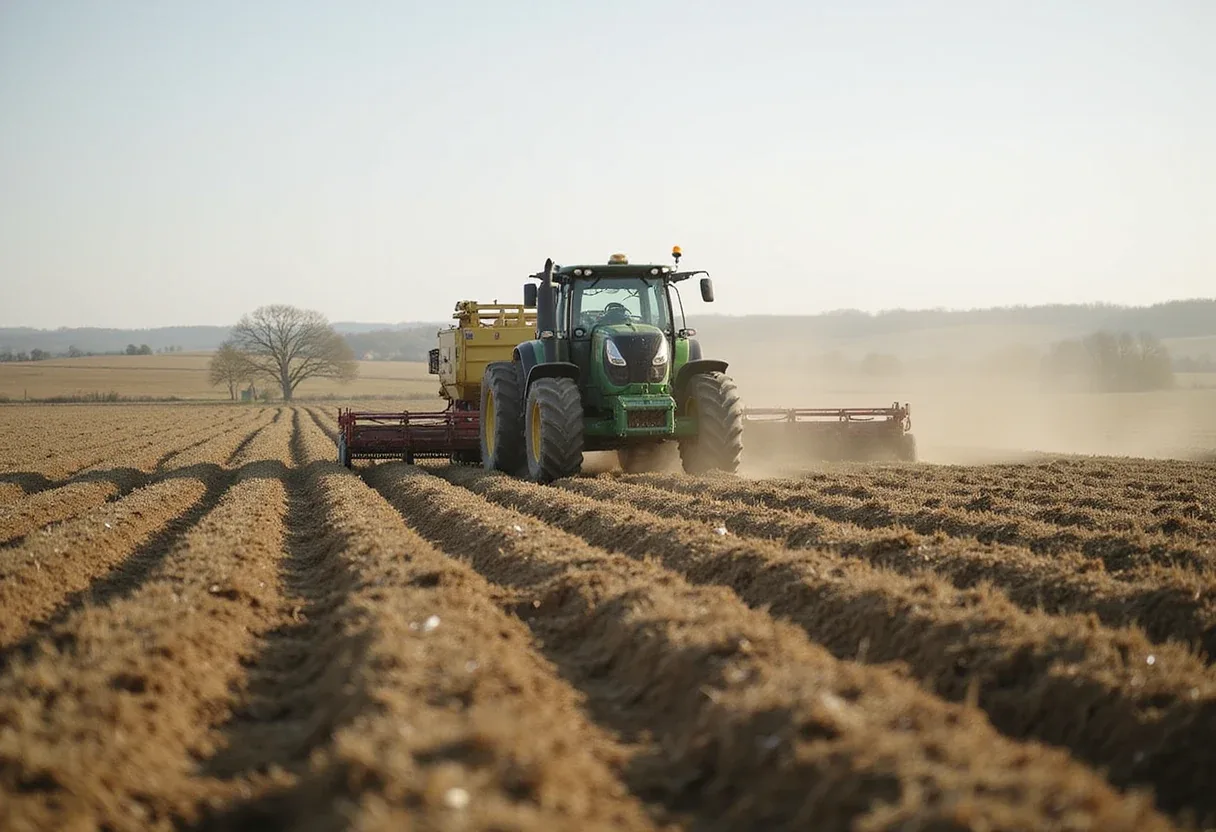
Reduced tillage delivers bigger emissions savings than mulching, according to a new study from Rothamsted Research, Britain's oldest agricultural research institute and home to long-term field experiments running since the mid-19th century.
The finding matters for farmers weighing soil management options against carbon targets. It suggests that changing how the soil is worked, rather than what is laid on top of it, is the stronger lever for cutting greenhouse gas output per hectare.
Rothamsted, based in Harpenden, Hertfordshire, has built its reputation on continuity. Its classical field trials, some running for more than 180 years, give researchers a baseline that short-term studies cannot match. The new tillage-versus-mulching comparison sits squarely in that tradition.
What does the result change?
For growers already using minimum tillage or strip-till systems, the study offers validation that the machinery investment pays an emissions dividend. For those relying on mulch, the message is more nuanced.
Mulching retains organic matter and suppresses weeds. It does not, on these results, match the emission reductions achieved by cutting the intensity of tillage passes. Farmers planning a transition should sequence their decisions accordingly. Fewer passes first. Amendments second.
The distinction is practical. A shift to reduced tillage typically involves machinery change, fuel savings and fewer cultivation hours per hectare. Each of those carries a measurable emissions effect. Mulch, by contrast, chiefly affects the carbon cycle at the surface.
Why the comparison matters now
Regenerative agriculture has pushed both practices into mainstream advice, often bundled together as a single package. The Rothamsted work separates them, and ranks them.
That separation matters for agronomy budgets. Reducing tillage cuts diesel use per hectare directly, a cost saving that compounds across seasons. Mulching adds a material input, whether crop residue, compost or imported organic matter, with its own handling and transport footprint.
Advisers and agronomists now have trial evidence to cite when clients ask which intervention delivers the fastest emissions return. The answer, per Rothamsted, is the one that changes the cultivation system itself.
What should farmers watch next?
The study adds to a growing body of Rothamsted work on carbon and cropping systems. Farmers should watch for follow-up analysis on yield effects, since any emissions gain must hold against output per hectare to stay economic.
Further results from the institute's long-term platforms are expected to extend the comparison across soil types and rotations. Growers considering a move to reduced tillage for carbon reasons should monitor how the findings translate to their own rotations and machinery lines.
By Olivia Hart, Arable Wire
via Google News: crop protection farming (Source)
More from Olivia Hart
Show full bio
News editor covering regulation, policy and their impact on production farming and field operations at Arable Wire.
153 articles
Nearby records
- CQ 23Conservation tillage cuts CO2 but mulching can raise emissionsOctober 10, 2026
- MW 77Stanford finds reduced tillage helps soils and yieldsOctober 14, 2026
- JS 88Regenerative practices cut costs and rebuild soil, Indiana farmer reportsSeptember 29, 2026
- EF 23Cover Crops, Grazing and Wood Chips Anchor Award-Winning No-Till SystemOctober 9, 2026
- WJ 78Agroforestry gains ground as UK climate resilience tool, FW reportsOctober 14, 2026