Drones and Conventional Sprayers: Precision Farming Dealer Maps the Fit
A new Precision Farming Dealer feature argues unmanned sprayers work alongside boom rigs on wet, lodged or irregular fields rather than replacing them, and frames UAVs as an add-on for 2026 spray planning.
- Entered
- Plot
- 0.9 ha
- Record
- 346 words
- Walk-through
- 2 min
DrillSprayHarvestCurrent stage
Agronomist’s notes
- Precision Farming Dealer published a feature titled "How Drones Can Complement Conventional Sprayers"
- Headline framing: UAVs positioned as an add-on to existing spray programmes, not a replacement for ground rigs
- Conventional boom sprayers keep advantages in work rate, tank volume and tank-mix flexibility
- Drones add access to wet, lodged or irregular fields, late-season canopy penetration and operator safety
- Watch items for 2026 planning: regulatory rules, payload limits and per-hectare UAV costs
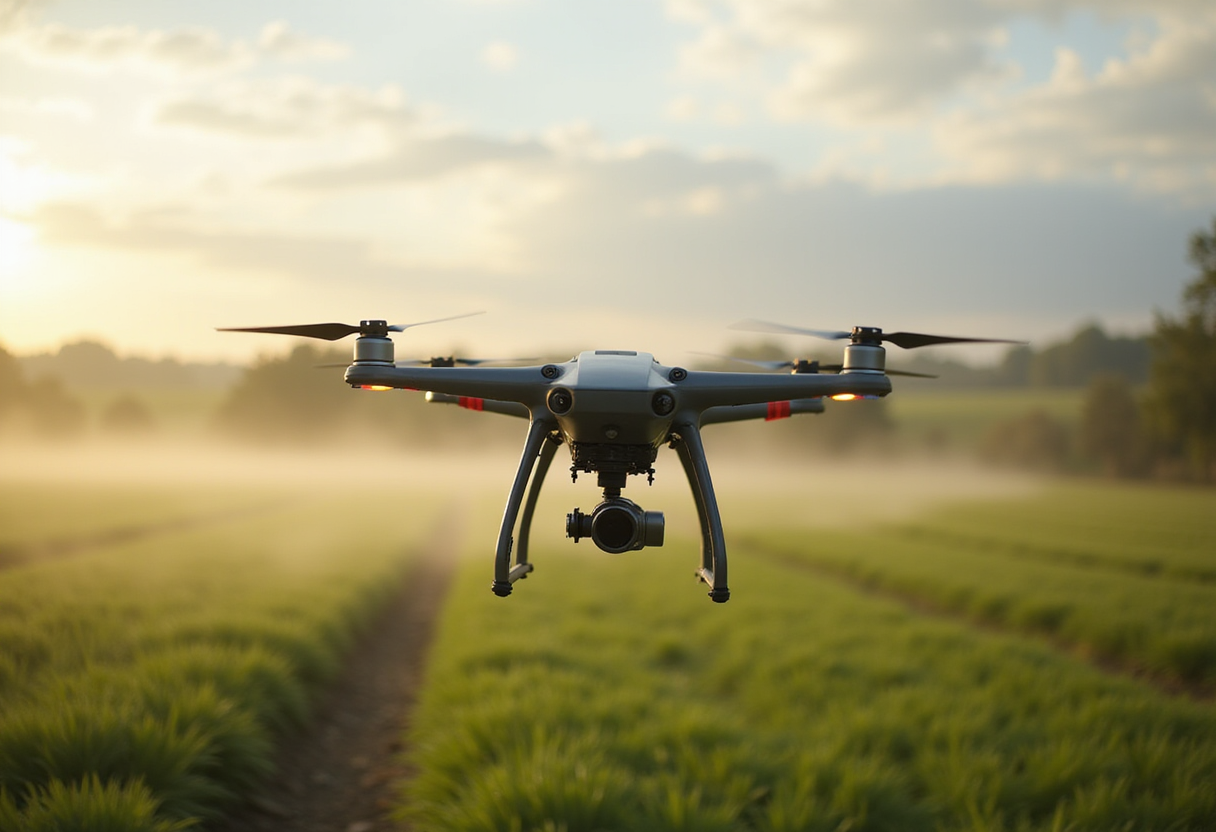
Agricultural drones continue to move from curiosity to working tool on North American row-crop farms, and a new Precision Farming Dealer feature lays out how unmanned sprayers can sit alongside — rather than replace — conventional ground rigs.
The article, headlined "How Drones Can Complement Conventional Sprayers," positions UAVs as an add-on to existing spray programmes. That framing matters because equipment decisions on most arable operations still revolve around a primary self-propelled or tractor-mounted boom sprayer, with everything else built around its work rate, tank volume and carrier capacity.
Where conventional sprayers still lead
Conventional boom sprayers remain the backbone of broad-acre application. They cover hectares per hour at speeds most drones cannot approach, carry tank volumes that keep the machine running rather than returning to a fill point, and handle complex tank mixes with high carrier volumes in a single pass. For blanket fungicide, herbicide and foliar fertiliser work across hundreds of hectares, ground equipment carries the load.
What drones add to the system
Drone sprayers bring three attributes a ground rig cannot easily offer. They take off from a headland or farm track and reach fields that are too wet, too steep or too lodged for a heavy sprayer to cross without rutting or crop damage. They fly low to the canopy with rotor downwash, a setup that improves spray penetration in dense late-season crops where a high boom risks lost deposition. And they keep the operator out of the spray mist, an emerging health-and-safety plus.
In this reading, drones fill the awkward passes — headland misses, wet corners, lodged patches, small or irregularly shaped fields — that the main sprayer either skips or handles inefficiently.
What growers should watch next
Growers planning 2026 spray programmes should track the regulatory, payload and per-hectare cost data that any deep coverage of UAV spraying will surface. Those are the numbers that decide whether a drone becomes a contracted service or an owned platform on any given farm, and application rules continue to shift as regulators and manufacturers work through the technology.
via Google News: spraying season farm (Source)
More from Olivia Hart
Show full bio
News editor covering marketplaces and e-commerce at Arable Wire.
116 articles
Nearby records
- BV 45Spray Drones Gain Ground in Crop ProtectionSeptember 29, 2026
- BC 86What Canada's farmers need to know now about drone sprayingSeptember 29, 2026
- UU 63John Deere Bets on AI to Drive 'Decision Agriculture' ShiftOctober 1, 2026
- FP 52Precision Spraying Cuts Herbicide Costs by $20 per AcreSeptember 29, 2026
- ST 22FAA slaps record $290,000 fine on illegal agricultural drone sprayingOctober 9, 2026