Spray Drones Gain Ground in Crop Protection
Spray drones are moving from novelty to a routine crop protection tool, changing the math on capacity, labour and field access for growers.
- Entered
- Plot
- 0.9 ha
- Record
- 359 words
- Walk-through
- 2 min
DrillSprayHarvestCurrent stage
Agronomist’s notes
- Spray drones are gaining ground as a working crop protection tool, not just a demonstration technology
- Drones offer advantages in wet or hard-to-access fields by eliminating wheeling damage and tramline limits
- Battery, tank capacity and regulatory requirements still constrain how far UAV spraying can scale
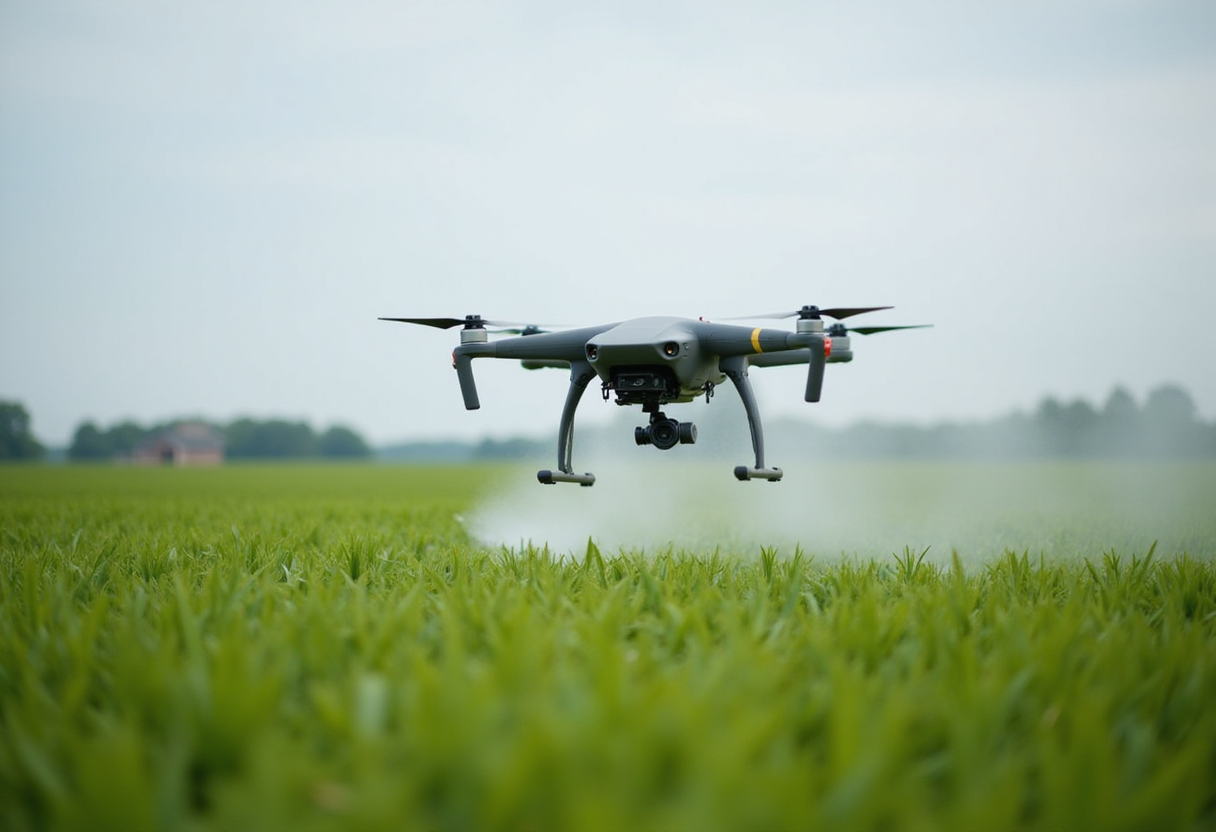
Spray drones are gaining ground in crop protection, according to Brownfield Ag News, as more growers put unmanned aerial application to work alongside — and in some cases instead of — conventional self-propelled and trailed sprayers.
The report signals a shift that matters for machinery planning. Where drones were once confined to spot-spraying and small-plot demonstration work, operators are now treating them as a routine part of the crop protection kit. That changes the calculus on spray capacity, labour and timeliness, particularly on fields where ground rigs struggle with trafficability, tramline access or crop damage.
For farmers weighing an investment, the practical case rests on a few fundamentals. Drones apply low volumes per pass, which suits targeted treatments and rapid response windows better than wholesale fungicide programmes. They remove wheeling damage entirely — a real cost saving in high-value crops and in wet seasons when a loaded sprayer can compact headlands and tramlines. And they can treat fields that a tractor-drawn machine cannot reach without damaging the crop or the soil.
The trade-offs remain real. Battery and tank capacities limit the area a single drone can cover in a day, so fleet size, charging infrastructure and refill logistics determine whether a UAV programme scales beyond hobby-scale. Regulatory requirements around pilot certification, airspace rules and pesticide label restrictions still shape what, where and how operators can legally spray. Any grower considering the route should price those compliance costs into the business case, not just the hardware.
The significance for the wider market is directional rather than numerical. Drone spraying is no longer a trade-show curiosity in the crop protection conversation; it is showing up in mainstream coverage of how growers actually protect crops. Suppliers of application equipment, adjuvants formulated for low-volume aerial application, and drone service providers all stand to gain if the trend continues along its current path.
What farmers should watch next: whether regulators move to streamline approval for aerial pesticide application, whether drone makers publish field-scale coverage and efficacy data comparable with ground rigs, and whether custom-application services expand into regions where individual ownership does not yet pencil out.
via Google News: crop protection farming (Source)
More from Tom Whitfield
Show full bio
Staff writer covering marketplaces and e-commerce at Arable Wire.
38 articles
Nearby records
- BC 86What Canada's farmers need to know now about drone sprayingSeptember 29, 2026
- BY 18Saving Time and Maximizing Resources on Spray ApplicationsOctober 3, 2026
- FP 52Precision Spraying Cuts Herbicide Costs by $20 per AcreSeptember 29, 2026
- UU 63John Deere Bets on AI to Drive 'Decision Agriculture' ShiftOctober 1, 2026
- AU 80John Deere See & Spray Covers Five Million Acres in 2025October 3, 2026