Farm fires cost £118m as machinery losses climb
Farm fires have left the sector with a £118m bill as machinery losses mount, prompting farmers to reassess insurance cover and ignition risks.
- Entered
- Plot
- 1.4 ha
- Record
- 572 words
- Walk-through
- 3 min
DrillSprayHarvestCurrent stage
Agronomist’s notes
- Farm fires left a £118m bill across the sector.
- Machinery losses account for a mounting share of fire claims.
- Modern machinery values mean higher losses per fire incident.
- Harvest is the peak period for farm fire risk.
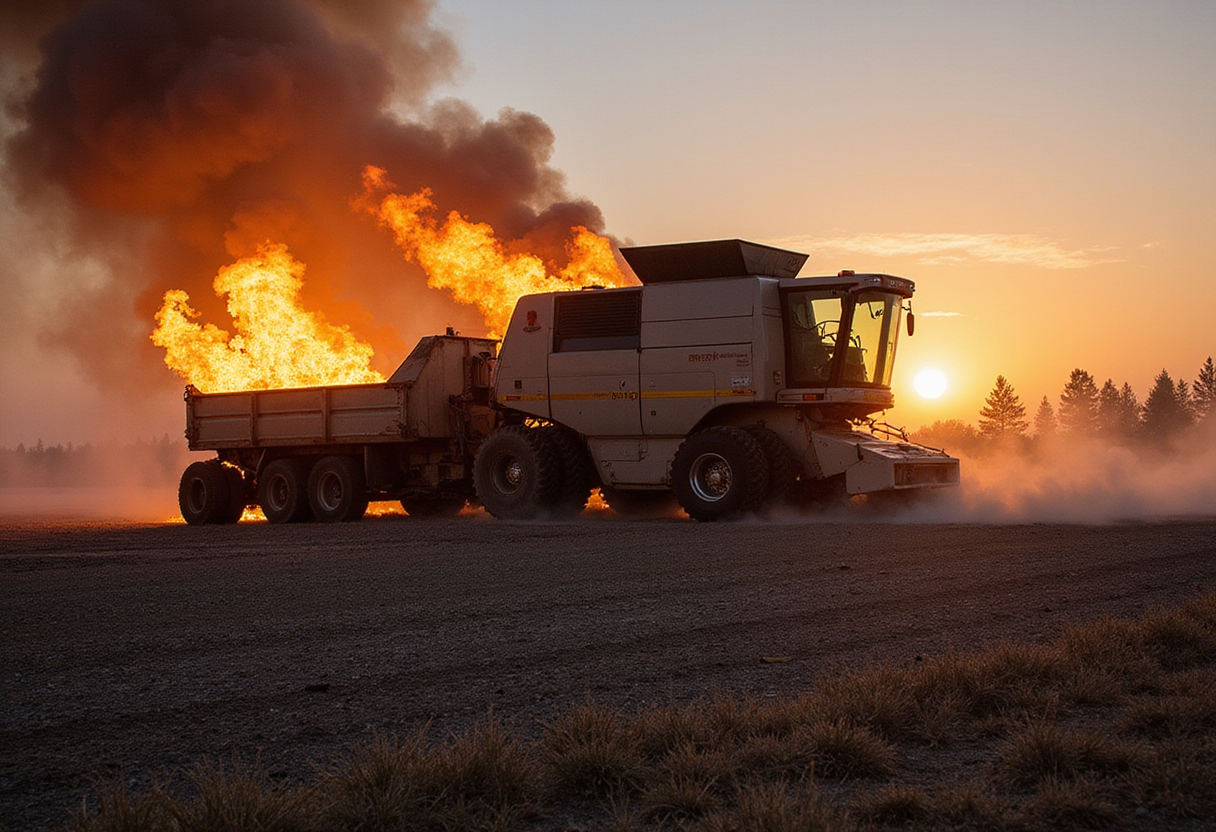
Farm fires left Britain's farming sector with a £118m bill, according to figures reported by FarmingUK, with machinery losses accounting for a growing share of the damage.
The number matters because it reflects where risk now sits on modern farms. Combines, tractors, balers and grain-handling kit carry higher replacement values than ever before, and when fire reaches a machinery shed or a stack of bales, the loss per incident rises accordingly. For a farm business, that shifts the question from whether cover exists to whether the sum insured still matches what is actually parked in the shed.
Why machinery drives the bill
Fire on a farm rarely stays small. A single spark in a baler, an electrical fault in a workshop or a hot bearing in a combine during harvest can move from equipment to stored crops, fertiliser, fuel and buildings within minutes. Machinery is often the ignition point and almost always the most expensive item to replace.
The financial mechanism is straightforward. Modern farm equipment costs more per unit than machinery did a decade ago, and farms run more of it. A fire that would once have destroyed a £60,000 tractor may now destroy a high-horsepower machine worth several times that figure. Insurers price that risk, and claims data showing machinery losses mounting points to a sector where the exposure per farm has grown faster than the number of fires.
Harvest is the peak period. Dry crops, hot engines, dusty conditions and bailer twine or chaff build-up around hot components combine to create the highest-risk weeks of the farming year. Electrical faults in ageing farm buildings remain a year-round cause.
What should farmers do with this number?
A £118m sector-wide bill translates into practical pressure at farm level in three areas.
- Review sums insured. Machinery values have risen; a policy written two or three years ago may under-insure a modern fleet. Insurers treat under-insurance harshly, reducing payouts proportionally.
- Check what the policy covers. Some policies distinguish between fire in buildings, fire to machinery in the open and fire to stored crops. Farmers should confirm which categories apply to their setup.
- Reduce ignition risk. Regular blowing-down of combines and balers during harvest, checks on electrical installations in older sheds, and safe separation of fuel, fertiliser and bale stacks all cut both frequency and severity.
Fire prevention is not glamorous, but it is cheap relative to the outcome. Twenty minutes of cleaning chaff from a combine each evening in July costs nothing against a six-figure machinery claim.
Who carries the cost?
The £118m figure aggregates claims across the sector. Insurers recover what they can, but the wider costs sit with farmers themselves: lost crops that no payout fully replaces, downtime during harvest windows that cannot be re-run, and higher premiums at renewal for farms with a fire history.
There is also a safety dimension. Farm fires put operators, firefighters and livestock at risk, and emergency response in rural areas takes longer than in urban ones. Prevention measures that protect machinery also protect people.
What to watch next
Farmers should expect insurers to keep pressing on risk management as claims costs climb, and renewal terms may increasingly reflect housekeeping standards as well as sums insured. The practical watch-points ahead are the coming harvest season, when fire risk peaks, and any updated claims data showing whether machinery losses continue to rise.
via Google News: agricultural machinery (Source)
More from James Calloway
Show full bio
Correspondent covering regulation, policy and their impact on production farming and field operations at Arable Wire.
126 articles
Nearby records
- CD 73Farm fire losses hit £118m as dry weather sharpens riskOctober 12, 2026
- EA 11Farm fire costs hit £118m as record temperatures biteOctober 12, 2026
- PH 79Northern Ireland farm fire costs jump 73% to £11.8m in 2025October 12, 2026
- UE 51Firefighters extinguish farm equipment fire in Greene County fieldOctober 3, 2026
- YX 86Machinery Costs Are Now a Balance-Sheet DecisionOctober 10, 2026