Georgia blueberry harvest opens after warm winter disrupts chill hours
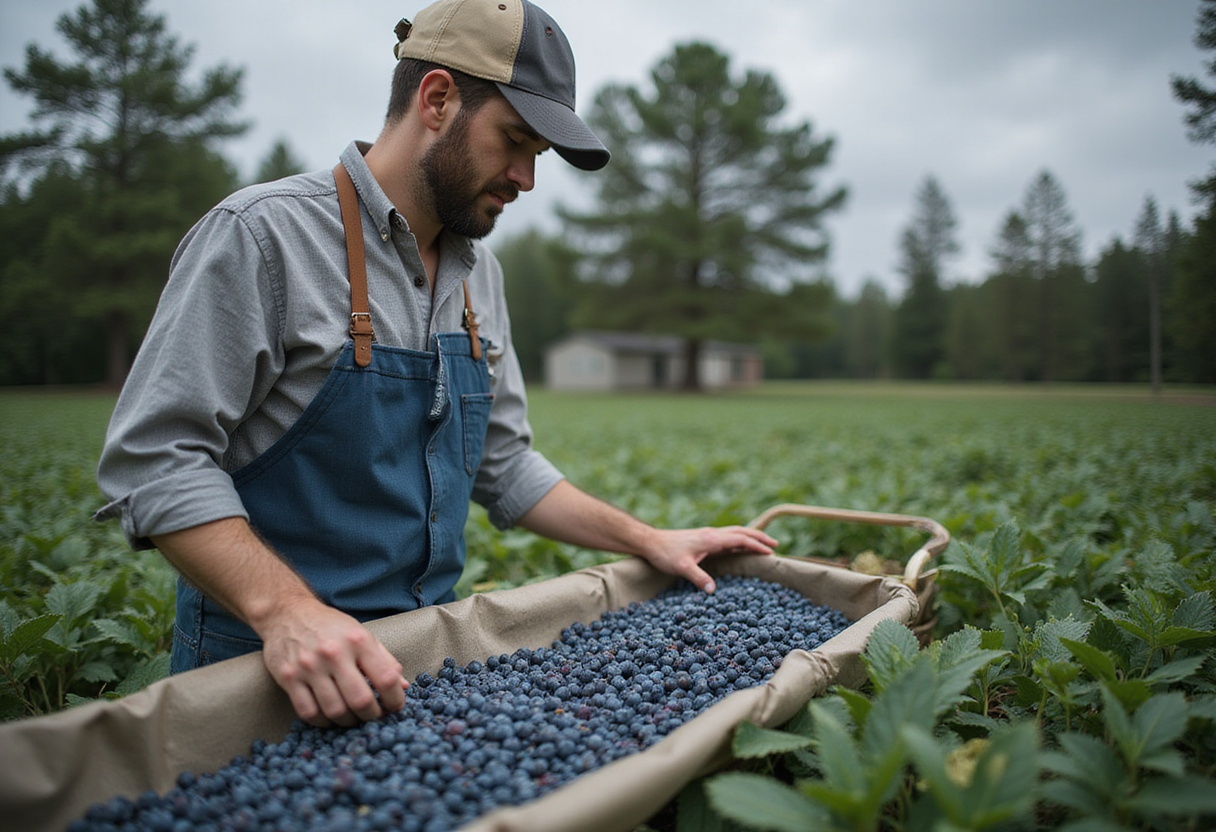
Warm winter weather has left Georgia's blueberry crop ripening unevenly, compressing the harvest into a shorter, more intense picking window for growers.
- Entered
- Plot
- 0.7 ha
- Record
- 266 words
- Walk-through
- 1 min
DrillSprayHarvestCurrent stage
Agronomist’s notes
- Warm winter temperatures reduced chill hours, disrupting dormancy in some southern highbush blueberry varieties
- Harvest timing varies sharply between blocks, compressing the season into a shorter, more intense picking window
- Georgia ranks among the top blueberry-producing states in the US
Georgia's blueberry growers have started picking a crop that warm winter weather left uneven across orchards, with harvest timing varying block by block and varieties ripening out of their usual sequence.
Mild temperatures through winter reduced accumulated chill hours in parts of the state, disrupting dormancy for some southern highbush varieties. Growers now see bloom and fruit development that varies sharply between fields, even within the same farm.
"We have some varieties that are ready to pick now, and others that are weeks behind," one grower told WABE. That spread compresses the season into a shorter, more intense picking window and complicates labour planning for farms that rely on hand crews.
The stakes are high for the state. Georgia ranks among the top blueberry-producing states in the US, and the crop is one of its most valuable fruit enterprises. A compressed harvest means growers must move fruit fast to protect quality and capture prices during the early market window before other regions enter production.
Frost risk added further pressure. Warm spells that pushed plants into early bloom also exposed them to cold snaps, and some growers spent nights running irrigation or other frost-protection measures to shield open blossoms.
Weather volatility has become a recurring theme for Georgia blueberries. Recent seasons have alternated between late freezes, heavy rain and heat, leaving growers adjusting varieties, site selection and protection practices to manage the risk.
For now, attention turns to the weeks ahead. Growers will watch spring conditions closely, coordinate picking crews across staggered ripening blocks, and work to move fruit to market while quality holds.
via Google News: farming weather (Source)
More from Priya Raman
Nearby records
- KW 36Extreme heat forces specialty crop farmers to rethink harvest timingOctober 3, 2026
- UX 41April heat-then-freeze whiplash hits Northeast fruit and flower farmsSeptember 29, 2026
- EW 20Freeze Warnings to 90°F Plains Heat: US Crops Caught in Weather SqueezeSeptember 30, 2026
- XK 19El Niño Strengthens, Australian Farmers Brace for Fierce FrostsSeptember 29, 2026
- WY 90Dry Weather Threatens North Carolina's Sweetpotato HarvestSeptember 30, 2026