A late-January freeze wiped his crop. Jason Watts replanted anyway.
Former NFL center Jason Watts replanted his freeze-wiped 450-acre Florida blueberry farm on handshake deals alone. The first verdict on the gamble arrives with the 2027 harvest.
- Entered
- Plot
- 2.6 ha
- Record
- 1,044 words
- Walk-through
- 5 min
DrillSprayHarvestCurrent stage
Agronomist’s notes
- A late-January 2026 freeze destroyed Jason Watts' entire blueberry and muscadine crop; he replanted by October with new varieties.
- Florida Best Farms packs about 3 million pounds of blueberries and 750,000 pounds of muscadines per season, largely with local labor.
- Watts runs roughly 450 acres of blueberries, a few hundred head of cattle and 800 bee hives, and was named Sunbelt Ag Expo's Florida Farmer of the Year in 2024.
- He markets through at least five companies per season, refusing multiyear contracts in favor of handshake deals.
- He left the NFL in 2002, forgoing a $175,000 Super Bowl roster bonus, and built the farm from 10 acres.
A late-January freeze in 2026 stole Jason Watts' entire blueberry and muscadine crop. By October, he had replanted the acres and added new varieties, doubling down on an educated gamble he won't fully price until the 2028 harvest.
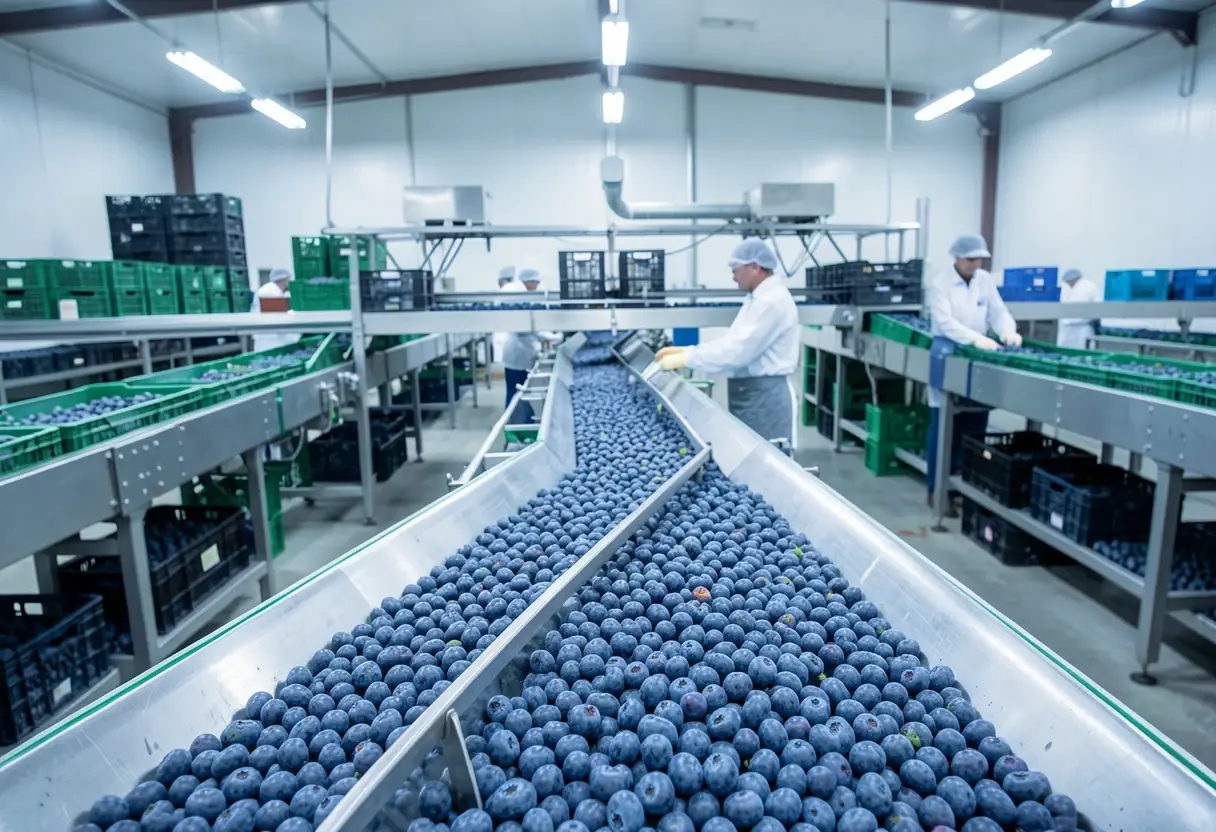
Watts runs roughly 450 acres of blueberries in his hometown of Oviedo, Florida, through Florida Best Farms, alongside a few hundred head of cattle, a growing muscadine grape operation, an exotic pesticide business and about 800 bee hives for pollination. The packing house that sits at the center of it all normally packs about 3 million pounds of blueberries and 750,000 pounds of muscadines a season, largely with local labor.
This year the conveyor belt stayed quiet. The freeze didn't just hit Watts — it decimated blueberry and muscadine crops across his community, so the packing house never opened. A blow for him, and a blow for the neighbors and workers who depend on it.
What does the handshake model change?
Plenty, in Watts' view. Since launching the blueberry side in 2009, Florida Best Farms has weathered the COVID-19 pandemic, competition from Mexico, labor shortages and the annual threat of freezing weather during the blueberry and muscadine seasons. What sets the business apart isn't acreage or diversification. It's the insistence on old-school dealing.
"That's the way I want it," Watts said of a business built almost entirely on handshake deals. "I don't get paperwork, which I probably should do that, but ..." His voice trails off. He shrugs off the risk. Trust, he insists, works better than contracts ever could.
That philosophy extends to the growers he serves. Other farmers hand over their harvest to his packing house without a signed agreement, and Watts markets their fruit alongside his own.
"They essentially are putting their trust in me, Jason, in Florida Best Farms, to do what's best for their fruit," he explained.
To honor that trust, he spreads sales across at least five marketing companies each season, picking buyers based on who he "wholeheartedly believes is getting them the best price." No single basket, no matter how sturdy it looks. That independence puts him at odds with marketers who, in his words, "always want to tie you up" in multiyear contracts.
Three reasons Watts won't sign
His objections are concrete:
- Volume commitments sit beyond a grower's control — the 2026 freeze proved that emphatically.
- Contract prices reflect preseason expectations, which too often favor the buyer rather than the farmer.
- Escaping a bad contract means an expensive trip through the courts.
Instead, he strikes informal arrangements at the start of each season. "We got a handshake agreement at the beginning of the year," he said of his buyers. "I'm going to give you X amount. ... If the season lasts as long as it normally does, I'll get you half a million pounds. If it's shorter, then obviously, I'll do the best I can."
Large corporate buyers remain the exception. "They're so corporate. It's like, no ifs, ands or buts," Watts said, laughing at how his biggest contract reads. "They made it so generic because they had to have something officially on paper, and I didn't want it."
Paperwork, he believes, is a formality rather than the foundation of a relationship. He sees agriculture as the last bastion of business built on integrity. "Agriculture is the last thing out there where your word matters," he said.
Crop economics, plainly
The no-contract stance shapes how he reads markets. Blueberry prices swing fast. Muscadine prices hold steady — around $18 to $20 — because supply is limited. Cattle follow predictable seasonal patterns that let him time sales strategically. "If you don't have to sell, you can wait a month," he said.
The 'luckiest unlucky guy'
Timing hasn't always been his strong suit. Watts calls himself the "luckiest unlucky guy in the world," and the biography backs the claim. A standout center at the University of Kentucky, he was one of the best in the country when a deadly traffic accident — he was driving to go hunting, and his two passengers, both friends, died — sidelined his career. The scar on his right forearm comes from that crash, along with wounds you can't see.
He still reached the NFL, playing for the Denver Broncos and the Oakland Raiders plus a stint in Europe, enduring 13 surgeries along the way. In 2002 he left football to farm — walking away from his contract just before an Oakland Raiders Super Bowl trip that would have paid a $175,000 roster bonus, with the starting center injured and the field, hypothetically, his.
"Hypothetically speaking, if I wasn't stupid, I would have been back out there before the season ended and would have been training, and assuming I was playing like I had the abilities to play, I would have been playing in the freaking Super Bowl," Watts recalled. The team representative tried to talk him out of leaving. He concedes he should have listened.
Ask about the Super Bowl, though, and he pivots fast — to coaching his son's team, his younger daughter's success in sports, his older daughter's path to becoming a certified pilot and flight instructor, and his other son's cattle business. He doesn't mention being named Sunbelt Ag Expo's Florida Farmer of the Year in 2024. He does mention the early spray-business years when his family nearly pawned his wife's wedding ring to pay home utility bills. Hard times make a fellow grateful.
"I had everything going for me if I just wouldn't have went hunting that morning. I mean, literally, I would be a millionaire to this day right now," Watts said, his voice even, regret present but contained. Then it falters: "But in the same sense, like I told my wife and kids, I wouldn't — I wouldn't be doing this. I've truly been blessed and worked and built this up from literally 10 acres."
What to watch next: the 2027 harvest gives the first read on whether the freeze-driven replant into new varieties pays, with the full picture arriving in 2028 — handshake, as always, in place of a guarantee.
via Farm Progress (Source)
More from Priya Raman
Show full bio
Senior reporter covering technology and product news in production farming and field operations at Arable Wire.
189 articles
Nearby records
- ZK 68Georgia blueberry harvest opens after warm winter disrupts chill hoursOctober 3, 2026
- KW 36Extreme heat forces specialty crop farmers to rethink harvest timingOctober 3, 2026
- EW 20Freeze Warnings to 90°F Plains Heat: US Crops Caught in Weather SqueezeSeptember 30, 2026
- UX 41April heat-then-freeze whiplash hits Northeast fruit and flower farmsSeptember 29, 2026
- RQ 97Fall Creek trials new blueberry genetics across Southern AfricaSeptember 30, 2026