Irish-built Tornado disc cultivator passes the field test
Tested on a Kildare tillage farm, Denis Doyle's Tornado cultivator ran 560mm discs deeper than usual with free material flow and clean seedbeds, across 4m to 5m models.
- Entered
- Plot
- 1.7 ha
- Record
- 671 words
- Walk-through
- 3 min
DrillSprayHarvestPlanning window
Agronomist’s notes
- Three Tornado models span 4m–5m widths, weighing 4,700kg to 5,900kg and requiring 140hp to 200hp minimum.
- All models work at 35–120mm depth with 560mm discs and hydraulic depth control on the move.
- The Vario Seeder sows from 1kg/ha (mustard, turnip) to 80kg/ha (grass seed), plus slug pellets and microgranules.
- Rambo pile drivers range from a 5-tonne-excavator attachment to the self-propelled, remote-controlled Rambo 500.
- A combined disc-and-leg cultivator is in early development alongside the Tornado.
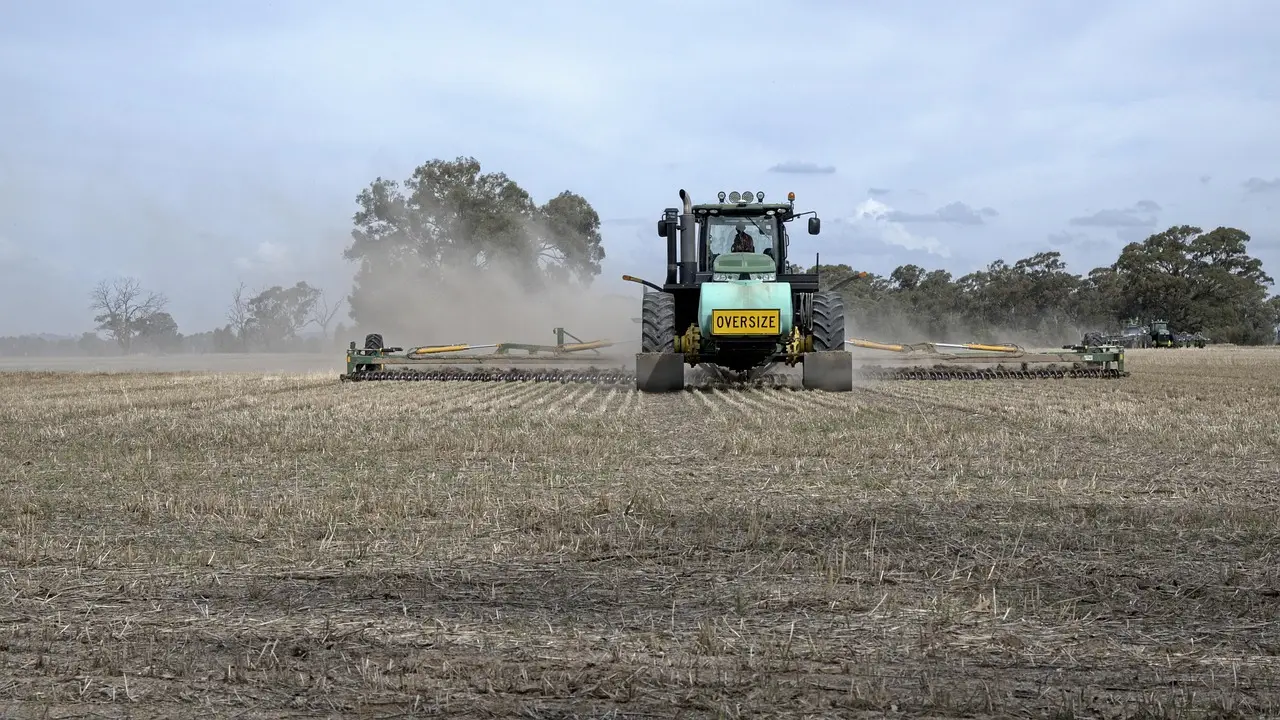
The Tornado disc cultivator, built by Denis Doyle Limited of Kildare since the company's founding in 1994, worked freely at depths growers would not normally attempt when tested on a local tillage farm this autumn. Moist but not sticky soil kept the 560mm discs and rear roller clean, and material moved through the machine without blockage even when the operators went deeper than usual with power to spare.
The result that matters is the finish in the field, and on that measure the Tornado made a strong impression — though the favourable conditions deserve a caveat. Other farmers running the machine this autumn reported easy field setup, a compact transport width, a good cut at their chosen depth and a seedbed that suited the job, whether that meant encouraging weeds to germinate or establishing a crop.
What is in the range?
Three models cover working widths from four to five metres:
- D456 — 4m, 4,700kg with paddles, minimum 140hp
- D556 — 4.5m, 5,300kg with paddles, minimum 170hp
- D656 — 5m, 5,900kg with paddles, minimum 200hp
Weight and power rise with width, but the core numbers hold across the range. All three cultivate at depths of 35–120mm, measure 6.1 metres long and run 560mm diameter discs.
How is the machine built?
The working parts are specified for hard use. Cast-steel disc arms carry heavy-duty 560 × 5mm discs on SKF hubs with triple seals, with four 40mm rubber isolators damping shock loads. Hydraulic depth control allows the operator to adjust working depth on the move, with an indicator showing the setting. Hydraulic wing latches lock the machine for transport, removing the manual locking job.
At the rear, a Hardox DD roller (Hardox is a wear-resistant steel brand) consolidates the seedbed, with Hardox quick-release scraper arms and 50mm steel housing flange bearings rated for high-impact loading. The roller design caught particular attention: scalloped Hardox rings are welded between the conventional "dinner plate" rings to improve consolidation and greatly reduce the risk of weld failure at the plate joints — a known weak point on this style of roller.
The semi-mounted layout (the implement carries part of its own weight on its wheels rather than fully trailing the tractor) helps with tighter headland turns, and levelling boards are available as an option.
Who builds it?
Denis Doyle Limited spans two very different markets. On the solar side, the Rambo pile-driver line puts steel posts in the ground for panel supports: the Rambo 100 is an entry-level attachment for excavators of at least five tonnes, with an in-cab screen showing pile alignment on the X and Y axes. The Rambo 300 mounts on a tracked skid-steer loader with the same two-axis adjustment, while the self-propelled Rambo 500 serves medium to large solar contractors with automatic post alignment and remote control as standard and GPS guidance optional. The manufacturer says the 500 was built specifically for solar work rather than adapted from a highway barrier driver, and that the system allows fully automated operation.
The farm side is equally varied. The Vario Seeder handles sowing from 1kg per hectare of mustard or turnip up to 80kg per hectare of grass seed, with slug-pellet and microgranular fertiliser application as options — the spread between those two rates shows the range of jobs it covers.
Denis Doyle remains a tillage farmer on his own Kildare farm, and that connection between workshop and field shapes the machinery. Alongside the Tornado he is developing a combined disc-and-leg cultivator, still at an early stage and unnamed.
What should growers watch next?
The Tornado's strongest selling point in this test was the job it left behind: free material flow, a finished seedbed and straightforward setup and transport. Buyers choosing a cultivator should note the unnamed disc-and-leg machine as the next development to watch from the Kildare workshop, alongside wider feedback from the Tornado's first seasons in less forgiving conditions than this autumn's.
via Google News: agricultural machinery (Source)
More from James Calloway
Show full bio
Correspondent covering regulation, policy and their impact on production farming and field operations at Arable Wire.
179 articles
Nearby records
- TX 68Minnesota Soil Health Bus Tour Draws 40-Plus Farmers to Strip-Till ConferenceOctober 10, 2026
- NP 72Wet-Field Traffic Could Trigger 10% to 20% Yield Losses in IowaNovember 4, 2026
- TW 11Weeds at 12 Inches Cost Corn Growers 22% of YieldOctober 10, 2026
- RM 55Kilkenny tillage farmer gains 40% output with 45m Amazone PanteraOctober 8, 2026
- HJ 76Horsch develops new 18-metre Joker and Serto machinesOctober 12, 2026