Irish grain output set to drop below 2Mt as yields slide 14%
An IFA survey of its national grain committee members puts Irish grain output at 1.92Mt for 2026, a 14% fall on 2025, as drought and delayed fertiliser bite into yields.
- Entered
- Plot
- 1.5 ha
- Record
- 615 words
- Walk-through
- 3 min
DrillSprayHarvestCurrent stage
Agronomist’s notes
- Irish grain output projected at 1.92Mt for 2026, down 14% on 2025
- IFA survey of national grain committee members conducted on August 13
- Winter wheat yields fell from 4.3t/ac in 2025 to 3.85t/ac in 2026
- Winter oilseed rape was the strongest crop at 2t/ac
- Spring barley averaged 2.63t/ac across two planting tranches, mid-March and four weeks later
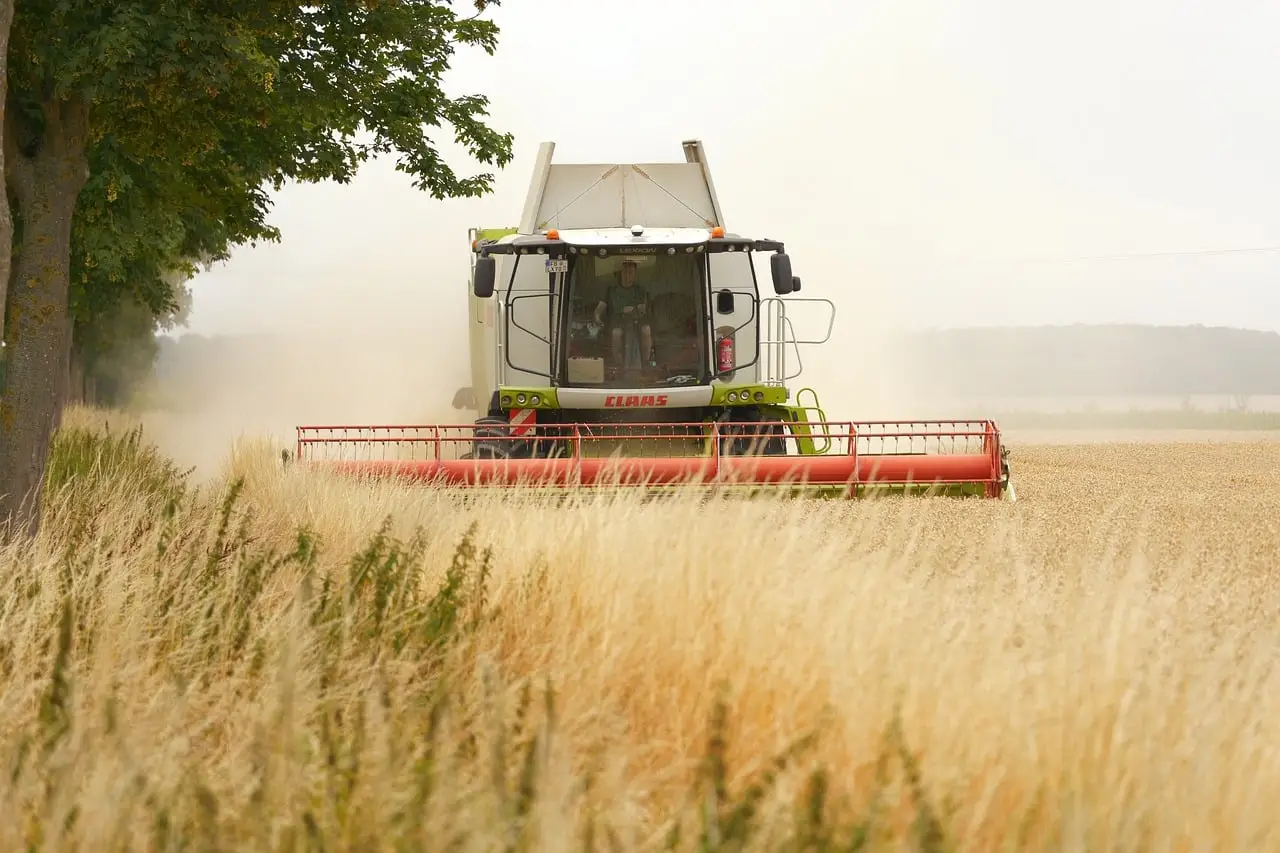
Irish grain output will fall to 1.92 million tonnes in 2026, a drop of 14% on the 2025 figure, according to a survey of Irish Farmers' Association (IFA) national grain committee members carried out on August 13.
The projection, which brings total harvest below the 2Mt mark, aligns with output forecasts compiled by Teagasc. IFA national grain committee secretary Max Potterton said the survey figures track the state agency's numbers closely, giving growers a reliable picture of the year ahead.
The squeeze comes from two directions at once: yields roughly half a tonne per acre below last year's levels, and production costs that continue to climb against already-tight margins.
What did the yield survey find?
Potterton set out the headline figures from the August 13 survey. He said: "The yield estimated was as follows – winter barley: 3.45t/ac, winter wheat: 3.85t, winter oats: 3.5t."
Winter oilseed rape stood apart from the rest. "Winter oilseed rape was the star of the show at 2t/ac," Potterton said. "Spring barley yields were extremely variable with the average coming in at 2.63t."
The sharpest year-on-year decline sits in winter wheat. The 2025 crop yielded 4.3t/ac; this year's figure of 3.85t/ac represents a shortfall of just under half a tonne per acre on the country's dominant feed crop. Potterton described the contrast between the two years as most graphically illustrated by that single comparison.
Why did yields fall?
Weather drove most of the damage. January was very wet, which delayed fertiliser applications across tillage holdings. That early setback constrained crop potential before the season had properly begun.
Disease pressure through early spring was quite low, so fungicide performance was not the limiting factor. The second blow arrived from mid-June, when drought conditions spread across the country and persisted through July and August.
Spring barley tells the story of that split season most clearly. Growers planted the 2026 crop in two tranches, the first in mid-March and the second roughly four weeks later. The earlier sown crops withstood the dry spell far better. Later plantings, with shallower roots and less established canopy, took the full force of the summer rain deficit.
That variability produced the wide spread behind the 2.63t/ac spring barley average, with individual results falling well above and below the mean depending on sowing date.
What does this mean for malting barley growers?
Malting barley growers face a quality problem stacked on top of a price problem. The very dry conditions in the run-up to harvest hit the 2026 malting crop on two specification measures: protein content and screenings.
These quality issues compound an already difficult market. Growers are grappling with poor prices currently available for malting barley, and grain that fails to meet malting specification falls back onto the feed market at a further discount. For farmers who planted later spring barley, the combination of variable yield and missed specification hits margin twice.
Is there any bright spot?
Winter oilseed rape continues to perform. At 2t/ac it delivered the most consistent result of the harvest, and Potterton noted its reliability. "It seems to be a very consistent crop," he said.
That track record under Irish conditions will not be lost on growers planning their 2027 cropping. A crop that holds yield through a wet January and a dry summer offers a hedge that wheat and spring barley could not provide this year.
Growers should watch for Teagasc's confirmed output figures as the harvest data is finalised, and for malting barley price movements as merchants and maltsters respond to the smaller, more variable 2026 crop.
via cdn.agriland.ie (Original)
More from Tom Whitfield
Show full bio
Staff writer covering regulation, policy and their impact on production farming and field operations at Arable Wire.
168 articles
Nearby records
- GT 42Poor Yields, Not Prices, Drive Tight Tillage Margins: TeagascSeptember 30, 2026
- AR 42Forage maize yields top 20t/ac as Ireland's 2026 harvest wraps upOctober 16, 2026
- YL 32US corn harvest tops 17.6 t/ha as weather disrupts seasonOctober 11, 2026
- AE 55UK wheat yields fall 11% below average as drought hits 2026 harvestOctober 2, 2026
- LE 12UK wheat harvest 2026 closes 11% below five-year averageOctober 10, 2026