Kent pumpkin farms scrap pick-your-own after dry spring cuts crop to a tenth
Broadditch Farm expects just 1,500 pumpkins against a usual 25,000-30,000 after a dry May wrecked germination, forcing two Kent farms to cancel pick-your-own events.
- Entered
- Plot
- 1.6 ha
- Record
- 652 words
- Walk-through
- 3 min
DrillSprayHarvestCurrent stage
Agronomist’s notes
- Broadditch Farm in Southfleet expects around 1,500 pumpkins this year versus a normal 25,000-30,000 — a tenth of its usual harvest.
- Both Broadditch Farm and The Wonky Parsnip at Brogdale Farm, Faversham, have cancelled pick-your-own pumpkin events after dry May weather hit germination.
- The Wonky Parsnip is considering drought-resistant varieties or earlier planting next season; Broadditch will still run its Little Frights Trail and carving workshops.
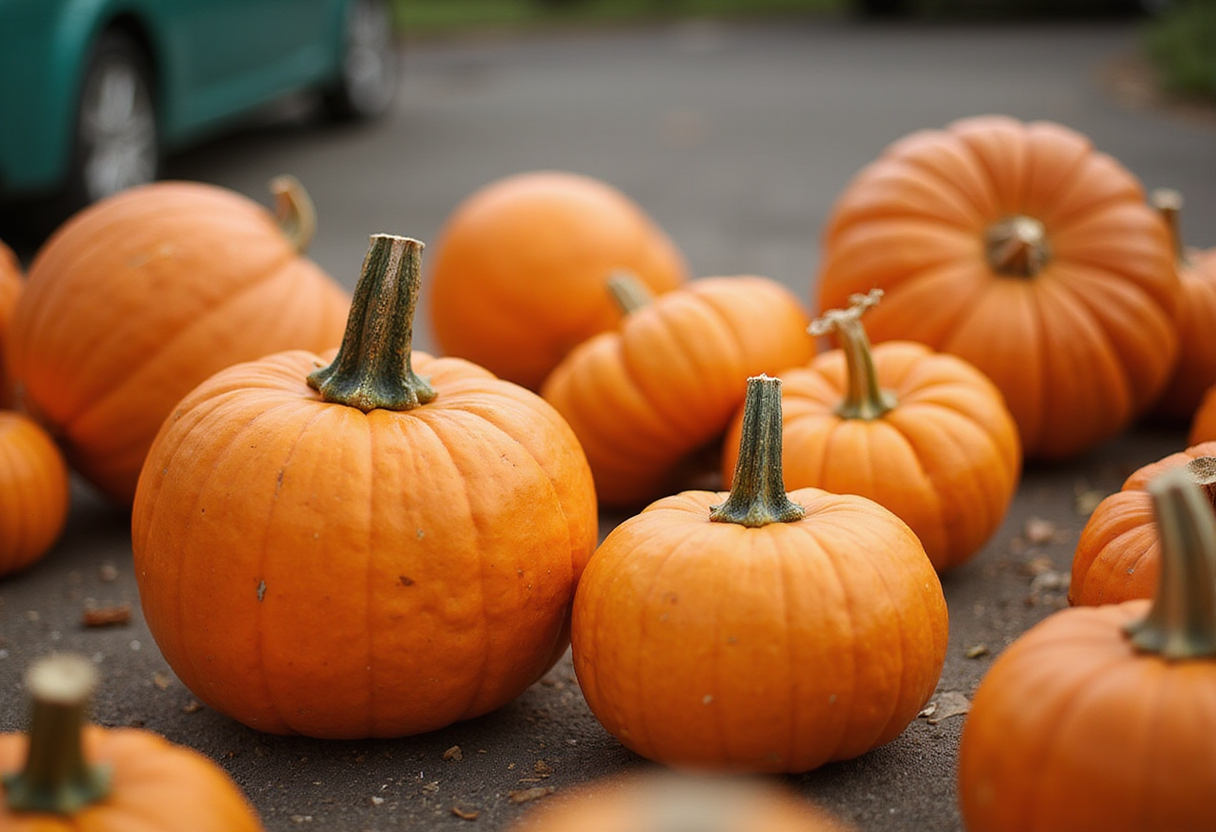
Broadditch Farm in Southfleet, Kent, expects to harvest around 1,500 pumpkins this autumn — a fraction of the 25,000 to 30,000 it would normally pick. The shortfall has forced the farm to cancel its pick-your-own pumpkin events, along with the "spooky trailer ride" that depends on the open field.
Farmer John Harris put the collapse in yield squarely on the dry spring. "We're suffering. We've only harvested a tenth of what we should have done," he said. The critical window came in May, when the crop was sown and needed moisture to germinate. Once established, the plants thrived in the sunshine.
"The key is obviously getting a crop there to start with," Harris said. "If we could get some rainfall through May, we don't need a lot, just a good shower to get them all going, and they'll be fine."
The farm grows its pumpkins using rainfall rather than irrigation, a decision that an update on its website acknowledged left crops "at the mercy of the British weather". That exposure cuts both ways: in most years it keeps input costs down, but a dry May removes the crop before the growing season even begins.
Second Faversham grower closes its patch
The Wonky Parsnip, a market garden at Brogdale Farm in Faversham, has also scrapped its pick-your-own pumpkin patch for this year. Owner Laura Brady wrote on Facebook that she was "absolutely gutted".
Brady said she had "waited and waited all summer" for the weather to turn. In the end, Brogdale Farm produced some pumpkins, but not enough to deliver the experience she wanted for visitors. The fruit that did grow went to restaurants, displays and the farm shop rather than the picking field.
Her reading of the failure is agronomic rather than emotional. Pumpkins are eaten and grown all around the world, she noted, and hot weather alone does not make them impossible to produce. The farm will now consider different varieties, including drought-resistant pumpkins, or look at planting earlier in the season.
"Sometimes things are not what we want but we can't get too upset," she said. "We've just got to try again next year."
Halloween plans scaled back, not cancelled
At Broadditch, the Halloween offer has been restructured rather than abandoned. The Little Frights Trail and pumpkin carving workshops will still run, and homegrown pumpkins and squash remain on sale in the farm shop. Only the pick-your-own field and the trailer ride that served it are off.
That distinction matters commercially. Pick-your-own events trade on the experience — families walking the rows, choosing their own fruit — and cannot run on a crop that is down 90% on the year. Farm shop sales, by contrast, can continue on whatever volume survives, and both growers have redirected their limited output there.
The two closures also illustrate where the risk sits in rain-fed pumpkin production. Germination in May is the pinch point Harris identifies: sunshine after establishment works in the crop's favour, but a dry sowing window can remove most of the yield before summer arrives. Growers without irrigation have no buffer against that pattern.
The adaptations under discussion at The Wonky Parsnip — drought-resistant varieties and earlier planting — point to the practical responses available to small-scale growers who cannot justify irrigation infrastructure. Both farms are hoping for better conditions next year, and Brady's plan is to adjust the cropping approach rather than repeat the same calendar and hope for rain.
Farmers watching this season's outcome should note the timing question at its centre: one good shower in May, in Harris's assessment, would have made the difference between a full crop and a tenth of one. Whether more Kent growers shift sowing dates or variety choices for 2026 is the development to watch as seed ordering decisions land later this year.
via ichef.bbci.co.uk (Original)
More from Olivia Hart
Nearby records
- SL 67Beavers, lagoons and soya: UK farmers rewrite drought playbooksSeptember 29, 2026
- CN 54On-Farm Storage Could Pay Dividends for Wet, Damaged CropsSeptember 30, 2026
- TW 17'Spoon-Feeding' Fertility Drives Record Corn Yields in PennsylvaniaSeptember 30, 2026
- BX 61Canadian Prairie Harvest at 45% as Wet Weather Batters QualitySeptember 30, 2026
- BW 40Wheat Harvest Gains Momentum Across RegionSeptember 29, 2026