Magenta solar panels lift broccoli light-use efficiency 4.5-fold
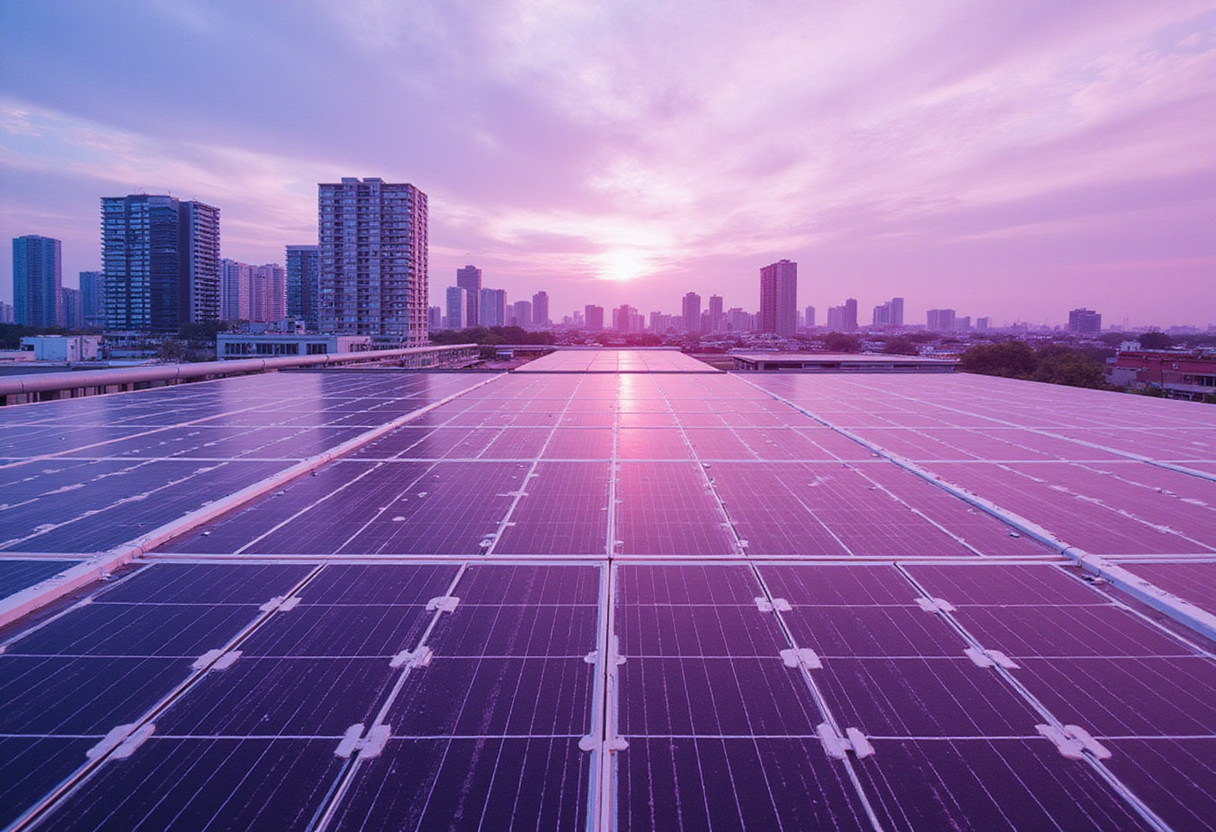
Broccoli grown under magenta photovoltaic panels converted sunlight 4.5 times more efficiently than under standard full-spectrum conditions, according to research reported by The Times of India.
- Entered
- Plot
- 1.5 ha
- Record
- 598 words
- Walk-through
- 3 min
DrillSprayHarvestCurrent stage
Agronomist’s notes
- Magenta photovoltaic panels placed above broccoli delivered a 4.5-fold increase in light-use efficiency versus standard full-spectrum conditions
- Magenta panels transmit red (~660 nm) and blue (~450 nm) wavelengths while filtering the green band (~500-570 nm) that leaves largely reflect
- Conventional black silicon agrivoltaic systems have typically recorded 15% to 30% yield penalties on vegetable crops including cabbage and lettuce
- The reporting does not disclose trial location, panel density, mounting height or whether the comparison is against an unshaded control, a conventional silicon array, or both
- Independent farm-scale replication across at least two seasons and two sites has not yet been reported
Broccoli grown under magenta-tinted photovoltaic panels converted sunlight into growth 4.5 times more efficiently than plants under standard full-spectrum conditions, according to a finding carried by The Times of India.
What the trial measured
The reported experiment placed magenta panels directly above broccoli plots. A magenta panel is engineered to transmit the red and blue wavelengths that chlorophyll absorbs most efficiently, while blocking the green band that contributes less to photosynthesis. Green light, broadly, is the part of the spectrum that leaves reflect rather than harvest.
The 4.5-fold headline figure reframes the agrivoltaics debate. Conventional agrivoltaic systems rely on blue or black silicon modules, which shade crops with light across the full visible spectrum, including wavelengths the plant cannot exploit. A magenta module, by design, lets the productive wavelengths through and converts only surplus photons into electricity.
Why the spectrum choice matters
Plant photosynthesis runs on two absorption peaks: blue light around 450 nanometres and red light around 660 nanometres. Green light between roughly 500 and 570 nanometres is largely reflected by leaf mesophyll and contributes marginal biomass gain.
A magenta filter — effectively the inverse of a green filter — therefore passes precisely the wavelengths that drive biomass accumulation. The argument that solar arrays steal yield from crops depends, critically, on which part of the spectrum the array removes. Black arrays remove productive and unproductive light indiscriminately. Magenta arrays remove largely unproductive light while harvesting the same red and blue photons the plant needs.
What remains unverified in the headline figure
The reporting available does not disclose agronomic variables growers need before treating the result as operational. Key unknowns include:
- Trial location, latitude and growing season
- Panel density, mounting height, and the percentage of ground coverage
- Whether the 4.5-fold figure refers to biomass, marketable head weight, or photosynthetic rate per photon
- Whether the comparison is against unshaded controls, conventional silicon panels, or both
- Cultivar and plant population
Without these parameters the result reads as a proof of concept rather than a recommendation growers can act on.
Where this fits in the wider agrivoltaics picture
Agrivoltaic installations across Europe and North America have generally recorded yield penalties of 15% to 30% under standard opaque panels for vegetable crops including lettuce, cabbage and tomato. The economic case for dual-use land depends on whether the electricity revenue offsets the agronomic loss.
A 4.5-fold efficiency gain, if it scales, inverts that calculus. It would suggest that spectral engineering of the panel itself — rather than the geometry or density of standard modules — is the productive axis to optimise. That is a meaningful shift for growers evaluating dual-use land leases.
What growers should watch next
The immediate question is replication. The next trial reports from the same research group will show whether the magenta principle extends to other brassicas, leafy greens and soft fruit. Cabbage, kale and lettuce share broccoli's chlorophyll profile and are obvious candidates. Tomato, pepper and cucurbit crops, with different leaf architectures and light-response curves, will need separate verification.
Independent replication at farm scale — the threshold at which agrivoltaic concepts typically move into commercial deployment — has not yet been reported. Until growers see plot-level results across at least two growing seasons and at least two sites, the 4.5-fold figure should be treated as a research milestone rather than a procurement signal. Watch for follow-on papers naming the research team, the panel manufacturer and the trial sites; those details will decide whether magenta agrivoltaics becomes a product line or stays in the proof-of-concept stage.
via Google News: crop protection farming (Source)
More from Tom Whitfield
Show full bio
Staff writer covering marketplaces and e-commerce at Arable Wire.
103 articles
Nearby records
- TN 33Indiana 2026 corn: did cloudy days cut kernel numbers?October 10, 2026
- KW 36Extreme heat forces specialty crop farmers to rethink harvest timingOctober 3, 2026
- SA 74NC State Textile Cover Triples Strawberry Yields in TrialsOctober 10, 2026
- YT 71Corn Silking, Soybean Blooming Run Ahead of Five-Year Average: USDAOctober 10, 2026
- XF 54US crops face late-summer stress as heat, wildfire smoke and uneven rain spreadOctober 3, 2026