Mahindra Begins Manufacturing Vancouver Firm's Mini-Seeders
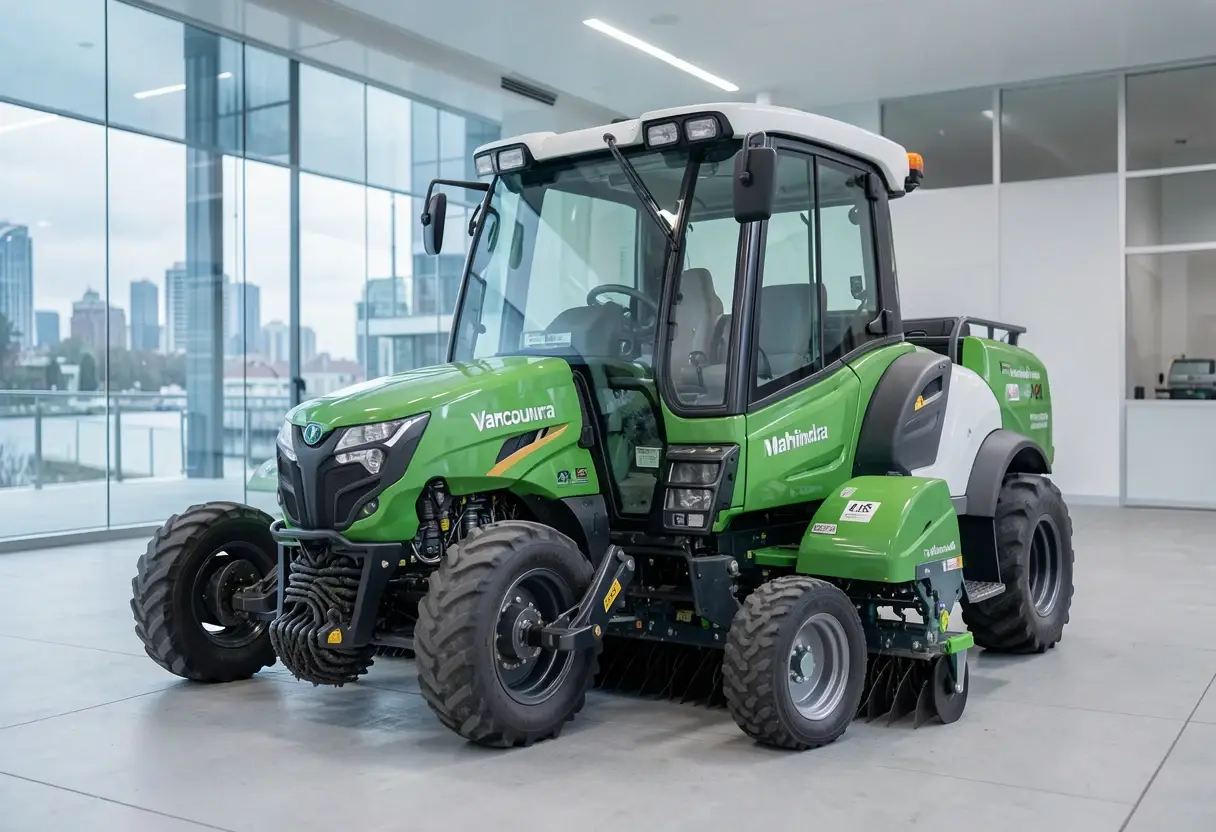
Mahindra, one of the world's largest tractor makers, is now manufacturing mini-seeders designed by a Vancouver company, expanding availability of small-scale seeding equipment.
- Entered
- Plot
- 1.6 ha
- Record
- 642 words
- Walk-through
- 3 min
DrillSprayHarvestCurrent stage
Agronomist’s notes
- Mahindra is now manufacturing mini-seeders designed by a Vancouver-based company
- The deal moves production of the Canadian-designed seeding equipment to Mahindra's industrial base
- Mini-seeders target small plots, horticultural acreage, and smallholder operations
- Pricing, model specifications, and distribution details for the Mahindra-built units remain to be announced
Mahindra, one of the world's largest tractor manufacturers, is now building mini-seeders designed by a Vancouver-based company, The Western Producer reports.
The manufacturing arrangement moves production of the Canadian company's small-scale seeding equipment to Mahindra's industrial base. For the Vancouver designer, the deal secures manufacturing capacity at a scale no Canadian boutique fabricator could match. For Mahindra, it adds a compact seeding product to a portfolio built on tractors and implements for small and mid-sized farms.
What does the deal change?
The shift matters because of who Mahindra is. The Indian group ranks among the biggest tractor makers on the planet by volume, with a sales and service network that reaches deep into South Asia, Africa, and North America. A mini-seeder that once depended on limited Vancouver-area production can now, in principle, reach markets the original firm could not supply.
Mini-seeders occupy a specific niche. They are built for small plots, horticultural acreage, vegetable operations, and the fast-growing segment of market gardeners and smallholder producers who cannot justify a full-size drill. Demand for that class of machinery has strengthened as direct-market farming expands and as small-acreage operators seek mechanisation that scales to their hectares rather than to commercial grain farms.
The product also fits Mahindra's existing customer base. Buyers of compact and utility tractors — the segment where Mahindra holds its strongest position — are exactly the operators who need a seeder matched to lower horsepower and narrower working widths.
Why contract out manufacturing to Mahindra?
For a small Canadian design firm, manufacturing is the bottleneck. Building seeding equipment in volumes requires welding capacity, assembly lines, component supply chains, and quality control that small shops struggle to finance. Licensing or transferring production to a global manufacturer converts a constrained, regional product into one with volume capability.
The arrangement also addresses cost. Equipment built in Mahindra's plants benefits from the group's purchasing power in steel, bearings, metering components, and drivetrain parts. That can bring the unit price of a mini-seeder down to a level accessible to the smallholders who need it most — a decisive factor in a market where buyers count every dollar per hectare of establishment cost.
Who gains?
Three groups stand to benefit if the deal scales as intended:
- Small-acreage farmers, who gain access to a Canadian-designed seeder with broader availability and, potentially, lower pricing through Mahindra's dealer network.
- The Vancouver company, which retains its design role while offloading the capital burden of production.
- Mahindra, which deepens its implements lineup without developing a seeding product from scratch.
There are open questions. The Western Producer's report confirms the manufacturing relationship but leaves pricing, model specifications, and distribution details to be established. Whether the machines carry the Vancouver firm's branding, Mahindra's, or a joint badge will shape how dealers position them. Canadian farmers will also want to know which models remain available domestically and through which channels.
What should farmers watch next?
Watch for the first units to appear through Mahindra's North American dealer network, and for the Vancouver company to publish updated specifications, pricing, and warranty terms for the Mahindra-built versions. Small-acreage operators comparing seeders should also monitor whether the change in production affects lead times — historically the pain point for equipment from small fabricators.
The deal signals a broader pattern worth tracking: global tractor manufacturers picking up proven niche designs from small engineering firms rather than developing their own. For farmers, that trend promises wider access to specialised equipment. For Canadian ag-innovation firms, it offers a route to scale without surrendering ownership of the design.
Further details on models, availability, and pricing are expected as production ramps up; buyers should check with Mahindra dealers and the Vancouver company directly before committing to spring seeding plans.
via Google News: agricultural machinery (Source)
More from Olivia Hart
Show full bio
News editor covering regulation, policy and their impact on production farming and field operations at Arable Wire.
162 articles
Nearby records
- TS 58Mahindra Begins Commercial Production of MAXSEEDEROctober 12, 2026
- HN 55Mahindra starts commercial production of MaxSeeder zero-till drillOctober 13, 2026
- KL 60China Strengthens Position as a Global Agricultural Machinery PowerhouseSeptember 29, 2026
- RR 23Sonalika Will Build Compact Tractors for Massey FergusonOctober 9, 2026
- CG 89Autonomous tractors arrive in two very different size classesOctober 13, 2026