New weather station expands field-level data at Pease farm
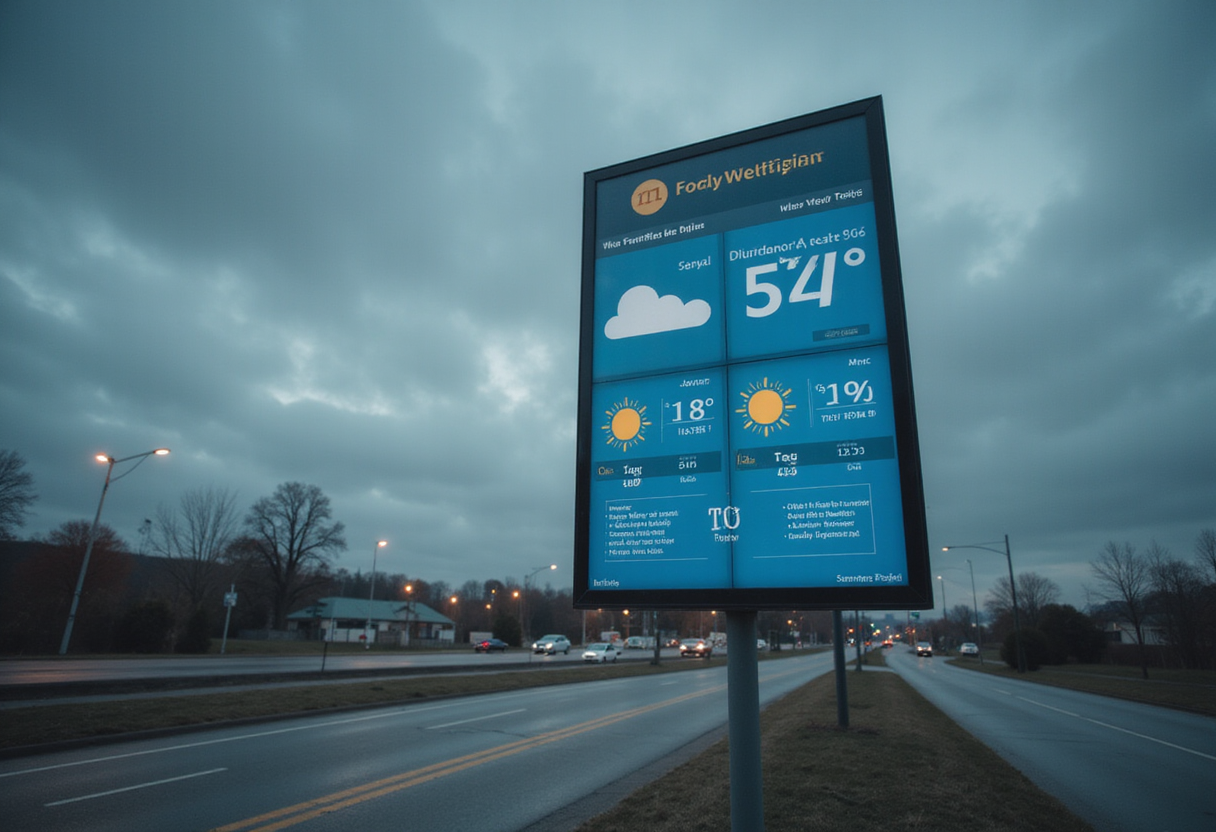
A new weather station installed at Pease farm is delivering an expanded meteorological dataset to the operation, joining a growing cohort of US row-crop and mixed farms investing in farm-owned atmospheric monitoring.
- Entered
- Plot
- 1.2 ha
- Record
- 491 words
- Walk-through
- 2 min
DrillSprayHarvestCurrent stage
Agronomist’s notes
- A new weather station is now operating at Pease farm.
- The station provides an expanded meteorological dataset to the operation.
- The installation supplements rather than replaces existing public weather feeds.
- On-farm stations typically capture microclimate effects missed by regional networks.
- The published report did not name the station supplier, sensors or data platform.
A new weather station installed at Pease farm is delivering an expanded meteorological dataset to the operation, hometownsource.com reported. The site joins a growing cohort of US row-crop and mixed farms investing in their own atmospheric monitoring rather than relying on distant public reporting points.
What does an on-farm station change?
At field scale, a weather station converts weather from a planning assumption into a measured input. Continuous readings of temperature, rainfall, humidity, leaf wetness, wind speed and gust feed day-to-day calls on tillage, spraying, irrigation and harvest. Public networks interpolate between official stations that may sit tens of kilometres apart. A local instrument closes that gap with readings logged at whatever cadence the sensors support.
For Pease farm, the addition means planting, fertilising and spray timing can be checked against the station's own readings rather than against a county-wide forecast. The shift matters most on days when conditions sit near a working-window threshold. Small changes in temperature, humidity or wind speed can swing the call to spray or hold off.
Why "expanded" data, not replacement?
The new unit supplements rather than replaces existing sources. Many farms layer a private station on top of public feeds to cross-check readings. Farm-level instruments also capture microclimate effects that regional stations miss: cold-air drainage at low points, frost pockets and rainfall shadows caused by local topography and shelterbelts.
Distance from the nearest official site shapes the value of the upgrade. Where the closest reporting point is far enough away, daily totals can diverge enough to distort irrigation and spray planning. A farm-owned station re-anchors those numbers against the exact field being managed.
How growers typically deploy the data
On-farm weather feeds tie into three workflows more than any others:
- Spray-window planning uses wind, humidity and rain probability to settle product choice and application timing.
- Irrigation scheduling pairs the readings with soil-moisture probes and reference evapotranspiration calculations.
- Crop modelling and record-keeping draw on season-long feeds for yield forecasting and end-of-season review.
Each workflow reads the data on a different cadence. Spray decisions lean on the latest hour. Irrigation works from daily totals and reference evapotranspiration. Crop models accumulate the whole season before producing end-of-year outputs.
What to watch next
The published report did not name the station supplier, the sensor list or the data platform. Buyers of on-farm weather stations typically weigh three points before purchase: logger reliability, cellular or Wi-Fi coverage at the chosen site, and how the feed integrates with existing farm management software.
For Pease farm, the wider test will be whether the new stream survives a full season and feeds directly into agronomy decisions rather than sitting as a standalone log. Watch for follow-up coverage that names the hardware, sets out integration plans and reports any change in operating practice tied to the station's readings.
via Google News: farming weather (Source)
More from Olivia Hart
Show full bio
News editor covering marketplaces and e-commerce at Arable Wire.
116 articles
Nearby records
- QK 81University of Maine weather station network saves farmers time and moneyOctober 10, 2026
- VV 96Farm Progress highlights two free weather tools for farmersSeptember 30, 2026
- NW 13Oklahoma Producers Weigh Rain Promise Against Storm RiskOctober 10, 2026
- XC 32Mixed weather and cooler air to test arable fieldwork this weekOctober 10, 2026
- XW 27Basse's Farms battles severe weather ahead of fall season pushOctober 3, 2026