Pasture cropping shows promise for soil health and forage
AgriLife Today reports pasture cropping — drilling annual crops into dormant living pasture — may lift soil health and forage quality on mixed farms.
- Entered
- Plot
- 1.4 ha
- Record
- 565 words
- Walk-through
- 3 min
DrillSprayHarvestCurrent stage
Agronomist’s notes
- AgriLife Today reports pasture cropping may improve both soil health and forage quality
- The technique drills annual crops into living perennial pasture during its dormant window
- Livestock grazing prepares the seedbed and manages regrowth, combining grain and grazing income from one paddock
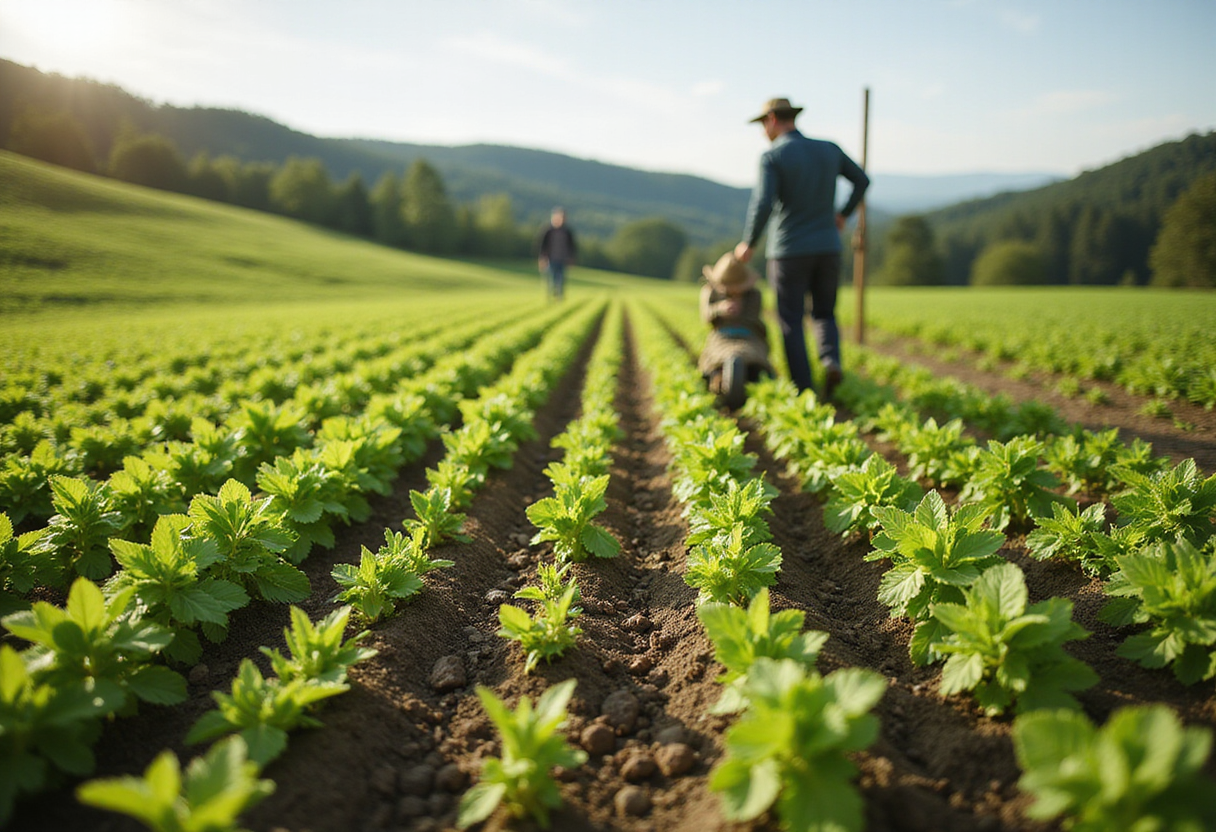
Pasture cropping — the practice of sowing a cash crop directly into a living, dormant perennial pasture — may improve both soil health and forage quality, according to research reported by AgriLife Today.
The finding matters because it addresses two problems at once. Farmers running perennial pasture systems often face a trade-off: ploughing the sward to plant an annual crop destroys soil structure and opens the door to erosion, while leaving the pasture untouched forgoes a grain or forage income stream. Pasture cropping splits the difference. The grower drills the annual crop into the standing perennial base during its dormant window, then harvests the crop before the perennial resumes full growth.
What the technique asks of the grower
Timing is the core discipline. The annual crop must establish while the perennial pasture is least competitive — typically its winter-dormant phase in temperate regions. Plant too early and the perennial smothers the seedling. Plant too late and the crop misses the moisture and temperature window it needs to yield.
Grazing management sits at the centre of the system. Livestock are used to prepare the seedbed by grazing the pasture down tightly before drilling, which reduces competition for the emerging crop. After harvest, animals return to graze the regrowth, cycling nutrients back through the paddock and keeping the perennial base productive.
Why the soil-health signal matters
The reported link between pasture cropping and improved soil health follows a well-established logic. Because the ground is never bare and never cultivated, the soil keeps its aggregate structure, its macropores and its fungal networks intact. Roots remain present year-round, feeding the microbial community that drives organic matter turnover. Residue from both the crop and the perennial returns to the surface rather than being inverted by a plough.
For a farmer weighing the practice, the relevant question is whether those gains survive the economics. A pasture-cropped field will usually yield less grain than a conventional clean-tilled field in the short run, because the crop shares water and nutrients with the perennial. The payoff arrives through avoided costs — fewer tillage passes, less reseeding of pasture, reduced fertiliser demand over time — and through the value of the grazing days the paddock still delivers.
The forage angle
The reported improvement in forage quality adds a second income line. A diversified plant base — perennial species plus the stubble and regrowth of the harvested annual — can extend the grazing season and lift feed value compared with a single-species sward. Grain harvest and grazing come off the same hectare in the same season, which changes the carrying-capacity maths for a mixed operation more than any single yield figure suggests.
What farmers should watch next
The AgriLife report is an encouraging signal rather than a verdict. Growers considering the practice should watch for follow-up work quantifying the effects: replicated trial data comparing pasture-cropped paddocks against conventionally managed controls on soil organic matter, compaction, water infiltration and forage crude protein. Regional trial results will matter most, since dormancy windows and moisture patterns dictate whether the technique fits a given district.
In the meantime, the lowest-risk entry point is a small paddock drilled into dormant pasture with a no-till drill, grazed tightly beforehand, and measured against an adjacent conventionally managed field. That comparison — not the headline — will tell an individual farm whether pasture cropping earns a place in the rotation.
via Google News: soil health farming (Source)
More from Tom Whitfield
Show full bio
Staff writer covering marketplaces and e-commerce at Arable Wire.
38 articles
Nearby records
- RK 67U.S. Winter Wheat Harvest Outpaces Average PaceOctober 3, 2026
- UK 97Adding cattle can improve soil health, Farm Progress reportsSeptember 29, 2026
- JX 83Soil health practices pay dividends, but only on a long horizonSeptember 29, 2026
- KK 70Powys farmers get open day on sustainable grassland managementSeptember 30, 2026
- JS 88Regenerative practices cut costs and rebuild soil, Indiana farmer reportsSeptember 29, 2026