Regenerative practices cut costs and rebuild soil, Indiana farmer reports
An Indiana farmer reports regenerative practices cut input costs while rebuilding soil health, adding Midwest evidence that cover crops and reduced tillage can pay across a full rotation.
- Entered
- Plot
- 1.5 ha
- Record
- 581 words
- Walk-through
- 3 min
DrillSprayHarvestCurrent stage
Agronomist’s notes
- An Indiana farmer reports regenerative agriculture lowered costs and improved soil health
- Reported by Farm Progress as an on-farm case study from the Corn Belt
- Gains follow the typical three-to-five-year trajectory for cover crops and reduced tillage
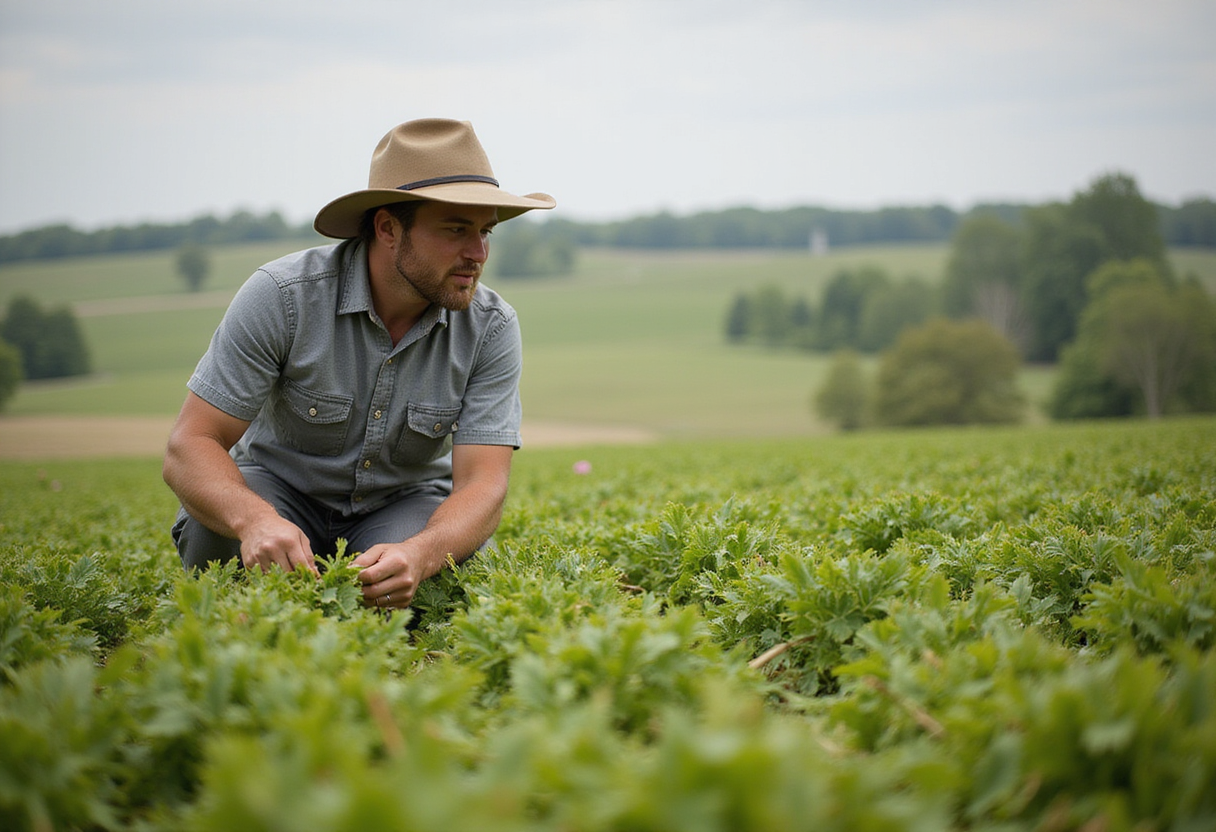
An Indiana row-crop farmer says regenerative agriculture has delivered two outcomes growers rarely get in the same season: lower input spending and measurably healthier soil.
The account, reported by Farm Progress, comes from the Corn Belt, where tight margins have pushed more producers to examine whether cover crops, reduced tillage and fewer passes across the field can pay without hurting yield. For this operator, the answer over multiple seasons has been yes on both counts.
The economics matter as much as the agronomy. Fertiliser, fuel and machinery costs have climbed faster than grain prices in recent seasons, and every pass eliminated from a field programme removes a line from the budget. Farmers who cut tillage typically report savings on diesel, wear on implements and labour hours. Those who add cover crops spend more up front on seed and seeding, but the goal is to claw that back through reduced fertiliser and herbicide reliance as soil biology recovers.
The soil health gains described in the report follow a pattern agronomists now recognise well. Roots left in the ground year-round build organic matter. Residue on the surface keeps moisture in the profile and buffers temperature swings. Less disturbance lets fungal networks and microbial populations rebuild, which in turn improves nutrient cycling and water infiltration. None of this happens in one season. Growers who stick with the system for three to five years generally report the clearest gains, and the Indiana case fits that trajectory.
Indiana itself has become a useful testing ground for these practices. The state's conservation partnerships, including its network of soil and water conservation districts, have promoted cover cropping and no-till for years, and university researchers in the region have tracked how quickly fields respond. Wet springs and variable drainage make the state a demanding environment, which strengthens the case when the system works there.
The field-level decisions behind a transition like this are usually incremental. A grower might start with a single field, plant cereal rye after harvest, terminate it ahead of drilling, and compare performance against a conventionally managed neighbour block. Equipment choices follow: no-till drills, roller crimpers or sprayer upgrades for termination timing. Seed selection and termination date carry more risk than the cash crop itself in year one, which is why most advisers recommend a cautious entry rather than a whole-farm switch.
The cost side rewards patience. Fuel savings arrive immediately with fewer passes. Fertiliser savings lag, because it takes time for soil biology to supply nitrogen and unlock phosphorus and potassium already in the profile. Herbicide costs can rise initially, as cover crop termination adds a spray job, before weed suppression from residue starts reducing pressure. Growers who run the numbers across a full rotation, rather than a single crop year, tend to reach the same conclusion this Indiana farmer did.
Farm Progress has featured a steady stream of similar accounts from the Midwest over the past several seasons, and the consistency of the message — lower costs, better soil, yields held steady — is itself a signal. Individual results always depend on weather, drainage and management skill, but the direction of travel across many farms is harder to dismiss.
Growers weighing a similar shift should watch trial data from their local extension services, compare termination strategies for their chosen cover species, and budget the transition over at least three seasons rather than one. The next round of Corn Belt field days this summer will offer more on-farm evidence.
via Google News: soil health farming (Source)
More from Priya Raman
Nearby records
- JX 83Soil health practices pay dividends, but only on a long horizonSeptember 29, 2026
- VW 47Farm Progress asks whether Kernza can deliver on soil health goalsSeptember 30, 2026
- LT 65Farmers for Soil Health reopens cover crop enrollmentOctober 3, 2026
- ZJ 70Study examines how soil cover practices shape soil health outcomesSeptember 29, 2026
- JX 95Precision Data Bridges Soil Health and Crop EconomicsOctober 3, 2026