Soil sampling in November and December will shape grass output in 2027
November and December soil testing delivers the most accurate P and K readings because no slurry has been spread. Results feed fertility plans that drive 2027 grass growth.
- Entered
- Plot
- 1.6 ha
- Record
- 660 words
- Walk-through
- 3 min
DrillSprayHarvestPlanning window
Agronomist’s notes
- November and December give the most accurate soil P and K test results because no slurry has been applied.
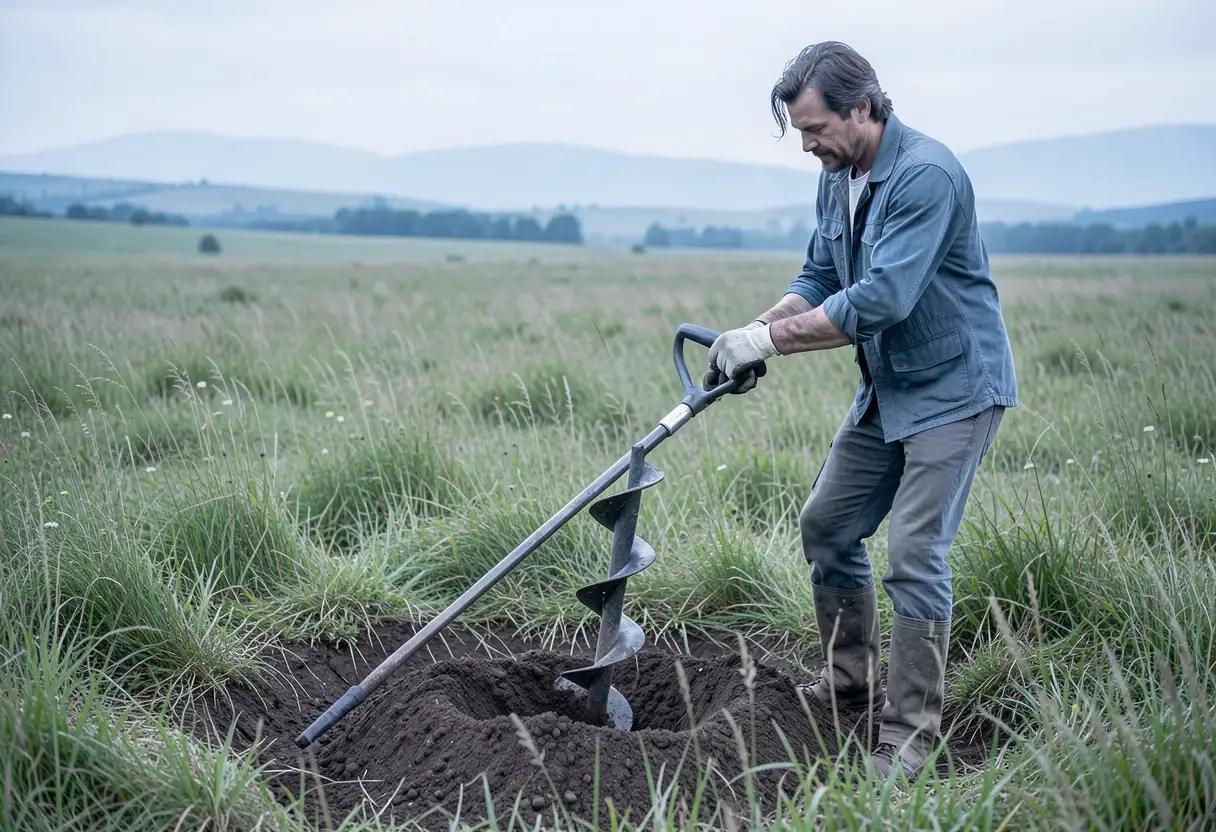
- Sampling protocol requires a 10cm depth, one sample per 2-4ha, a minimum of 20 cores and a W-shaped walking pattern.
- Soils should be retested at least every two years, targeting the worst parts of the farm.
- Clover reseeded or over-sown paddocks often yield poorly in the first year.
- Fertility results also direct slurry to P- and K-deficient fields and flag low-pH ground for lime.
November and December are the two most accurate months of the year to test soil for phosphorus (P) and potassium (K), because no slurry has been applied in that window to distort the laboratory results. Farmers who sample now and build a nutrient management plan around the findings are, in effect, setting their 2027 grazing season in motion, because correcting soil fertility takes time to show results in herbage production.
The advice lands as the poor, unsettled weather of the past week draws the 2026 grazing season to a close. Farmers face a demanding workload — drying off cows and preparing for calving — but advisers urge them not to let soil fertility slip down the list. Soil ranks among the most valuable assets on any farm and needs to be treated with care and precision.
Why test now rather than spring?
The timing argument is straightforward. Slurry applications during the grazing season inflate P and K readings, so samples taken outside that period give a truer picture of what the soil actually holds. November and December sit in that clean window. The results identify which fields are short of nutrients, and that information becomes the backbone of both a soil fertility plan and a wider nutrient management plan.
Anyone starting the process should expect patience to be part of it. Results do not appear overnight once a plan is in place. The discipline is to sample at least every two years and to target the worst-performing parts of the farm first, rather than the fields that are already performing well.
The payoff is measurable. A good nutrient management plan lets farmers apply nutrients only where they are required, minimising waste while maximising grass growth rates. According to the advice, getting this right is what separates top-performing farms from bottom-performing ones — a gap that matters more than usual given the current price of nitrogen. Every unit of fertiliser placed on a field that does not need it is money spent against, not for, the 2027 silage and grazing budgets.
How to take a sample that means something
The sampling protocol is prescriptive, and corners cut here produce plans built on false data. The rules are:
- Sample at a consistent depth of 10cm;
- Take one sample for every 2-4ha;
- Collect a minimum of 20 soil cores per sample;
- Walk a W-shaped pattern across the paddock while sampling;
- Avoid poached areas, including gate gaps and around water troughs.
Farmers who take samples only from the same area every year, or only from the best-performing ground, are doing themselves an injustice. A biased sample produces a biased plan, and the fertiliser bill follows it.
What else does the plan decide?
The fertility data carries uses beyond nutrient spreading. It can flag which paddocks need reseeding, a crucial task in maintaining herbage production. The signal is not purely nutritional, either: paddocks with good soil quality but large amounts of old grass or weeds may also need reseeding regardless of what the numbers say.
Farmers should budget for a first-year dip. Reseeded or over-sown paddocks with clover often show poor herbage production in year one, so the plan should allow for that before judging the investment.
The data also directs organic manure. Slurry and manure should be targeted at fields low in P and K, where their nutrient content does the most work and replaces the most purchased fertiliser. The same results identify fields with low pH that need a lime application — the cheapest correction in the entire fertility toolkit, and the one that unlocks the response to every other nutrient applied.
The practical instruction for the coming weeks is simple: while drying-off and calving preparations dominate the yard, block out time for sampling. Cores taken before the year ends are the first input of the 2027 grass crop, and farmers should watch their results arrive in time to budget lime, slurry and fertiliser before spring spreading begins.
via cdn.agriland.ie (Original)
More from Olivia Hart
Show full bio
News editor covering regulation, policy and their impact on production farming and field operations at Arable Wire.
210 articles
Nearby records
- YA 52Guessed fertilizer rates cost farmers real money, soil tests showOctober 30, 2026
- HT 56Can You Afford to Cut Phosphorus and Potassium Again?October 20, 2026
- AL 32Soil Sampling Timing Reshapes Soil Health ReadingsOctober 16, 2026
- PU 47New soil test maps microbes that release hidden phosphorusOctober 10, 2026
- NC 80Soil health indicators: five tests worth trackingSeptember 29, 2026