Sherrill Declares State of Emergency as New Jersey Crops Take Heavy Losses
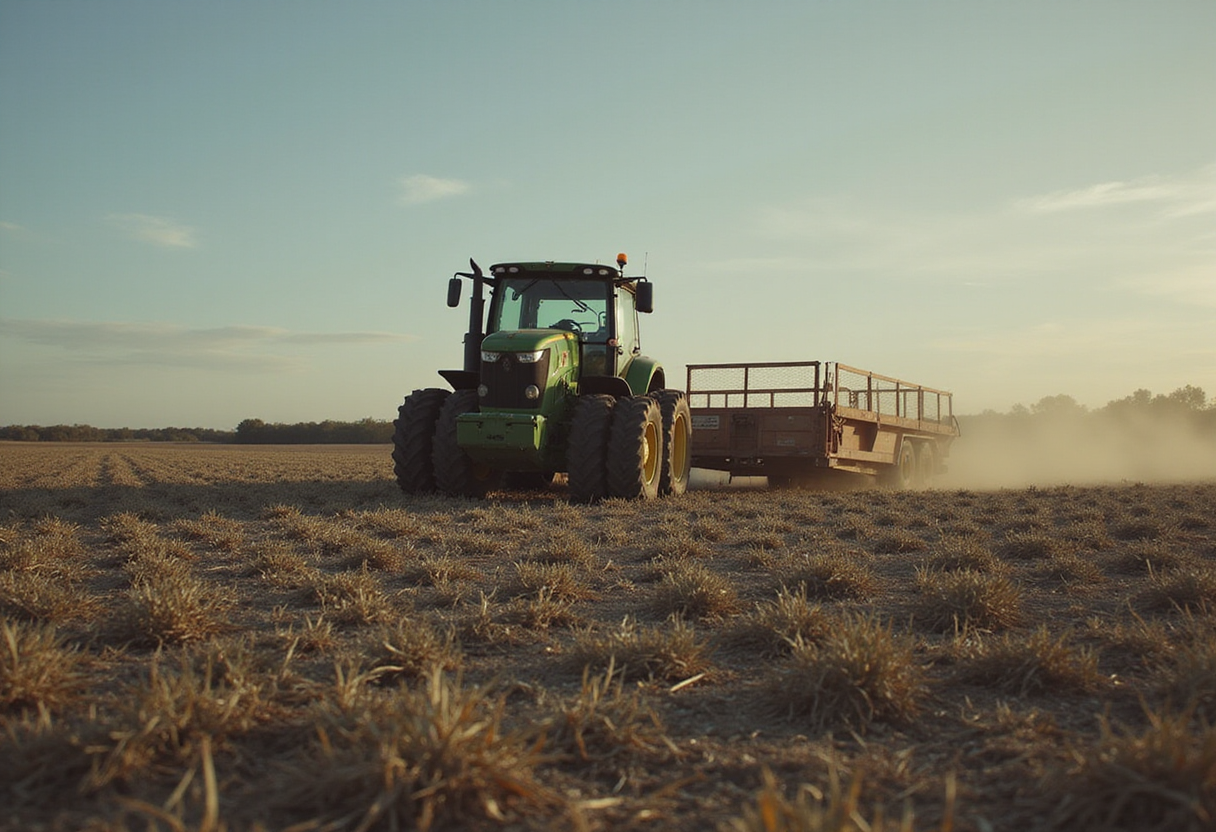
New Jersey Governor Mikie Sherrill has declared a state of emergency in response to crop losses driven by severe weather, opening the path to potential federal disaster relief through the USDA and FEMA.
- Entered
- Plot
- 1.2 ha
- Record
- 471 words
- Walk-through
- 2 min
DrillSprayHarvestCurrent stage
Agronomist’s notes
- New Jersey Governor Mikie Sherrill declared a state of emergency in response to crop losses driven by severe weather
- The declaration operates under New Jersey's Emergency Management Act and enables a request for a USDA Secretarial Disaster Designation
- Most crop insurance policies require a notice of loss within 72 hours of damage discovery
- New Jersey runs about 9,100 farms on roughly 715,000 acres per the 2022 USDA Census of Agriculture
- The state's highest-value produce — blueberries, cranberries, peppers, eggplant, and herbs — is concentrated in the Pinelands and southwestern counties
New Jersey Governor Mikie Sherrill has declared a state of emergency in response to crop losses driven by severe weather.
The order activates the state's emergency management framework and positions New Jersey to seek federal disaster relief through the USDA and the Federal Emergency Management Agency (FEMA).
What does the declaration actually do?
The order operates under New Jersey's Emergency Management Act and directs state agencies to coordinate the response. It authorizes the governor to call on the National Guard if needed and gives county and municipal officials expanded authority for debris removal, road access for farm equipment, and utility restoration. For growers, the most consequential effect is procedural: a state declaration is the first step on the path to a USDA Secretarial Disaster Designation, which unlocks low-interest emergency loans and certain insurance flexibilities.
How does it reach individual farms?
Growers do not apply directly for state emergency aid. The declaration enables the New Jersey Department of Agriculture and the USDA's Farm Service Agency (FSA) to begin formal damage assessments at the county level. County offices compile producer reports, photograph losses, and forward totals to the state FSA office. The state then submits a request to USDA, which makes the formal disaster designation that opens loan programs.
What does "wild weather" mean here?
Initial reports describe the trigger as "wild weather" without specifying the storm system that drove the declaration. New Jersey sits inside the mid-Atlantic corridor, exposed to winter nor'easters, late-summer tropical storm remnants, and increasingly severe convective storms. Any one of those can deliver the kind of compounding wind, rain, or hail damage that drives a governor-level declaration when losses cross a threshold.
Why timing matters for growers
According to the 2022 USDA Census of Agriculture, New Jersey runs about 9,100 farms on roughly 715,000 acres, with the heaviest concentration of high-value produce — blueberries, cranberries, bell peppers, eggplant, and fresh herbs — in the Pinelands and the southwestern counties of Burlington, Cumberland, and Salem. A single severe-weather passage can wipe out a season's worth of tomatoes, peppers, or leafy greens within hours.
What farmers should do now
County FSA offices typically begin compiling damage reports within days of a state declaration. Producers should photograph losses before any cleanup, retain seed, fertilizer, and chemical receipts, and file an acreage report with their local office even if a crop is a total loss. Most crop insurance policies require a notice of loss within 72 hours of discovery, and timeliness directly affects indemnity payments.
What's next
State damage tallies are expected over the coming weeks. Follow-up reporting should narrow down the affected counties, the commodities hardest hit, and whether New Jersey submits a federal disaster request. Arable Wire will track county FSA damage reports as they come in.
via Google News: farming weather (Source)
More from James Calloway
Show full bio
Correspondent covering marketplaces and e-commerce at Arable Wire.
113 articles
Nearby records
- QC 36Extreme Weather Hits California Farmers with $800 Million LossSeptember 29, 2026
- QS 96Thumb health partnership flags harvest-season hazards for farmers and motoristsOctober 10, 2026
- TZ 92#Harvest26: Mississippi Delta Surges Ahead as Wet Weather Slows Northern Corn BeltSeptember 29, 2026
- NW 13Oklahoma Producers Weigh Rain Promise Against Storm RiskOctober 10, 2026
- ND 25NOAA Confirms El Niño; Weather Risk for US Agriculture ResetsOctober 10, 2026