Soil pH 6.0-7.0 and 180-day manure storage cap: test before freeze
Columbiana SWCD's Haley Santee urges soil and manure testing before the freeze: pH 6.0-7.0, a 180-day stockpile cap and a 100-foot vegetated buffer for piles held past four months.
- Entered
- Plot
- 1.7 ha
- Record
- 685 words
- Walk-through
- 3 min
DrillSprayHarvestPlanning window
Agronomist’s notes
- Target soil pH is 6.0 to 7.0; below 6.0 lime raises it, and current pH affects the following year's yield.
- Temporary stockpiling of manure for a specific field is capped at 180 days.
- Manure piles stored more than four months should have a proper 100-foot vegetative buffer around them.
- Chicken litter is very high in phosphorus; hog manure is higher in nitrogen.
- The most mobile ('mass flow') nutrients are nitrogen, magnesium, sulfur, boron, calcium and potassium.
Two regulatory deadlines and one soil number define the fall nutrient decisions ahead of Ohio farmers: a 180-day ceiling on temporary manure storage, a four-month threshold that triggers a 100-foot vegetated buffer around a stockpile, and a soil pH band of 6.0 to 7.0 that decides whether lime goes on the field.
Haley Santee, agriculture technician for the Columbiana Soil and Water Conservation District, sets out the sequence in a column published ahead of the winter freeze: test the soil, test the manure, read the regulations, write the plan. "Make a plan, soil test, read current regulations and recommendations," Santee writes, "and consider reaching out to your local soil and water conservation district for a nutrient management plan."
What does a soil test actually tell you?
Sampling before any fertilizer or manure application shows where the problem areas sit and whether the ground is balanced. Santee puts the target plainly: "the sweet spot range is between 6.0 and 7.0; this means it is balanced." Where pH falls below 6.0, lime lifts it back into that range.
The number carries into next season. "The current soil pH will impact the harvest yield the following year," Santee says, which is why a fall test still changes the spring application rate rather than merely confirming what went on last year.
The same report breaks down the soil's macronutrients — nitrogen, phosphorus and potassium — and some tests also flag how much of each is plant-available, meaning a crop can actually take it up. "Just because you spread the nutrients does not mean they are readily available to the plants," Santee notes.
Mobility differs nutrient by nutrient. The ones that move with water in the soil — what agronomists call "mass flow" — are nitrogen, magnesium, sulfur, boron, calcium and potassium. That list tells a farmer which additions stay where they are spread and which keep moving through the profile.
Which manure belongs on which field?
Manure can cut the fertilizer bill significantly, but only where its contents are known. Two routes work: test the manure, or work from the Ohio Department of Agriculture's manure management book. Either one shows what the animals put back into the soil and where spreading returns the most.
Species changes the recipe:
- Chicken litter is very high in phosphorus.
- Hog manure is higher in nitrogen.
- A soil test shows where spreading pays off best, building organic matter and better topsoil.
Applying manure back to fields when the weather is appropriate returns organic matter and nutrients to the soil. Matching the manure to the field — chicken litter where phosphorus is short, hog manure where nitrogen is — is what trims the fertilizer bill in the long run.
What do the storage rules require?
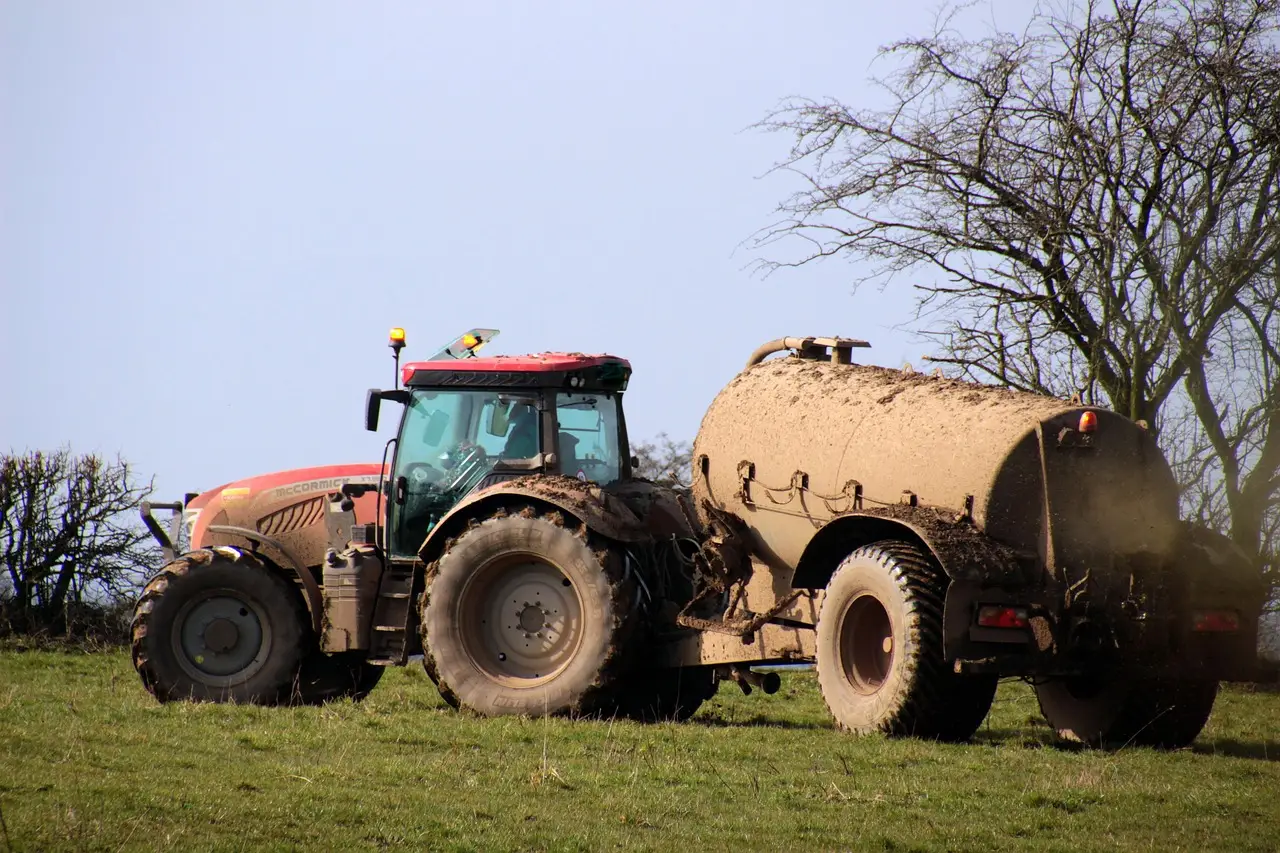
Two numbers do most of the work here. Temporary stockpiling of manure for a specific field to spread is capped at 180 days. And a pile stored longer than four months should carry a proper 100-foot vegetative buffer around it, roughly 30 metres of vegetated strip.
Bedding type and storage method change which requirements apply, so a plan has to name both before a single load is moved. The buffer rule also bites earlier than the storage cap: four months sits roughly 60 days inside the 180-day maximum, so a pile stacked in late autumn can trigger buffer requirements well before the storage limit arrives.
What should farmers do before the freeze?
Santee's pre-freeze checklist:
- Test soil before applying any fertilizer or manure.
- Test manure, or use the Ohio Department of Agriculture's manure management book.
- Factor bedding, storage type, the 180-day cap and the 100-foot buffer into the nutrient management plan.
- Ask the local soil and water conservation district for a nutrient management plan.
Freeze-up, not the fertilizer price, sets the schedule. Samples drawn while fields are workable come back with results and a written plan in hand before spring spreading begins, and a producer who skips stockpiling altogether sidesteps the 180-day clock and the buffer rule entirely. Santee can be reached at 330-332-8732.
via farmanddairy.com (Source)
More from Daniel Okafor
Show full bio
Market editor covering money, funding and market shifts around production farming and field operations at Arable Wire.
202 articles
Nearby records
- TN 87Soil pH 6.8 is the target: why liming decisions start with fall testsOctober 28, 2026
- UT 36Frontiers paper pairs corn nutrient management with soil and water outcomesOctober 10, 2026
- NC 80Soil health indicators: five tests worth trackingSeptember 29, 2026
- YA 52Guessed fertilizer rates cost farmers real money, soil tests showOctober 30, 2026
- UG 68Ohio farms to lead $10M soil health studyOctober 10, 2026