Steam, Not Chemicals: Strawberry Grower Bets on Heat for Healthier Soil
A strawberry farmer is trialling steam soil treatment instead of chemical fumigation, aiming to cut soil-borne disease and deliver a healthier, higher-value crop.
- Entered
- Plot
- 1.0 ha
- Record
- 382 words
- Walk-through
- 2 min
DrillSprayHarvestCurrent stage
Agronomist’s notes
- A strawberry farmer is trialling steam soil treatment as an alternative to chemical fumigation
- The method targets soil-borne disease and weed pressure without chemical residues
- The trial was reported by the Toronto Star
- Open-field steam sterilisation remains technically demanding and cost-sensitive compared with fumigation
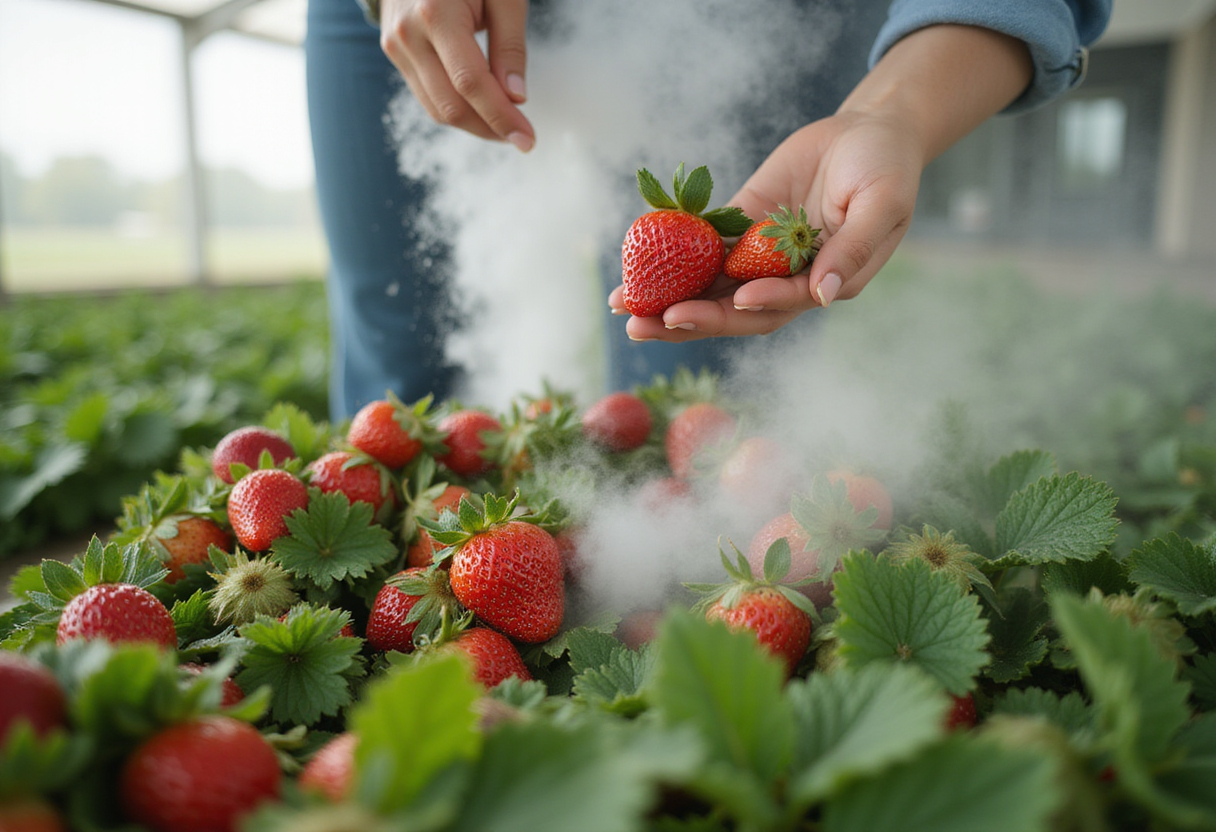
A strawberry farmer is betting that steam — not fumigants — holds the key to healthier soil and a stronger crop, as reported by the Toronto Star.
The grower is trialling steam treatment on strawberry fields, a method that superheats soil to kill pathogens and weeds without the chemical residues associated with conventional fumigation. For a crop as disease-sensitive as strawberries — where soil-borne fungi and nematodes can wipe out entire plantings — the approach targets one of the berry sector's most persistent problems at its source.
The trial reflects a wider search for alternatives as regulatory pressure tightens around soil fumigants and consumer demand leans toward residue-free fruit. Steam sterilisation is not new in principle: controlled-environment growers and some vegetable producers have used heat treatment for years. What makes this case notable is its application in open-field strawberry production, where treating broadacre soils with steam remains technically demanding and cost-sensitive.
Why does this matter for strawberry growers?
Soil health sits at the centre of strawberry profitability. Replanting strawberries into ground where a previous crop built up disease pressure is one of the fastest routes to yield loss, and growers have traditionally leaned on chemical fumigation to reset the biology of a field. Any technique that suppresses pathogens while preserving the wider soil ecosystem offers a double prize: disease control now and long-term soil productivity.
Steam offers that promise in theory. Heat kills off harmful organisms but leaves no chemical residue, and unlike some fumigants it does not require lengthy re-entry intervals or buffer zones around neighbouring properties. The open question — and the one this farmer's trial puts to the test — is whether the treatment can deliver reliable disease suppression at a cost that works for commercial strawberry economics.
What should farmers watch next?
The trial's results will matter beyond one farm. If steam treatment proves it can hold down disease pressure and support a better crop without fumigants, it could give strawberry growers — and possibly vegetable producers facing similar soil-borne disease issues — a practical template to follow. Watch for harvest data from the treated ground, cost comparisons against conventional fumigation, and whether the method scales beyond small plots. Growers weighing fumigant alternatives should track how this Ontario trial develops through the coming season.
via Google News: soil health farming (Source)
More from James Calloway
Show full bio
Correspondent covering marketplaces and e-commerce at Arable Wire.
114 articles
Nearby records
- JT 61Strawberry grower bets on steam to clean up soil and lift yieldsOctober 10, 2026
- SA 74NC State Textile Cover Triples Strawberry Yields in TrialsOctober 10, 2026
- MM 64Wet Season Drives Surge in Manitoba Fungicide SprayingOctober 3, 2026
- KW 36Extreme heat forces specialty crop farmers to rethink harvest timingOctober 3, 2026
- JX 23Arkansas farmer cuts input costs through improved soil healthOctober 10, 2026