Strawberry grower bets on steam to clean up soil and lift yields
An Iowa strawberry farmer is trialling superheated steam as a chemical-free way to clean soil of pathogens and weeds before planting, chasing healthier ground and a stronger crop.
- Entered
- Plot
- 1.8 ha
- Record
- 713 words
- Walk-through
- 4 min
DrillSprayHarvestCurrent stage
Agronomist’s notes
- A strawberry farmer is trialling steam soil treatment as an alternative to chemical fumigation.
- Steam kills soilborne pathogens, weed seeds and pests without leaving chemical residues.
- Strawberries face major losses from soilborne diseases such as verticillium wilt and phytophthora root rot.
- Steam suits high-value, smaller-acreage crops because treatment speed is slower than fumigation.
- No treatment dates, temperatures or cost figures were disclosed in the initial report.
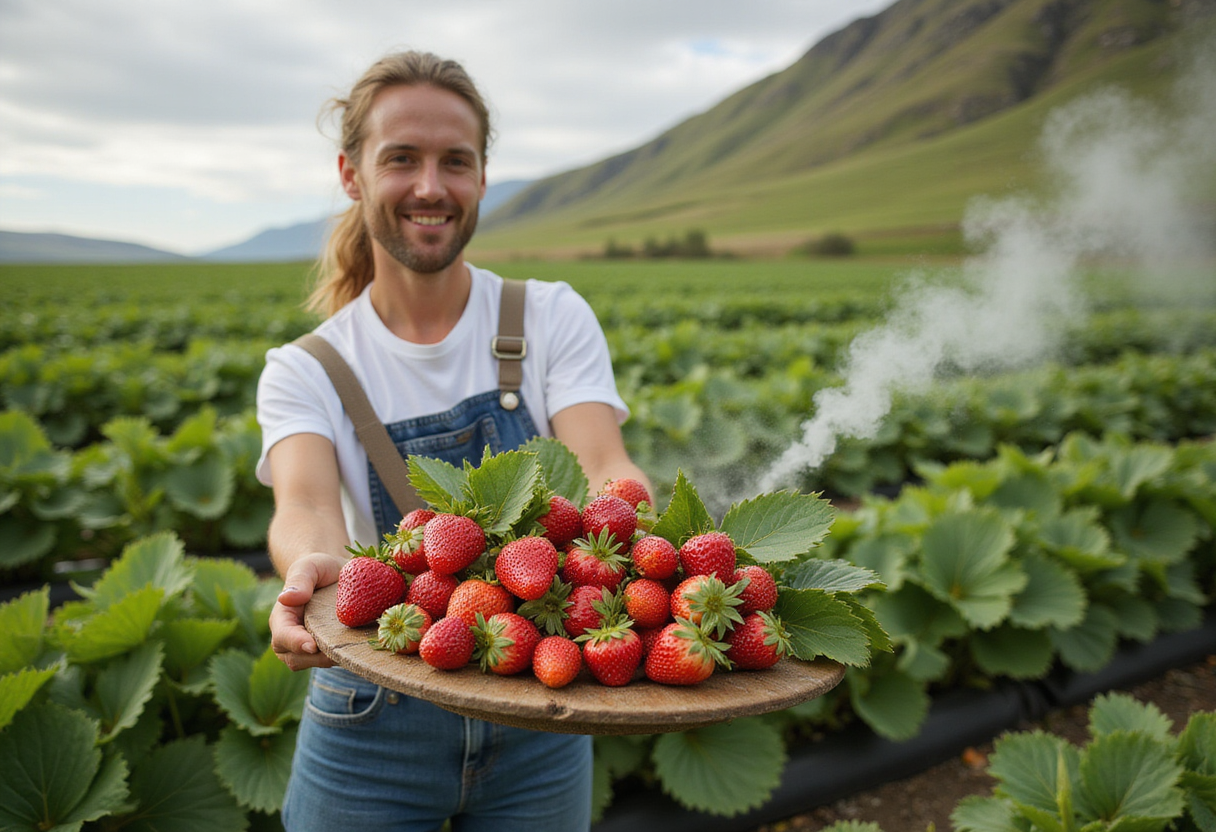
A strawberry farmer is betting that steam — not chemical fumigants — holds the key to healthier soil and a stronger crop, in a trial that signals where open-field berry production may be heading as regulatory pressure on soil sterilants grows.
The grower, profiled by Iowa broadcaster WHO13, is applying superheated steam to strawberry beds before planting. The logic is straightforward: heat the top layer of soil to a temperature that kills pathogens, weed seeds and overwintering pests, then plant into a cleaned seedbed without leaving chemical residues behind.
Why does steam matter for strawberries?
Strawberries are among the most soil-sensitive horticultural crops grown. They stay in the ground for multiple fruiting cycles, and common soilborne threats — verticillium wilt, phytophthora root rot, black root rot complex and nematodes — build up steadily under repeated berry plantings. Growers have traditionally managed that risk with pre-plant fumigation, most often using products such as chloropicrin-based formulations or, historically, methyl bromide before its phase-out under the Montreal Protocol.
That toolkit is narrowing. Regulatory reviews continue to tighten the conditions under which fumigants can be applied, and growers in populated areas face buffer-zone rules that can make fumigation impractical on smaller, diversified holdings. For a strawberry operation serving local or pick-your-own markets, a residue-free method has commercial as well as agronomic appeal.
Steam fits that gap. The technique raises soil temperature to a lethal band for pathogens — typically achieved in the top several centimetres where the bulk of the strawberry root system develops — without leaving any chemical footprint. It also kills weed seeds, which cuts early-season hand-weeding labour, a major cost line in berry production.
What does the trial involve?
The WHO13 report centres on the farmer's working hypothesis: that steamed beds will carry a cleaner crop through the season with fewer disease losses and less intervention. The grower's stated hope is that steam holds the key to healthy soil and a better crop — healthier because the treatment spares the wider soil biology that chemical sterilants can knock back, and better because plants establish without the early pathogen hits that suppress yields.
The approach matters because open-field strawberry growers lack the rotation freedom that grain and forage producers take for granted. Ground that has carried berries, nightshades or other susceptible hosts carries disease pressure for years. Any tool that resets that pressure without chemicals extends how long a block can stay productive.
The precise details of the trial — treatment dates, soil temperatures reached, bed dimensions, and the machinery used — were not specified in the broadcast report. Growers weighing the method should treat this as an early-stage, single-operator trial rather than a validated protocol.
What are the trade-offs?
Steam is not a free lunch. The equipment — a boiler or steam generator, delivery plumbing and bed-covering apparatus to hold the heat — represents real capital. Fuel or propane consumption per treated hectare is the number that will decide viability, and no cost figures were released with the report.
Speed is the second constraint. Steaming treats far less ground per hour than a fumigation rig, which pushes the economics toward higher-value, smaller-acreage crops. That profile fits strawberries well, and it is why steam has already carved out a commercial niche in greenhouse substrate sterilisation and high-value vegetable production in parts of Europe.
The offsetting gains are real where the method works: no re-entry intervals, no buffer zones, no residue testing concerns, and compatibility with organic certification — a meaningful premium channel for direct-market berry growers.
What should growers watch next?
The questions that will settle whether this farmer's bet pays off are measurable. Does the steamed block show lower disease incidence through the fruiting season? Does weed pressure fall enough to cut labour hours? And does the harvest from steamed beds — in tonnes or pick-your-own revenue — beat the untreated or chemically treated comparison?
For now, the trial stands as one more data point in a slow shift: as fumigant options narrow, heat is moving from greenhouse curiosity to field-scale proposition. Growers should watch for follow-up yield data from this operation at season's end, and for any replicated university trials that put numbers on cost per treated hectare.
via Google News: crop protection farming (Source)
More from Tom Whitfield
Show full bio
Staff writer covering marketplaces and e-commerce at Arable Wire.
105 articles
Nearby records
- AD 96Steam, Not Chemicals: Strawberry Grower Bets on Heat for Healthier SoilOctober 10, 2026
- MM 64Wet Season Drives Surge in Manitoba Fungicide SprayingOctober 3, 2026
- KW 36Extreme heat forces specialty crop farmers to rethink harvest timingOctober 3, 2026
- SA 74NC State Textile Cover Triples Strawberry Yields in TrialsOctober 10, 2026
- TL 66Herbicide Carryover Threatens Fall Cover Crops Across U.S. FieldsOctober 10, 2026