Steyr Hytrac: hydrogen tractor pairs H2 engine with on-farm fuel
Steyr's Hytrac project pairs a hydrogen combustion engine with an eCVT on a 100-140hp Expert base, plus on-farm H2 production led by TU Wien.
- Entered
- Plot
- 1.8 ha
- Record
- 702 words
- Walk-through
- 4 min
DrillSprayHarvestCurrent stage
Agronomist’s notes
- Hytrac is based on the Steyr Expert, a 100-140hp tractor with a 4.5L FPT NEF engine
- The FCtrac hydrogen concept was unveiled in July 2024; Hytrac is its successor
- Hydrogen stores roughly 120MJ per kg versus 43-46MJ per kg for diesel
- TU Wien leads the project; VDS Holding supplies the eCVT and Voltfactory the battery
- Fendt's Helios hydrogen tractor placed tanks in the roof, posing a tipping hazard
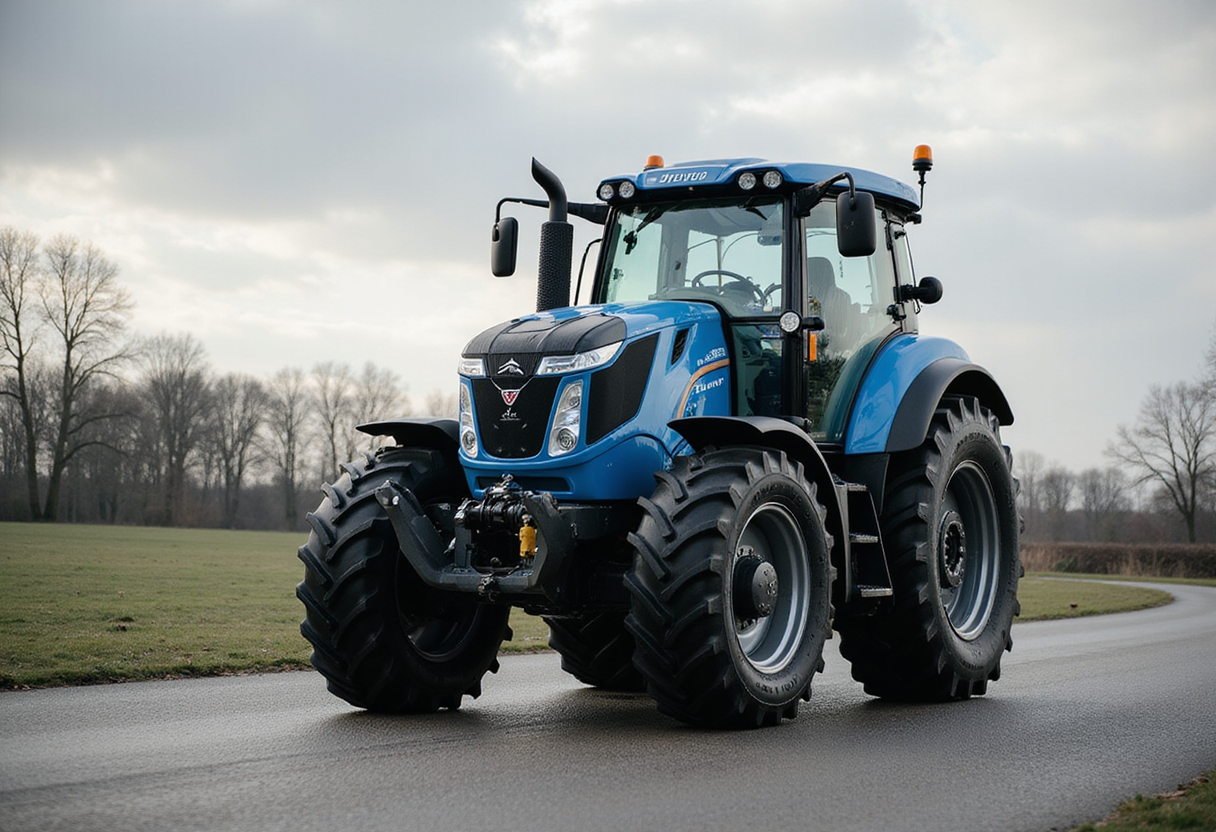
Steyr has launched the Hytrac research project, a hydrogen-powered tractor programme that pairs a direct-injection hydrogen internal combustion engine (H2 ICE) with on-farm hydrogen production, storage and refuelling infrastructure.
Vienna University of Technology (TU Wien) leads the project, with Steyr among multiple partners. The research tractor is based on the Steyr Expert, a 100-140hp machine powered in production form by a 4.5L four-cylinder FPT NEF Stage V engine.
The project builds directly on the Steyr FCtrac fuel cell concept unveiled in July 2024, itself developed with TU Wien. Hytrac takes a different technical route: instead of a fuel cell, it uses an H2 ICE combined with an electric power-split continuously variable transmission (eCVT) developed by Austrian engineering group VDS Holding GmbH.
What does the tractor actually offer?
According to Steyr, the project targets continuous power comparable to the donor vehicle while aiming at zero emission standards. Implements attached to the Hytrac can be powered electrically from the tractor's high-voltage battery, developed by Voltfactory GmbH.
Steyr said: "Benefits of the design include zero-emission operation at the point of use, high working efficiency and extended operating times, matching the needs of modern agriculture."
The drivetrain layout matters for farmers watching the technology. An electric power-split eCVT with a hydrogen combustion engine keeps the transmission architecture close to existing CVT tractors, rather than requiring a full battery-electric redesign. That is a pragmatic engineering choice for matching the duty cycles of cultivation and haulage work.
How would on-farm fuel production work?
The project aims to allow practical on-farm hydrogen production using existing energy generation resources. These include:
- Biomass from plant residues
- Wind power
- Photovoltaics, which convert sunlight directly into electricity
Steyr said the project also aims to enable "AI-optimised intelligent energy management, using load profiles, user data and predictive control integrated into this smart Energy Hub" to match fuel production to demand.
The company added that the system "delivers both carbon abatement and energy independence to farmers".
"By combining vehicle development and intelligent energy management, the Hytrac project demonstrates Steyr's commitment to exploring practical pathways towards a sustainable future for agricultural mechanisation," Steyr said.
Johannes Konrad, assistant professor at the Institute of Powertrain and Automotive Technology at TU Wien, said: "The Hytrac project enables us to analyse the interaction between hydrogen-powered agricultural machinery, energy infrastructure and farm operations under real-world conditions.
"This systems approach is essential to understanding how hydrogen technologies can contribute to future carbon abatement in agriculture."
That real-world testing focus separates Hytrac from static concept reveals. The project examines the whole chain — tractor, storage, refuelling and energy management — rather than the machine alone.
Why hydrogen rather than batteries?
The physics explains the interest. Hydrogen stores roughly 120 megajoules (MJ) per kg, against 43-46MJ per kg for diesel. But the catch is volume. Hydrogen is extremely light with poor volumetric energy density, so large, high-pressure tanks are required.
Fendt's hydrogen project tractor, Helios, hid those tanks in a mushroom-like enlarged cab roof. In Fendt's case, the tanks are heavy and their roof location poses a tipping hazard on uneven surfaces. Images of the Hytrac concept suggest hydrogen tanks mounted underneath the steps up to the cab — a lower, more stable position.
Battery-electric alternatives remain limited. Small electric tractors working roughly four hours per charge are available, but no current electric option replaces a 250hp tractor pulling a heavy implement for a full day.
Infrastructure is the bigger barrier. Farms could produce hydrogen for H2 ICE tractors, but no supporting infrastructure exists today and building it would require significant investment.
What should farmers watch next?
Steyr sits under the CNH umbrella alongside Case IH and New Holland, and CNH has used the brand as an experimental testbed before — including a light-armoured Terrus CVT concept developed with Mehler Protection. Any hydrogen drivetrain technology proven on the white brand could surface in Case IH and New Holland machinery.
Watch for real-world trial results from TU Wien, refinements to the on-farm Energy Hub concept, and any move by CNH to transfer H2 ICE and eCVT learnings into its volume brands.
via cdn.agriland.ie (Original)
More from Priya Raman
Nearby records
- LZ 31Steyr explores hydrogen power with Hytrac tractor projectOctober 10, 2026
- LD 81Steyr explores hydrogen power for tractors in Hytrac projectSeptember 30, 2026
- LB 62Electric Rigitrac SKE 40 arrives in Netherlands at €190,000October 10, 2026
- VF 83Massey Ferguson Partners with International Tractors Ltd on CompactsSeptember 30, 2026
- LT 55Zoomlion Delivers First 700-HP DX7004 Hybrid TractorOctober 10, 2026