Togo's Cotton Farmers Rebuild Soils and Cut Pest Treatments
Cotton farmers in Togo are cutting pest treatments and rebuilding soil fertility, a shift that lowers input costs and strengthens yields across seasons.
- Entered
- Plot
- 0.9 ha
- Record
- 350 words
- Walk-through
- 2 min
DrillSprayHarvestCurrent stage
Agronomist’s notes
- Togo's cotton farmers are reducing the number of pest treatments applied per season, allAfrica.com reports
- Growers are simultaneously working to rebuild degraded soils on cotton plots
- Fewer treatments cut crop protection and labour costs for smallholder cotton producers
- Soil restoration is expected to support yields over successive seasons
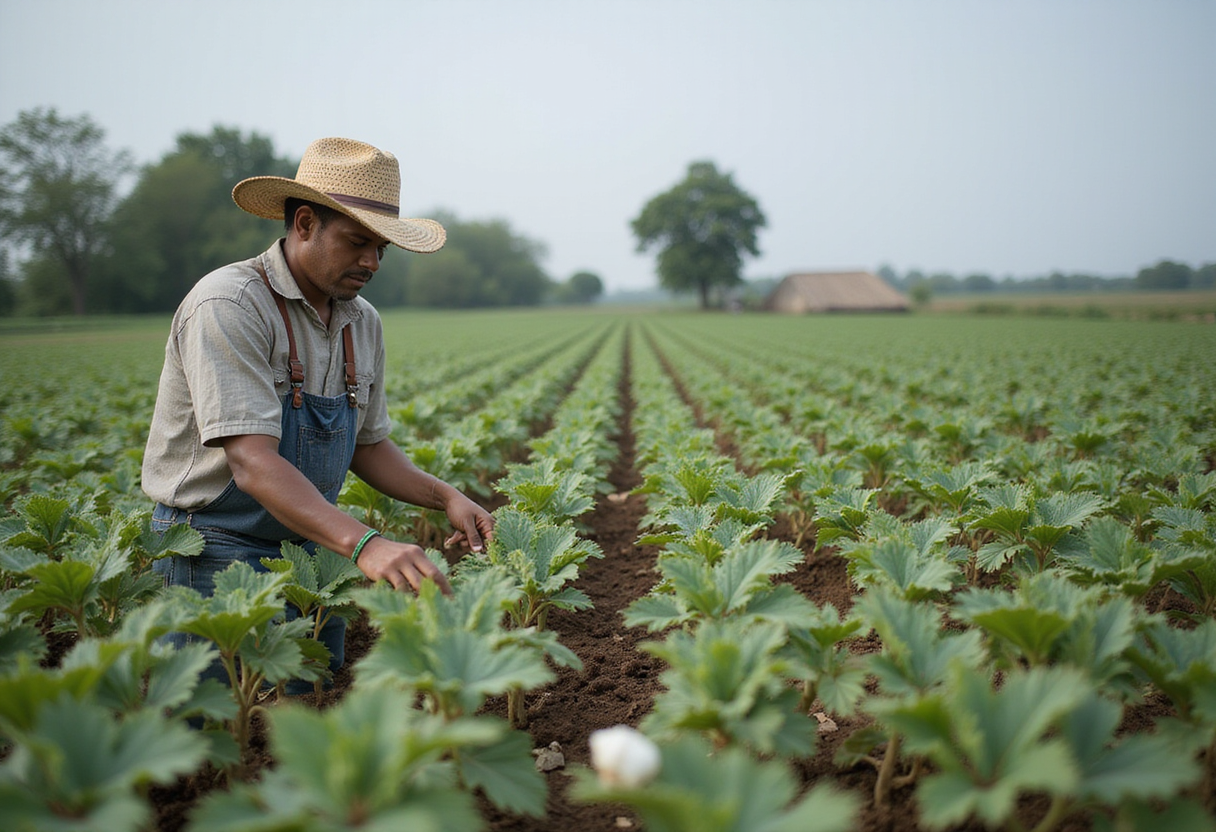
Cotton farmers in Togo are rebuilding degraded soils while reducing the number of pest treatments they apply each season, according to a report published by allAfrica.com.
The report centres on growers who have shifted their field practice toward soil regeneration and tighter pest management. For farmers who depend on cotton — one of Togo's principal cash crops — fewer spray rounds translate directly into lower input bills and less exposure for applicators, while improved soil structure supports better stands in subsequent seasons.
Why does this matter for cotton production?
Cotton across West Africa has faced a squeeze from two directions: declining soil fertility on smallholder plots and rising pressure from insect pests, which has historically pushed spray programmes to the limit of what farm budgets can absorb. A approach that rebuilds organic matter and soil life while cutting pesticide passes addresses both cost lines at once.
Healthier soils hold more moisture and nutrients through the growing season. That gives plants more resilience against pest damage and reduces the payoff from insurance spraying, allowing growers to treat only when pest pressure justifies it.
What does the change mean in the field?
For the farmers covered in the report, the practical effects are twofold:
- Fewer pest treatments per season, cutting spending on crop protection products and labour;
- Progressive restoration of soil fertility, which supports yields over successive rotations rather than in a single season.
The soil-rebuilding approach also carries longer-term significance for cotton schemes that depend on smallholder productivity. Regenerated plots can sustain cultivation without the escalating fertiliser bills that erode margins when world cotton prices are weak.
What should farmers and buyers watch next?
The allAfrica report signals a direction of travel for cotton production in Togo, but the detail that will change field decisions is quantified: how many spray rounds growers are saving per season, what the soil practices cost to implement, and how yields respond over the next two to three seasons. Buyers and ginners sourcing West African cotton should monitor whether these practices spread through the national cotton zone and whether the results hold at scale.
via Google News: crop protection farming (Source)
More from Priya Raman
Nearby records
- JX 23Arkansas farmer cuts input costs through improved soil healthOctober 10, 2026
- JS 88Regenerative practices cut costs and rebuild soil, Indiana farmer reportsSeptember 29, 2026
- MM 64Wet Season Drives Surge in Manitoba Fungicide SprayingOctober 3, 2026
- GX 90Mississippi Farmers Turn to Soil Health as Drought, Floods and Pests Threaten CropsOctober 9, 2026
- TL 66Herbicide Carryover Threatens Fall Cover Crops Across U.S. FieldsOctober 10, 2026