U.S. Wheat Harvest Pushes North as Plains Showers Slow Combines
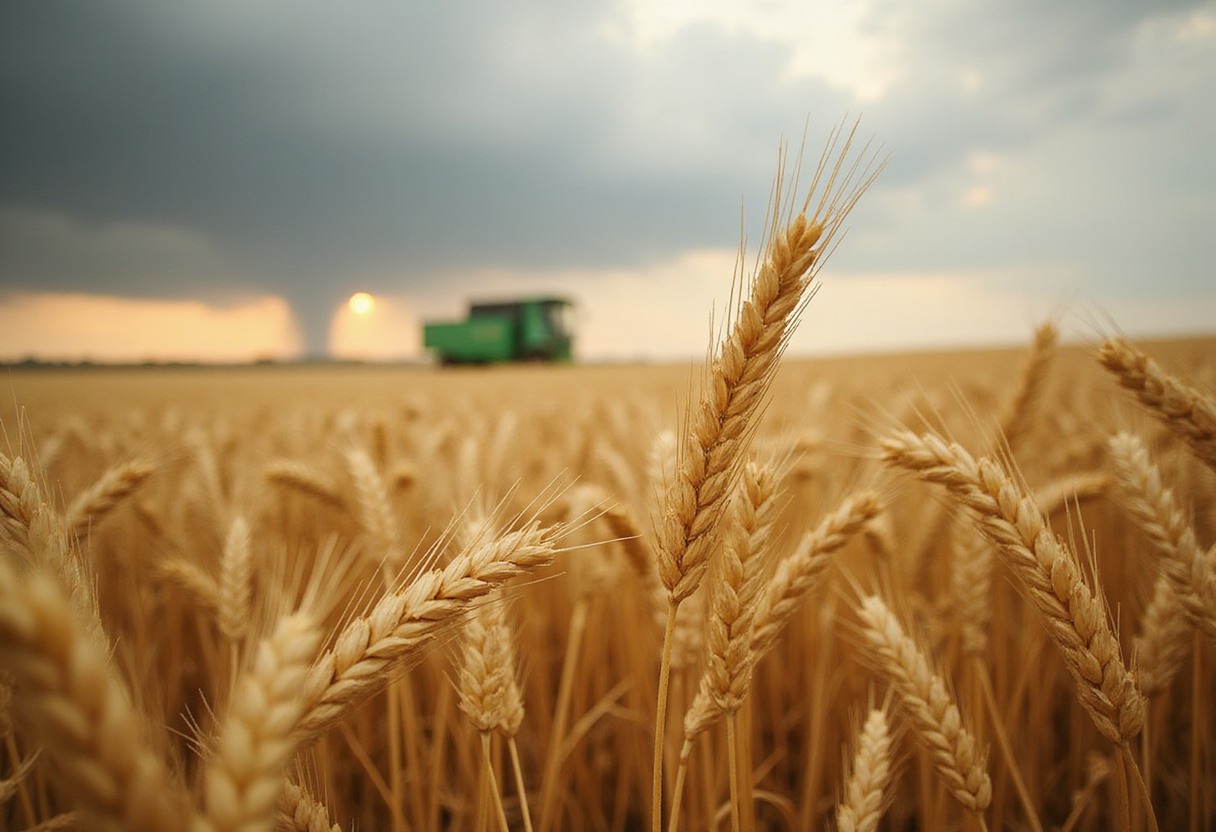
U.S. wheat harvest advanced across the Plains this week despite repeated rain delays that interrupted combining in multiple states, with combines finishing in the south while central growers wait for dry windows.
- Entered
- Plot
- 1.4 ha
- Record
- 569 words
- Walk-through
- 3 min
DrillSprayHarvestCurrent stage
Agronomist’s notes
- U.S. wheat harvest advanced across the Plains this week despite repeated rain delays, Grain Journal reported.
- Southern Plains winter wheat cutting is largely finished while central Plains combines face ongoing showers.
- Spring wheat in the northern Plains is approaching the dry-down stage.
- Rain at harvest can push wheat from milling grade to feed grade pricing.
- Export buyers will track protein readings, test weight, and spring wheat harvest pace.
The U.S. wheat harvest advanced across the Plains this week despite repeated rain delays that interrupted combining in multiple states, Grain Journal reported.
The harvest now spans the full regional arc. In the southern Plains, winter wheat cutting is largely finished and combines are moving off the road. In the central Plains, headers are running on the winter wheat crop, with showers cutting into workable hours. In the northern Plains, spring wheat is approaching dry-down, and operators are watching forecasts more than calendars.
Why does rain matter at this stage?
Wet weather during the harvest window reshapes the economics of a field. Wheat that sits past its ideal moisture loses test weight, falling numbers deteriorate, and pre-harvest sprouting becomes a real risk. Each of those changes moves the crop out of milling-grade specifications and toward feed-grade prices.
The price gap between milling grade and feed grade is wide. A single storm at the wrong hour can drop a field's classification, and the difference between the two price points flows directly off the grower's margin. For operations working on compressed economics, every point of quality lost is revenue that does not arrive.
What is the daily call for operators?
The current rainfall pattern forces the same judgement repeatedly. Cut at slightly higher moisture and run the grain through an aeration bin, paying the drying bill in fuel and time. Or wait for a dry window and accept the risk that another shower arrives first.
In the southern Plains, that decision is closed for the year. In the central Plains, it is the daily question on every farm. In the northern Plains, the call is still ahead.
What will the trade watch?
Export buyers monitoring U.S. wheat will track several signals in the coming weeks:
- Protein readings from the southern Plains set the tone for hard red winter offers
- Test weight data from Kansas and Nebraska shows whether recent weather held or hurt
- Spring wheat harvest pace in the Dakotas determines how quickly new-crop volume reaches Gulf and Pacific Northwest loaders
Storage capacity will also matter. On-farm bins emptying since late spring will start to refill, and the speed of that refill affects basis at local elevators. A delayed harvest compresses the marketing window and tends to push basis wider.
Combine logistics add another layer. Operators chasing a dry window often run longer hours, and breakdowns at the wrong time cost more than usual because the weather window does not wait. Service trucks, parts inventory, and header readiness have moved up the priority list for many central Plains growers this week.
What should farmers watch next?
For growers still in the cutting window, two things matter in the next seven days. The county-level forecast will decide when headers run. The moisture reading on the combine will decide whether the crop goes into a bin as milling wheat or something else.
For those in the northern Plains with spring wheat still in the field, patience is the strategy. The crop is not yet at the stage where rain hurts quality. The risk is more about field access and equipment readiness than grain condition.
The U.S. harvest is moving forward. Rain has slowed it, not stopped it. The crop is coming off. The question for the rest of the season is what grade it arrives as, and at what moisture content.
via Google News: harvest report wheat (Source)
More from Tom Whitfield
Show full bio
Staff writer covering marketplaces and e-commerce at Arable Wire.
103 articles
Nearby records
- AQ 53Winter Wheat Harvest Stalls Unfinished in 7 Top US StatesOctober 10, 2026
- GV 98Dry Spell Speeds U.S. Harvest as Gulf Rains Signal New RisksOctober 10, 2026
- UG 50Rain stalls Midwest corn and soybean harvest as cooler air settles over US farm beltOctober 3, 2026
- NP 93Kansas Wheat Harvest 2026 Nears Halfway Point as Yields SlideOctober 9, 2026
- XC 32Mixed weather and cooler air to test arable fieldwork this weekOctober 10, 2026