US Crop Weather Risk Rises as Drought, Storms and Frost Converge
Drought in the Plains, severe storms in the Corn Belt and late frost risk threaten US wheat, corn and soybean crops, with yield potential being set in the coming weeks.
- Entered
- Plot
- 1.0 ha
- Record
- 418 words
- Walk-through
- 2 min
DrillSprayHarvestCurrent stage
Agronomist’s notes
- Drought is expanding across hard red winter wheat areas of Kansas, Oklahoma and Texas after a dry autumn and winter.
- Severe storms threaten the central and eastern Corn Belt with hail, wind and flood damage to newly planted corn.
- Late frost into late April and early May could kill jointed wheat tillers and emerged early-planted corn.
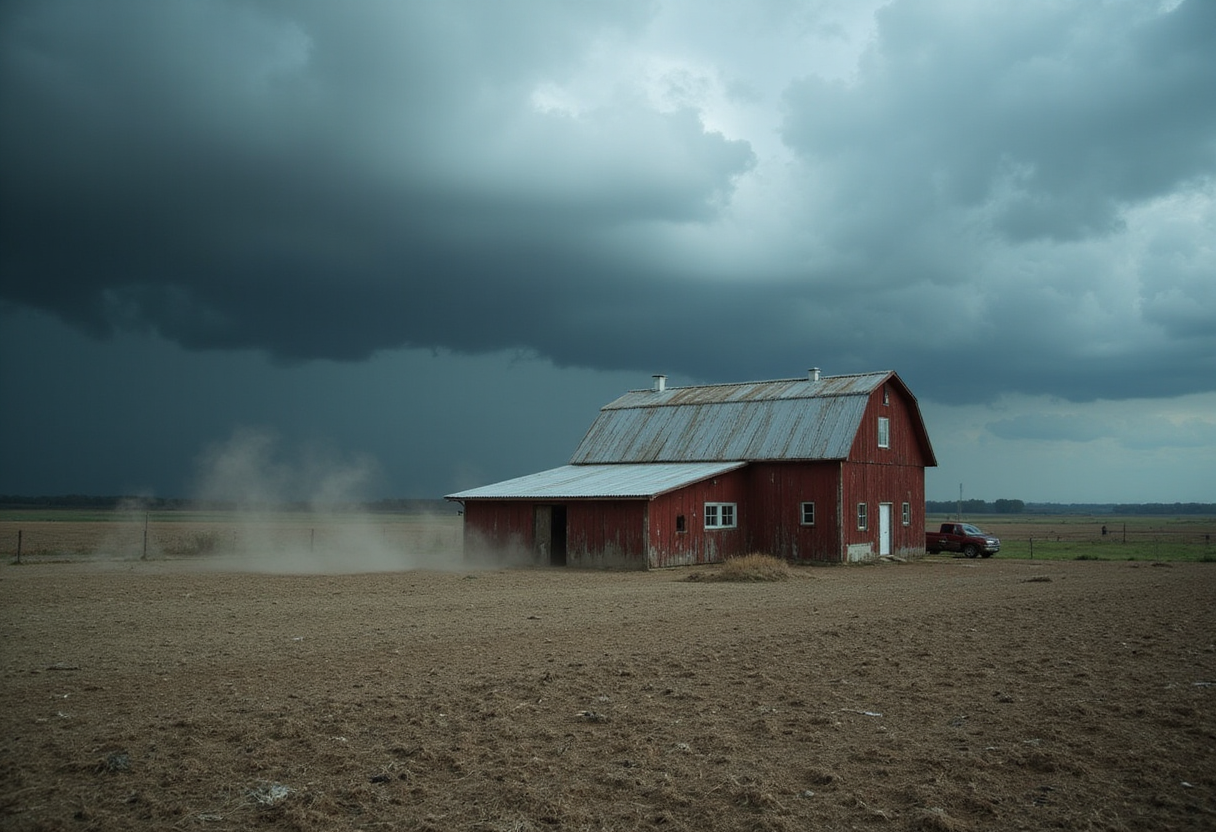
The 2025 US growing season faces a rare three-way weather threat: expanding drought in the Plains, a severe storm corridor across the Corn Belt, and late-spring frost risk for emerging winter wheat.
Drought monitors show dryness tightening across key hard red winter wheat areas of Kansas, Oklahoma and Texas. Subsoil moisture reserves are short after a dry autumn and winter, leaving the crop exposed as it breaks dormancy. Agronomists warn that wheat entering jointing with depleted soil water has little buffer against heat or drying winds later in spring.
Storms compound the problem. Forecasters expect an active severe weather pattern across the central and eastern Corn Belt, bringing hail, damaging winds and heavy downpours. Localised flooding can drown newly planted corn, while hail can shred young stands and force replant decisions. Heavy rain on drought-stressed fields also runs off rather than soaking in, wasting moisture the crop will need in summer.
Frost is the third hazard. Cold snaps remain possible into late April and early May across the central Plains and Midwest. Winter wheat that has greened up early, and early-planted corn that has emerged, are both vulnerable. A hard freeze after jointing can kill wheat tillers outright, cutting yield potential before the crop has a chance to fill.
The combination matters because the risks interact. Drought-stressed wheat is less able to recover from frost injury. Storm-damaged fields lose canopy cover, exposing soil to further moisture loss. Growers who planted early to beat drought may have exposed corn to frost instead. Each threat amplifies the others.
Market watchers are already pricing the risk. Wheat futures have firmed on dry Plains forecasts, and corn and soybean traders are watching planting weather windows closely. A season that starts with poor conditions can compress yield potential even if summer weather turns benign, because crops establish their foundation in these weeks.
For growers, the practical responses are limited but real. Replant decisions should weigh soil moisture at depth, not just surface conditions. Wheat growers can assess tiller survival a few days after any frost event before judging damage. Corn planted into marginal moisture may need a decision on whether to wait for rain or plant into dust, a call that depends on crop insurance dates and hybrid maturity windows.
The next two to three weeks are the critical window. Watch drought monitor updates, frost advisories for emerged wheat, and storm forecasts over the Corn Belt, because the 2025 crop's yield potential is being set now.
via Google News: farming weather (Source)
More from Olivia Hart
Nearby records
- NR 66Plains Heat Builds While Northwest Rains Delay PlantingOctober 3, 2026
- EW 20Freeze Warnings to 90°F Plains Heat: US Crops Caught in Weather SqueezeSeptember 30, 2026
- TN 28Oklahoma wheat crop halved as drought grips 2026 seasonOctober 3, 2026
- AC 43Oklahoma wheat harvest nears finish with quality up, bushels downOctober 3, 2026
- UG 50Rain stalls Midwest corn and soybean harvest as cooler air settles over US farm beltOctober 3, 2026