Drought and wildfires set Great Plains wheat for a rough year
IPM newsroom warns of a 'rough year' for Great Plains wheat farmers as drought and wildfires stack against the next harvest. Kansas, Oklahoma and the Texas Panhandle carry the heaviest exposure.
- Entered
- Plot
- 1.2 ha
- Record
- 487 words
- Walk-through
- 2 min
DrillSprayHarvestCurrent stage
Agronomist’s notes
- IPM Newsroom report warns of a 'rough year' ahead for Great Plains wheat farmers
- Drought and recent wildfires are the two compounding stressors
- Kansas, Oklahoma and the Texas Panhandle carry the heaviest combined exposure
- USDA weekly crop condition ratings and US Drought Monitor maps are the key indicators to watch through May and June
- Crop rotation and fallowing decisions made this summer will shape the 2026 wheat season
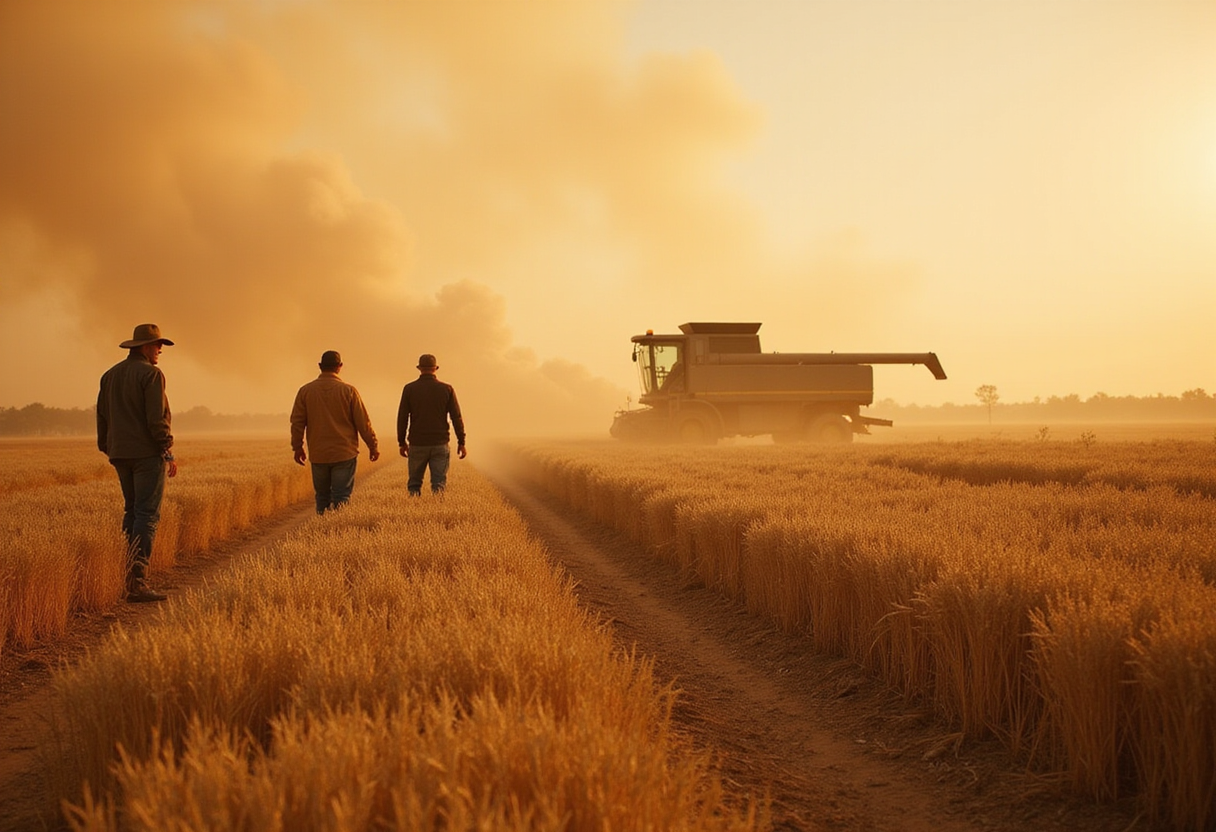
Wheat farmers across the US Great Plains face a sharp combination of drought and wildfire damage heading into the next harvest, according to a new report from the Integrated Pest Management newsroom. The report's headline warns of a "rough year" ahead for growers across the region, with both stressors stacking against the crop.
What conditions are stacking against the crop?
Two pressures drive the outlook. Multi-year drought has left subsoil moisture depleted across much of the wheat belt. Recent wildfires have burned through rangeland, fence rows and, in some places, standing wheat — adding direct crop loss to the moisture problem.
The southern Plains — Kansas, Oklahoma and the Texas Panhandle — carry the heaviest combined exposure. Winter wheat planted last autumn went into dry ground in many counties, and stands that survived have already entered spring with reduced yield potential.
Why does the timing hurt so much?
Wheat sets the components of yield — plant population, tiller count and head size — early in the season. A deficit at emergence or tillering cannot be recovered by later rainfall. The damage from drought and fire therefore arrives before growers have many levers left to pull.
For spring wheat producers in the Dakotas and Montana, the picture is different. Their crop depends on rainfall that arrives during the growing season, so a poor start can still be partly rescued by a wetter June.
What decisions do farmers face now?
Growers weighing the season's prospects are looking at several questions:
- Whether to keep a thin or damaged stand, or terminate it for forage or a summer alternative
- How to right-size nitrogen and other inputs for a lower expected yield
- Whether federal disaster or crop insurance programmes will trigger on failed or burned acres
- How to manage dual-purpose wheat where grazing demand is rising
What signals should farmers watch?
Three indicators will show whether the season stabilises or worsens:
- USDA weekly crop condition ratings, which report the share of wheat rated good-to-excellent
- US Drought Monitor maps, released each Thursday and tracking the extent of severe to exceptional drought across the Plains
- Local wildfire reports, since late-spring burns can still take out heading or flowering wheat
What happens after harvest?
Crop decisions made this summer — fallowing, cover cropping or rotating to sorghum, corn or sunflower — will shape the 2026 season. Many Plains agronomists recommend soil-moisture probing before deciding whether to keep wheat in the rotation.
If the season unfolds as the headline warns, hard red winter wheat supplies will tighten. That class dominates Plains production and supplies most US bread flour. Tighter domestic supply usually lifts Kansas City wheat futures, though global harvests in Russia, the EU and Australia set the ceiling.
Watch the May and June rainfall totals, the weekly condition ratings, and any new fire incidents in the southern Plains. Those three readings will decide whether "rough" stays manageable or becomes a full-blown disaster.
via Google News: harvest report wheat (Source)
More from Priya Raman
Nearby records
- YU 20US Crop Weather Risk Rises as Drought, Storms and Frost ConvergeOctober 3, 2026
- NR 66Plains Heat Builds While Northwest Rains Delay PlantingOctober 3, 2026
- TN 28Oklahoma wheat crop halved as drought grips 2026 seasonOctober 3, 2026
- AE 74Kansas wheat crop on track to be worst since 1972October 10, 2026
- XA 66Oklahoma wheat harvest 90% complete amid drought recovery and rain delaysOctober 10, 2026