York County corn farm loses thousands to weather extremes
A York County, Pennsylvania farm has lost thousands of dollars in corn after wet planting conditions and dry grain fill hammered yields across the 2024 season.
- Entered
- Plot
- 1.4 ha
- Record
- 573 words
- Walk-through
- 3 min
DrillSprayHarvestCurrent stage
Agronomist’s notes
- A York County, Pennsylvania farm lost thousands of dollars in corn to weather extremes
- Wet planting conditions followed by dry periods at grain fill drove the losses
- Crop insurance and drainage investment are the key levers growers can adjust for 2025
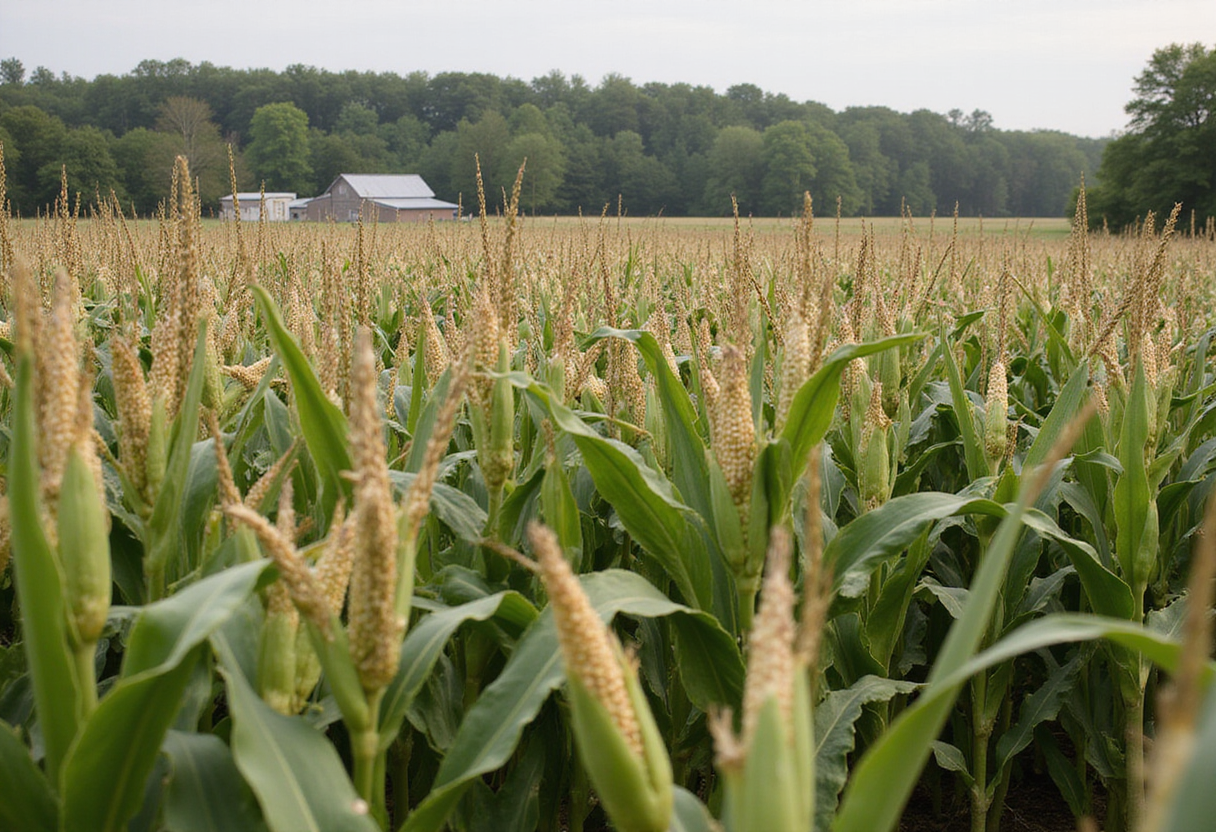
A farm in York County, Pennsylvania, has lost thousands of dollars in corn as weather extremes took their toll on the 2024 crop, local outlet Fox43 (Local21News) reports.
The loss puts a hard number on a season growers across south-central Pennsylvania will recognise. Heavy, poorly distributed rainfall early in the growing window kept planters out of fields and delayed emergence. Heat and dry stretches followed at critical stages of grain fill. The result, on this operation, was a corn crop that will not cover its input costs.
For a typical York County corn acre, seed, fertiliser, chemical and fuel bills alone commonly run to several hundred dollars before land, labour and machinery charges. A crop failure or severe yield hit on even a modest acreage therefore reaches five figures quickly. On this farm, the grower told the station the damage runs to thousands of dollars — money that will not return through the combine this autumn.
Why this season bit hard
Corn yields hinge on timing. Wet planting conditions compress the window and push sowing into shorter-season hybrids with lower yield ceilings. Saturated soils at emergence stunt root systems, and a shallow root profile leaves the crop exposed when rain shuts off in July. That is precisely the pattern growers in the region have described this year: too much water early, too little at the wrong moments later.
Compaction adds a second penalty. Fieldwork on wet ground squeezes pore space in the soil profile, and compacted layers restrict root depth for the rest of the season. Growers who waited for drier conditions traded planting date for soil structure — a decision with no clean answer in a year like this.
What it means for the farm gate
The York County loss is a cash-flow event, not just an agronomic one. A crop that fails after inputs are spent leaves the grower carrying fertiliser and seed costs into next season with no matching revenue. Crop insurance — where coverage was taken at adequate yield and price levels — becomes the difference between a bad year and a solvency question. Growers without insured yields, or those farming rented ground with cash rents fixed regardless of harvest, face the sharpest exposure.
Regional processors and elevators will also feel the pinch if the pattern holds beyond one farm. Local corn supplies feed dairy, poultry and ethanol demand across Pennsylvania and the Mid-Atlantic; short crops tighten that balance sheet and lift nearby basis.
Building resilience into the next rotation
Growers reviewing this season have a short list of levers. Drainage improvements — pattern tiling on the wettest fields — buy back planting days in exactly the years that cost the most. Cover crops and reduced tillage improve water infiltration and buffer both ends of the moisture extreme. Hybrid selection with strong emergence scores and drought tolerance spreads the risk within a single field.
Insurance decisions made each spring now carry more weight. Revenue protection tied to county or individual yields turns a weather disaster into a manageable loss rather than a balance-sheet shock.
What to watch next
The York County grower's next milestones are harvest, insurance claims documentation and replanning for 2025. Farmers across the region should watch how county yield averages settle once harvest data lands, because those figures set the guarantees underpinning next year's policies. Agronomists advising on 2025 rotations will also want a hard look at drainage investment payback after two seasons of extremes.
via Google News: farming weather (Source)
More from Daniel Okafor
Nearby records
- VE 82US Farm Weather: Midwest Rains Build as Southern Heat Drains Soil Moisture - AgroLatamOctober 3, 2026
- TW 17'Spoon-Feeding' Fertility Drives Record Corn Yields in PennsylvaniaSeptember 30, 2026
- RC 65Corn Harvest Hits 5% as Crop Condition Slides to Season LowOctober 3, 2026
- JS 88Regenerative practices cut costs and rebuild soil, Indiana farmer reportsSeptember 29, 2026
- XF 54US crops face late-summer stress as heat, wildfire smoke and uneven rain spreadOctober 3, 2026