1,5ha of a 150ha farm: how a Woolworths prize reshaped Marapyane
A Woolworths Youth Makers 2026 win has brought Global GAP compliance, IPM and drip irrigation to Nthato Motlana's 1,5ha vegetable operation on a 150ha Gauteng farm.
- Entered
- Plot
- 1.6 ha
- Record
- 646 words
- Walk-through
- 3 min
DrillSprayHarvestPlanning window
Agronomist’s notes
- Nthato Motlana farms 1,5ha of a 150ha farm at Lanseria, Gauteng, and was named a Woolworths Youth Makers 2026 winner.
- Around 150,000 seedlings a year are produced on the farm, half of all seedlings planted.
- A year of work with Woolworths has targeted Global GAP compliance and integrated pest management.
- The farm employs four permanent workers and 10 to 15 seasonal staff at peak periods.
- Drip irrigation replaced micro-irrigation to cut water, electricity and disease pressure.
Nthato Motlana cultivates just 1,5ha of his family's 150ha Marapyane farm in Lanseria, Gauteng, yet winning a place in the Woolworths Youth Makers 2026 programme has already changed how every square metre of it is managed. A year of work with the retailer's technical team has delivered integrated pest management, Global GAP compliance, and a production system he now runs on measurement rather than guesswork.
Motlana left the corporate world in 2023 to farm full-time, two years after starting part-time in 2022. He holds a B.Com degree and initially saw farming as a sideline. "It started as a side hustle, but I soon realised there were far greater opportunities in agriculture than in the corporate world," he says. "The only way I could reap those rewards was if I invested 100% of my time on the farm."
His grandfather, also named Nthato, grew lettuce hydroponically on the property. His father built a career with Hans Merensky, a renewable bioresource company with vertically integrated value chains.
What does the crop mix tell us?
Spinach came first, but low returns and volatile prices pushed Motlana towards baby marrows, which hold their price at market. Sweet peppers followed, with cabbage planted in winter. Around half of his seedlings — roughly 150,000 a year — are raised on the farm. He trials crops continually; a sugar snap pea trial this year tested how late the crop could go in and still catch a better marketing window.
"Each farm has a micro climate that could allow for a significant shift in a production window, which could result in better returns at the market," he says.
His market is deliberately local. Marapyane supplies independent fresh produce stores in northern Johannesburg, which otherwise buy from the Joburg Fresh Produce Market in the south of the city. Direct supply cuts transport costs for both sides, and demand from the stores leaves room to expand.
What did compliance change?
Woolworths was blunt from the start: the award carries no automatic offtake agreement. The retailer instead committed to bringing the farm up to its supplier standard, with Global GAP certification as the target. The work has centred on integrated pest management and record-keeping.
Motlana wanted to farm organically when he started, but pest pressure made it unworkable. Woolworths introduced him to biological control, releasing predatory insects against pests. "I had heard about predatory insects, but didn't realise how affordable and effective they were," he says. He times releases carefully so synthetic sprays do not kill them, and applies biologicals early in the season to keep pressure low, spraying synthetics only when infestations rise.
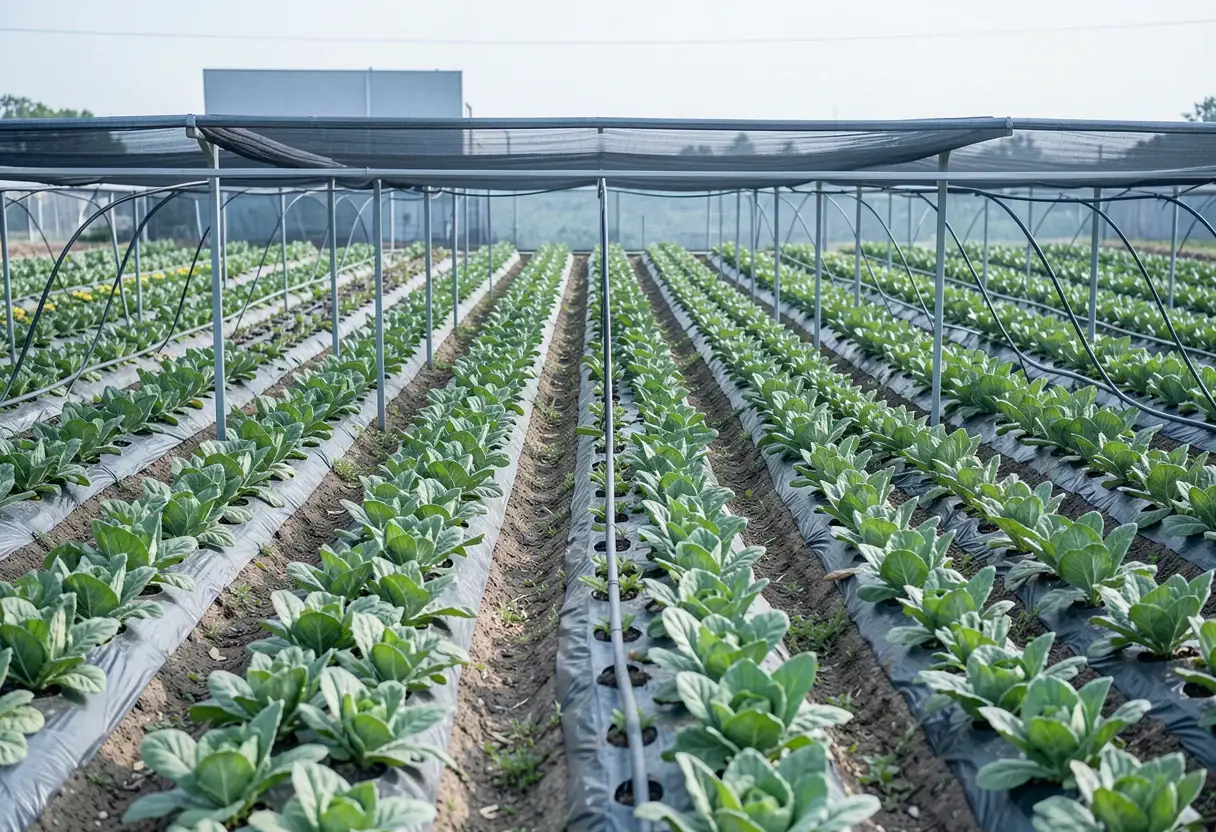
Mulch plastic on the rows retains moisture, suppresses weeds and has cut herbicide volumes. The audit process extended well beyond chemicals into staff welfare and health and safety training. "Global GAP does not just look at chemical use and management but also staff welfare," he notes, and the discipline has sharpened yields: fertiliser and pesticide dilutions are now measured and logged, not estimated.
Where are the remaining bottlenecks?
Water drove a switch from micro-irrigation to gravity-fed drip, which cuts electricity costs, lowers disease pressure and lets him track exactly how much water each crop receives. Finance remains the hard constraint. "You can't scale up without funding, but financiers are hesitant to fund you unless you have sufficient scale," he says. His new records should strengthen that case.
Labour has stabilised: four permanent workers, plus 10 to 15 seasonal employees at peak. An Enza Zaden seed day showed him how matching varieties to planting windows can extend production through the year.
Motlana is watching the coming season for proof that the changes pay. With 148,5ha still uncultivated, he intends to fix the fundamentals before expanding — and advises newcomers to start now, use every free resource, and let their location dictate what they grow.
via google.com (Original)
More from Tom Whitfield
Show full bio
Staff writer covering regulation, policy and their impact on production farming and field operations at Arable Wire.
185 articles
Nearby records
- FB 90Kirkwood irrigator Pieter Nortjé named 2026 Grain SA/Syngenta Producer of the YearOctober 27, 2026
- SV 24One Florida acre produces 1.7 million heads of lettuce a yearNovember 2, 2026
- NH 42Limerick dairy farm cuts feed costs 96% with regenerative systemOctober 25, 2026
- XF 99Uganda bets on drought-tolerant seed and 80/20 irrigation to shield yieldsOctober 30, 2026
- UZ 36DRiS soil data from 34 localities reshapes South African CA trialsOctober 21, 2026