One Florida acre produces 1.7 million heads of lettuce a year
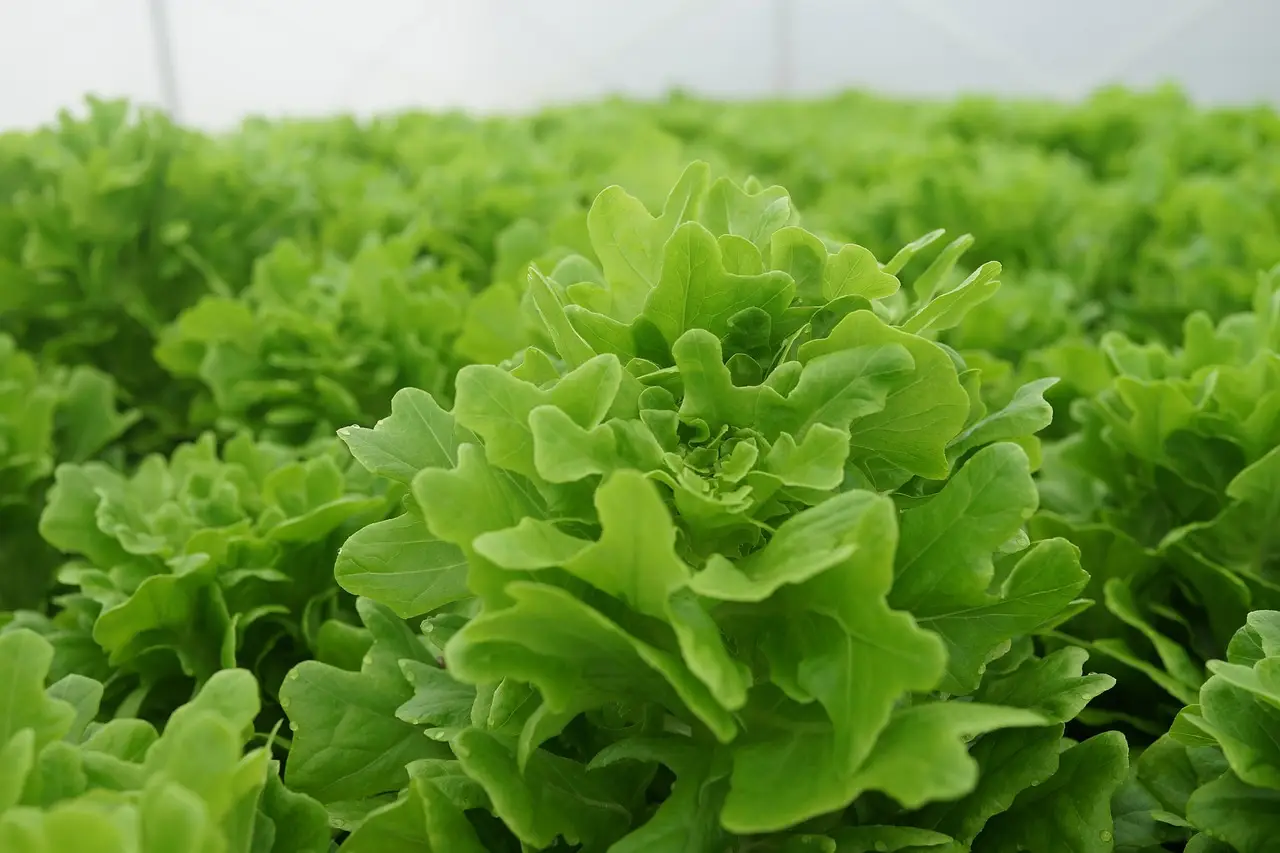
A 1-acre hydroponic farm in Naples, Florida, grows 1.7 million heads of lettuce yearly on a 10,000-gallon recirculating water system run from a phone.
- Entered
- Plot
- 2.0 ha
- Record
- 798 words
- Walk-through
- 4 min
DrillSprayHarvestPlanning window
Agronomist’s notes
- Naples Fresh produces about 1.7 million heads of lettuce per year on 1 acre in Naples, Florida.
- The hydroponic system circulates roughly 10,000 gallons of water total, versus about 6,800 gallons per acre per day for average irrigated fields.
- Lettuce moves from seed to finished product in about 42 days, extending to nearly 60 days in cooler winter temperatures.
- The farm uses Israeli-based shallow-water hydroponic technology controlled from a handheld device.
- All lettuce stays in Florida, sold weekly through local independent grocers.
A 1-acre hydroponic farm in Naples, Florida, ships roughly 1.7 million heads of lettuce to grocery stores every year. Saint'Clair Martins Jr. runs Naples Fresh alongside his father, Saint'Clair Sr., on an intensive operation that circulates just 10,000 gallons of water in total — while an average farm field under irrigation uses about 6,800 gallons per acre per day.
The numbers explain why investors and lenders are watching controlled-environment agriculture closely. One acre, a closed water loop, and a 42-day seed-to-harvest cycle now outproduce what conventional field acreage delivers in the same footprint, in a state where summer heat and humidity rule out most field lettuce.
What does the system actually look like?
Martins left a career on the livestock side of the yeast industry in the Midwest to farm fruit and vegetables in southern Florida. His father came from finance. Neither background reassured their bank.
"We started as an organic farm out here on a 15-acre property," Martins said. "The bank wasn't too sure about loaning farm money to a guy in biotechnology and one in finance. They wanted us to prove we could make it as farmers first."
After a few years of profitability, the bank approved a loan for a greenhouse system, and later for the fully automated hydroponic setup that defines the operation today. The family still farms the original 15-acre property, with the 1-acre greenhouse as its productive core.
"Intensive farming is like perfecting a recipe," Martins said. "Growing each plant takes just the right amount of ingredients, and after a few years, you've got the best lasagna around."
Why shallow-water hydroponics?
The farm did not default to the most common designs. Martins lays out the choice plainly.
"There are three major types of hydroponic systems: deep water, gutter-based systems and what we have is an Israeli-based technology using shallow water," he said. "It's more efficient at recycling water, and if something does go wrong, there's less water in the total system if it needs to be flushed."
That flushing advantage matters. In a deep-water system holding far more volume, a contamination event means dumping and refilling a much larger reserve. Naples Fresh's 10,000-gallon loop keeps that downside small.
The control side is deliberately semi-automated. "This system is what we call semi-AI," Martins said. "It's a regular computer program that uses parameters to make decisions — whether to cut the system on or off. It follows the temperatures I input and my controls. I don't know that a fully autonomous system is for us yet. I still like to be hands-on in the decision process."
All the system controls fit in the palm of his hand. The plants do the moving: lettuce travels through the system from seed to finished product in about 42 days, and new lettuce leaves the temperature-controlled stocking room for consumers every week.
What grows, and where does it go?
The flagship crop is burger leaf lettuce — large heads bred to hold up to heat and humidity, both between a burger bun and in the Florida sun. Variety selection is doing quiet work here: a head that survives a Florida summer also survives the grill and the retail shelf.
Seasonality shifts the cycle. "In the summer months, the lettuce grows faster, but humidity creates more complications," Martins said. "In the winter, it's less humid, and the cooler temperatures lead to much larger lettuce heads. But it takes closer to 60 days than our 42."
Distribution stays local. All Naples Fresh lettuce remains in Florida, packaged and sold through independent grocers across the state each week — no national chains, no out-of-state shipping.
Why it goes beyond yield
For Martins, the operation answered a frustration he carried out of corporate biotechnology: the chance to touch every part of the business rather than one silo.
"This is why we wanted to be farmers — to have myself, my father and my son all here spending time together," he said. "I don't have to specialize in any one thing. I can have a hand in all aspects of our production."
He frames the technology bet as a down payment on farming's future. "I truly believe in this industrial revolution we're in of [technological] innovation that farmers will be the last to turn the lights off. We know best how to grow great food," Martins said.
For growers weighing controlled-environment investments, the Naples Fresh model offers one clear benchmark: prove field-level profitability first, then borrow for the greenhouse. Watch whether shallow-water Israeli hydroponic technology — still rare among US lettuce operations — spreads beyond southwest Florida as water constraints tighten.
via Farm Progress (Source)
More from Daniel Okafor
Show full bio
Market editor covering money, funding and market shifts around production farming and field operations at Arable Wire.
172 articles
Nearby records
- KE 98Manage soil like a bank account, Missouri extension expert urgesOctober 10, 2026
- KP 61Nebraska's Largest Irrigation District Doubles Canal-Fed Pivots Since 2010October 30, 2026
- RS 30MSU long-term data: regenerative practices lift yield stabilityOctober 3, 2026
- KC 40Drought Threatens Middle Tennessee Crops as Farmers AdaptOctober 15, 2026
- LB 19Farmers for Soil Health doubles Ohio cover crop enrollment to 24,000 acresOctober 3, 2026