101-Year-Old Boer Goat Stud Endures 50mm Rainfall Years in Noorsveld
The 101-year-old Sakkie and Nicky Nell Boer goat stud survived 50mm rainfall years in the Eastern Cape Noorsveld, posting 180% kidding and 160% weaning rates on 2ha/SLU country.
- Entered
- Plot
- 2.6 ha
- Record
- 1,042 words
- Walk-through
- 5 min
DrillSprayHarvestPlanning window
Agronomist’s notes
- The Sakkie and Nicky Nell Boer goat stud, established in 1925, is 101 years old and runs 450 animals.
- The farm received just 50mm of rain in 2018 and 65mm in 2019 against a 250mm annual average.
- The stud averages a 180% kidding percentage, 160% weaning percentage and 50%–52% slaughter percentage.
- Top sale prices are R70 000 for a ewe and R50 000 for a ram; a Nell ewe was world champion at the 2006 Boer Goat World Show.
- Flock diet is 60% browsing and 40% grazing at a stocking rate of 2ha per small livestock unit.
A Boer goat stud established in 1925 has survived a drought that ran from 2014 until early 2026 on as little as 50mm of annual rainfall — a fifth of its area's long-term average — and still posts a 180% kidding percentage.
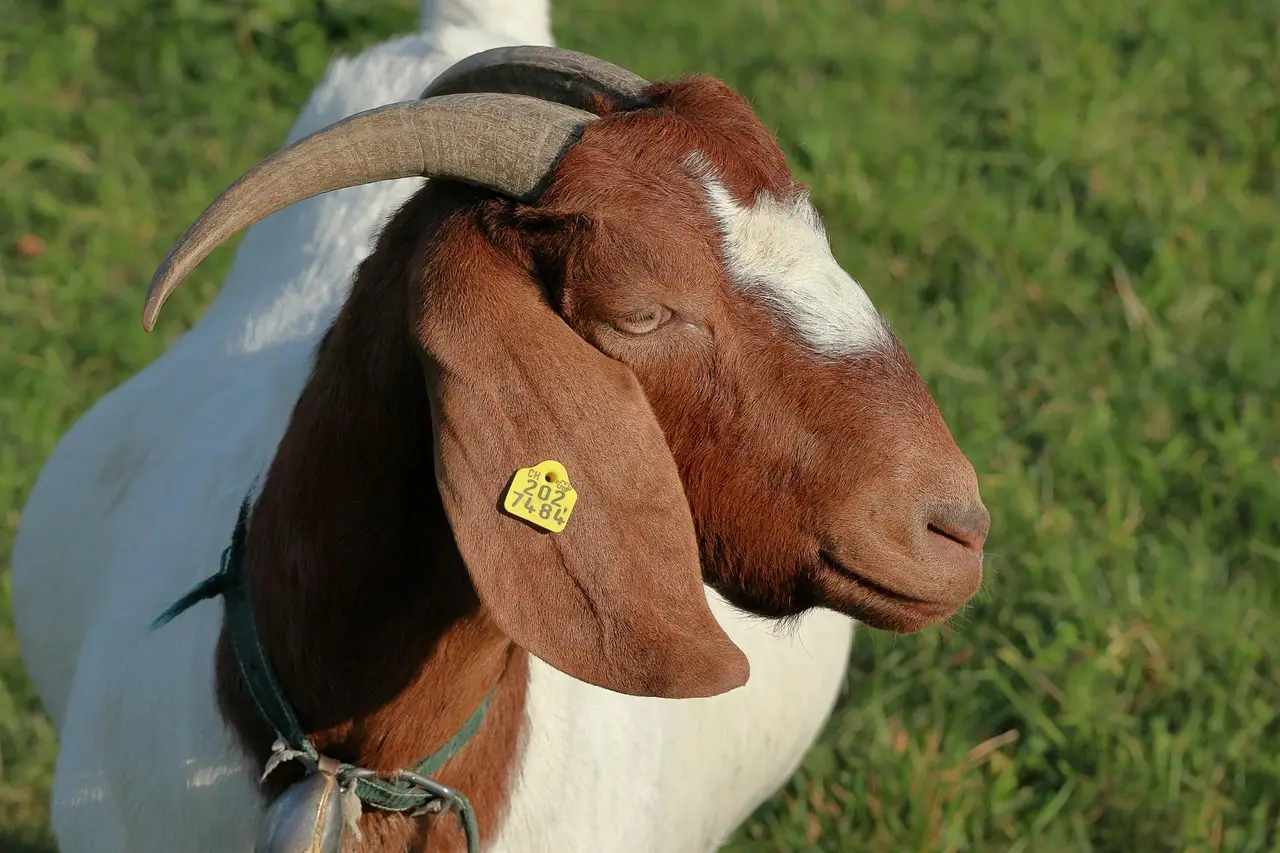
The Sakkie and Nicky Nell stud, one of the oldest active Boer goat studs in the world at 101 years old, runs 450 animals under extensive conditions in the Noorsveld, a small pocket of the Eastern Cape's arid interior near Jansenville on the southern fringe of the Camdeboo Plain.
"The Boer goat has been developed over the decades specifically for excellence under harsh farming conditions, and the breed's ability to not only survive, but to excel under such conditions has been proven by our flock over and over again," says Sakkie Nell, the sixth-generation breeder who joined the farming concern in 1997. His son Nicky, generation seven, came on board in 2014.
The numbers back him up. The area averages 250mm of rain a year, but the farm received just 50mm in 2018 and 65mm in 2019. "Because of their innate genetic composition and ability, our goats came through the drought years relatively unscathed, proving the economic value of the breed under such difficult conditions," Sakkie says.
How the flock started
The family's switch to Boer goats traces to a single catastrophic night in 1933, when fourth-generation farmer Louis Nell lost 700 Angora goats in a shed during a terribly cold spell. Traumatatised, he swore off Angoras entirely and moved into Boer goats.
Louis later helped establish the South African Boer Goat Breeders' Association in 1959. His son Louis Jnr took over as the fifth generation, followed by Sakkie and now Nicky — seven generations of unbroken Boer goat breeding on one farm.
What does the Noorsveld demand?
The veld itself is defined by sweet noors (Euphorbia coerulescens), an erect, spiny euphorbia averaging about 1m in height that dominates dense stands across the region. Despite its thorns, it's palatable — hence "sweet" — and serves as valuable drought fodder for sheep and goats.
The Nells' management leans on that trait hard. During droughts, they slash noors plants in half to make them accessible to the goats, prevent overgrazing, and feed a protein or energy lick only in extremely dry conditions. "The Noorsveld area is high in minerals and very nutritious, so there is normally no need to supplement the goats' diet," Sakkie explains.
The flock's diet splits 60% browsing and 40% grazing, which lifts the farm's carrying capacity to a stocking rate of 2ha per small livestock unit (SLU, the standard grazing-demand measure). Stud animals are occasionally fed before a competition, but not as a rule — the goats have to thrive on the veld.
How strict are the selection standards?
Selection follows the Boer Goat Breeders' Association breed standards, with emphasis on length, depth and femininity in ewes, and masculinity plus high libido in rams. Mothering ability ranks at the top because ewes must kid and raise offspring under stress.
"We are very strict in terms of udder development and teats in particular. We do not allow more than two teats per udder," says Nicky. "Only one teat on each side of the udder is allowed. We also only use rams with two teats."
Rams must also deliver top growth on the veld under extensive grazing, with good servicing ability. Uniformity across the flock is a stated goal.
Outside genetics enter cautiously. The father-son team mainly uses its own rams, occasionally drawing from the Lucas Burger and Nico Botha studs. Introduced rams run for no more than a single breeding cycle; afterwards, only rams carrying 50% new genetics and 50% Nell genetics are used.
"We take the utmost care when introducing outside rams into the flock and make sure of such a ram's genetic integrity beforehand," Sakkie says. "Despite the fact that external genetics can add significantly to the quality of our flock, they could also introduce some negative traits."
What do the production figures look like?
The stud's performance data reads like a commercial benchmark:
- Average kidding percentage: 180%
- Average weaning percentage: 160%
- Average birthweight: 4kg–5kg (3kg–3,5kg for triplets, depending on veld condition)
- Average slaughter percentage: 50%–52%
- Ewes mated at 14 months, kidding at 19 months
- Productive ewe lifespan up to 10 years, depending on teeth
- 20% of older ewes replaced by young ewes annually
The land is divided into camps of 120ha to 300ha, each with two watering points placed far apart to limit overgrazing and trampling around water. Goats rotate between camps based on the condition of both veld and animals.
The stud runs two breeding seasons. Rams go in with ewes in November for April/May kidding, and again in March/April for August/September kidding — a system Nicky says adds significantly to management ease. Kidding happens in 50ha–60ha camps, with ewes inspected every morning and evening.
Newborn identification is systematic. Single kids get a number on the left shoulder; twins are marked on the right shoulder with a dot on the rump; triplets carry a mark on the left side with a dot on the shoulder. Once strong enough, kids are tagged and moved to bigger camps.
What has the stud won?
The multi award-winning operation has collected international, national and Eastern Cape championship prizes over the decades. The standout: a Nell ewe was named world champion at the 2006 Boer Goat World Show.
Animals are marketed mainly through the stud's own production sales, serving both commercial producers and other stud breeders. The top prices so far are R70 000 for a ewe and R50 000 for a ram.
"For us as stud breeders, our biggest achievement lies in the fact that our clients are pleased with the genetics they acquired from us," says Nicky. "We see our clients as highly valued partners and believe in continuing a relationship with them after they have bought our animals."
With the 2014-to-early-2026 drought now broken, the Nells' next test is rebuilding veld condition while holding their 160% weaning rate — and buyers watching the production sales should watch whether the 101-year-old bloodline keeps performing on recovered grazing.
via Farmers Weekly South Africa (Source)
More from Daniel Okafor
Show full bio
Market editor covering money, funding and market shifts around production farming and field operations at Arable Wire.
199 articles
Nearby records
- FK 60Zimbabwe economist: resilient livestock farming starts with feed planningNovember 17, 2026
- JQ 36Water Infrastructure Lifted Conception Rates 50% at SD Award RanchNovember 12, 2026
- ZQ 15South African groundnut output climbs to 65 620t as plantings shrinkOctober 23, 2026
- JC 80French dairy farm runs 130 Kiwi-cross cows on 214ha of grassOctober 29, 2026
- UW 83Zimbabwean Farmers Plan Around El Niño With Fodder, Water ReservesOctober 25, 2026