Corn residue is treasure, not trash: why tillage slows the nitrogen cycle
Corn residue vanishes before harvest on mature soil health farms, GMO or not. Earthworms, not tillage, drive the nitrogen cycle — and shredding stalks may slow it down.
- Entered
- Plot
- 1.3 ha
- Record
- 530 words
- Walk-through
- 3 min
DrillSprayHarvestCurrent stage
Agronomist’s notes
- Report dated 27 October 2026 argues corn residue is a nutrient resource, not a disposal problem.
- Farmers on multi-year soil health plans report corn residue disappearing before harvest, GMO or non-GMO.
- At corn maturity, leftover nitrogen moves back down the stalk for storage.
- Earthworms are surface feeders; tilling residue under slows nutrient release.
- Recommended fixes include cover crops, later termination and higher-carbon covers.
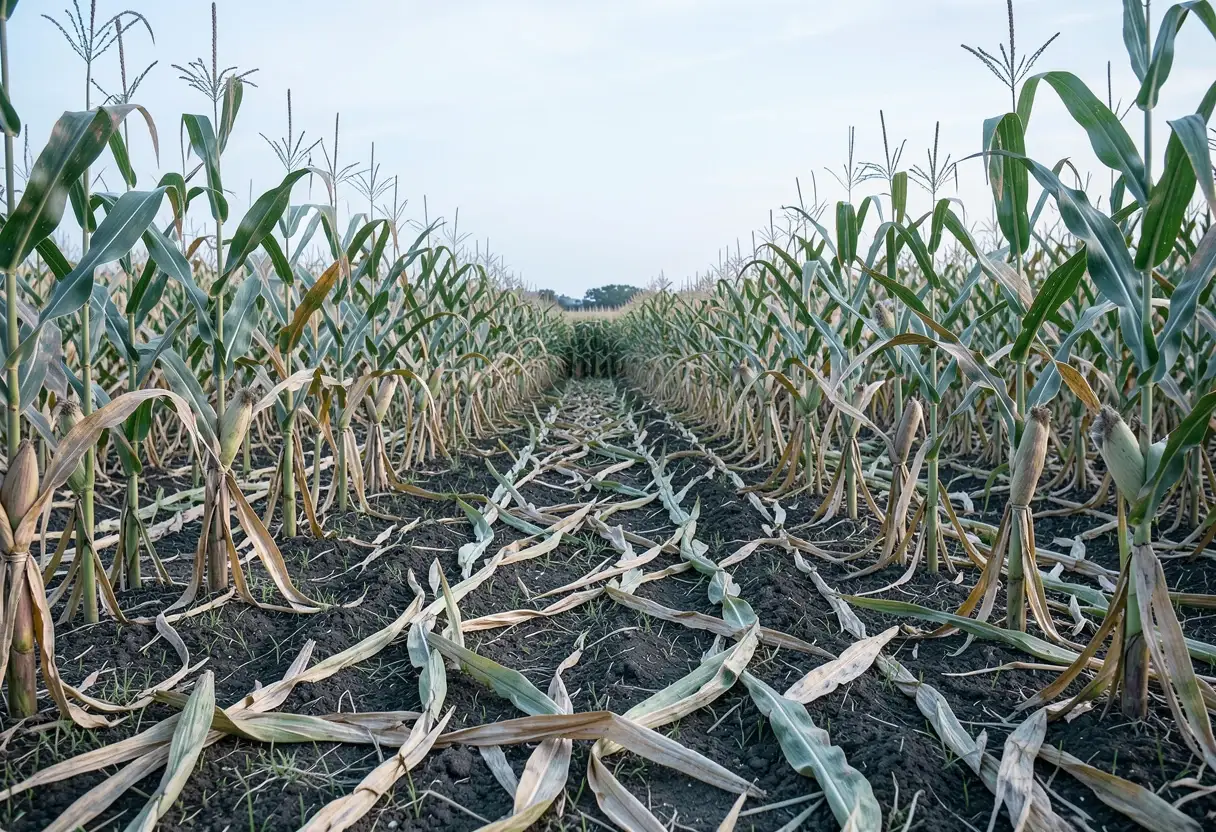
Corn residue disappears before harvest on farms that have run a soil health plan for a few years — regardless of whether the hybrid is GMO or non-GMO. That observation, reported on 27 October 2026, challenges one of the most persistent assumptions in corn country: that stalks must be sized with a chopping corn head or vertical tillage implement before they can break down.
The biology behind the assumption starts at maturity. When corn matures, the movement of nitrogen from the soil through the plant to the ear reverses. Any leftover nitrogen travels back down the stalk, where the plant stores it.
The agronomic goal is to return that stored nitrogen to the natural cycle for future crops without losing it through pathways such as leaching. The common belief holds that chopping or vertical tillage speeds that return.
Does GMO corn really break down more slowly?
The idea that residue must be mechanically shredded has been promoted in part by the predominance of GMO corn hybrids. The common thought is that GMO corn residue takes longer to break down than residue from non-GMO hybrids.
Field experience from farmers following soil health plans says otherwise. Those farmers report that corn residue vanishes through the summer — sometimes even in a corn-heavy rotation and with cover crops in the mix. GMO or non-GMO, it does not matter. The residue is gone before the combine arrives.
What actually breaks down the stalks?
The reason lies below the soil surface. As a soil health system develops, macro- and microbiology populations grow in size and activity. Earthworms start the process. They break down residue, pass it through their bodies, and leave nutrients behind for microbiology to prepare for plant uptake.
This is where tillage works against the farmer. Earthworms are surface feeders. They do not consume residue below the soil surface, so tilling residue under slows the release of available nutrients from that material. Earthworms also do not flourish in tillage systems.
The comparison is blunt: imagine having your home destroyed on a yearly basis. That is what annual tillage does to an earthworm population.
Why residue protects the bottom line
Residue carries two functions at once. It holds leftover nutrients, and it protects the soil surface from wind and water erosion. Treating it as waste discards both.
For farmers who have started a soil health program and now watch residue disappear during the summer, the recommendation is to rebuild the resource rather than mourn the loss:
- Plant cover crops to keep feeding the biology.
- Implement later termination to increase biomass.
- Incorporate higher-carbon covers to add additional residue.
The payoff compounds over time. As soil biology responds to these changes, the nutrient cycle becomes more efficient. The expected result is a reduced need for commercial inputs — a direct line from biology to the fertiliser bill.
The verdict from the field is straightforward. Residue is a treasure, and it is time to start treating it as such. Farmers still relying on chopping heads and vertical tillage should watch their residue cover next summer: if it is vanishing on its own, the biology is already working, and the iron can stay in the shed.
via Farm Progress (Source)
More from Tom Whitfield
Show full bio
Staff writer covering regulation, policy and their impact on production farming and field operations at Arable Wire.
177 articles
Nearby records
- KF 52Residue Breakdown: What No-Till Farmers Stand to Lose or GainOctober 13, 2026
- QR 81Faster residue breakdown moves up the field-readiness toolkitOctober 18, 2026
- YM 30Farm Progress distills soybean residue into five decision pointsOctober 14, 2026
- EZ 54York County corn farm loses thousands to weather extremesSeptember 29, 2026
- CP 90Soybean residue: why post-harvest assessment shapes next seasonOctober 14, 2026