Texas peanut growers adjust to market and weather in 2026
Texas peanut growers are recalibrating 2026 plans around shifting market signals and weather risk, balancing contracts, irrigation and rotations for the season ahead.
- Entered
- Plot
- 0.9 ha
- Record
- 379 words
- Walk-through
- 2 min
DrillSprayHarvestCurrent stage
Agronomist’s notes
- Texas peanut growers are adjusting 2026 plans in response to both market conditions and weather unpredictability, per The Gilmer Mirror.
- Adaptations centre on acreage decisions, contract terms and weather risk management rather than expansion.
- Upcoming USDA acreage intentions and sheller contract offers will reveal whether adjustments translate into measurable acreage shifts.
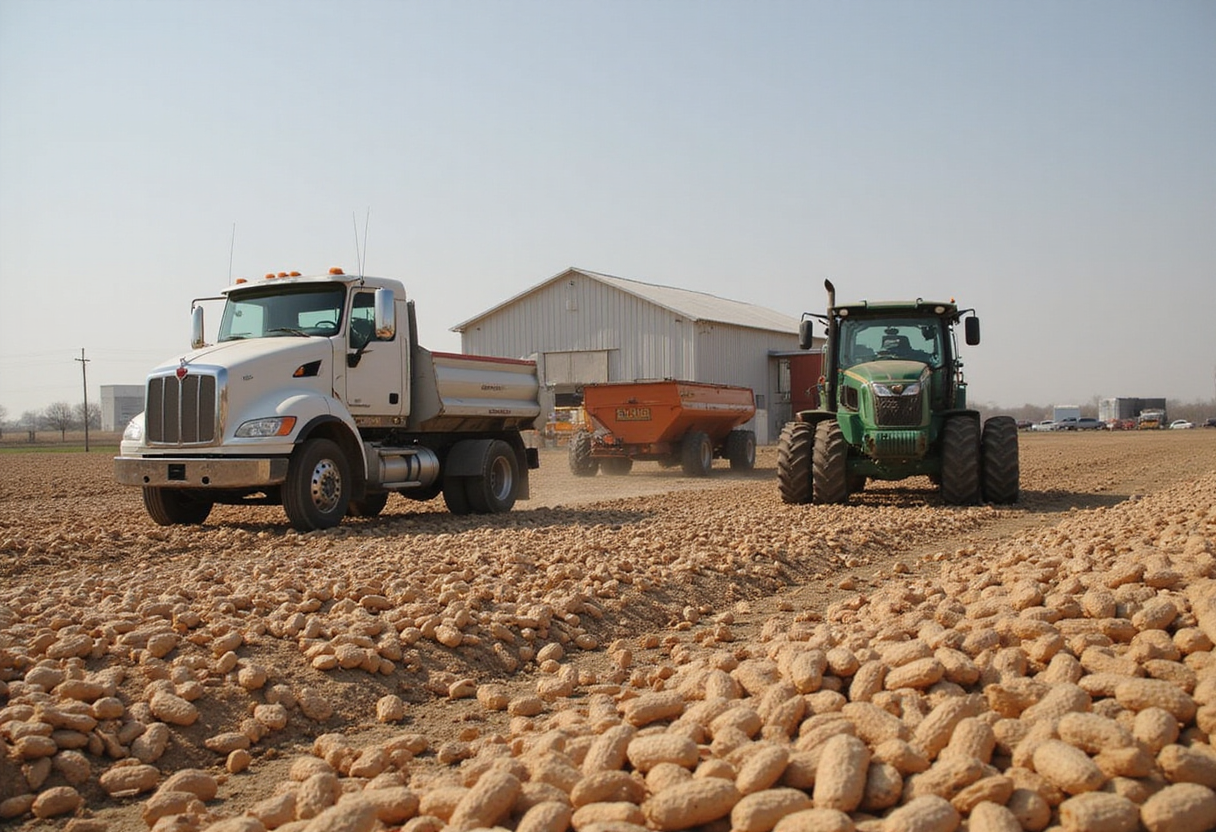
Texas peanut growers are adjusting their 2026 plans to absorb two pressures at once: shifting market conditions and unpredictable weather, according to a report from The Gilmer Mirror.
The report frames the coming season as one of adaptation rather than expansion. Growers across the state's peanut-producing regions are weighing input costs, contract terms and water availability against recent weather patterns that have made planting and harvest windows less reliable.
Why it matters for field decisions
Peanut production in Texas is concentrated in West Texas and the Rolling Plains, where irrigation capacity and commodity prices drive acreage decisions year to year. When contracts tighten or weather risk rises, growers typically rotate peanuts with cotton, sorghum or wheat — a choice that ripples through regional input demand, from seed to fungicide programmes.
The 2026 adjustments come as growers finalise financing and seed orders for the planting season. Decisions made now on variety selection, irrigation scheduling and disease management will set yield potential for the whole campaign.
Market signals remain the decisive variable. Where contract prices fail to clear production costs, growers shift acres to competing crops; where weather risk dominates, they lean on crop insurance and earlier-maturing varieties to compress the exposure window.
What the report signals
The Gilmer Mirror piece does not present itself as a statistical survey. Instead, it captures the practical calculus underway on Texas farms: balance what the market will pay against what the weather will allow, and adjust acreage, inputs and timing accordingly.
For the broader agricultural sector, that calculus is a useful early indicator. Texas peanut acreage moves with conditions faster than most row-crop sectors because the crop is irrigation-intensive and concentrated among a smaller grower base. A season of adjustment in Texas can move regional demand for peanut handling, shelling and shipping capacity.
Growers and agronomists tracking the sector should watch for USDA acreage intentions data and updated contract offers from shellers as the planting window approaches. Those two data points will show whether the adjustments described in the report translate into measurable acreage shifts or hold at the farm-planning level.
Note: This summary is based on the headline and framing of The Gilmer Mirror's report; readers should consult the full article for specific figures and grower interviews.
via Google News: farming weather (Source)
More from Olivia Hart
Nearby records
- HF 83Texas wheat crop faces 'more problems than bright spots' in 2025October 3, 2026
- TN 28Oklahoma wheat crop halved as drought grips 2026 seasonOctober 3, 2026
- RN 30Historic El Niño Threatens to Reshape U.S. Farm Weather Through 2027September 29, 2026
- VG 12Drought Splits 2026 US Sorghum Crop as Global Meet Targets Faster GeneticsSeptember 30, 2026
- EF 12Arkansas rice harvest hits record pace as soybean cutting tops 40% completeOctober 3, 2026