One in Five Alabama Farmers Wants Solar Panels, Survey Finds
A 2025 survey of 258 Alabama farmers finds one in five interested in on-farm solar, with interest peaking at 35% among under-35s and 24% among poultry producers.
- Entered
- Plot
- 1.6 ha
- Record
- 621 words
- Walk-through
- 3 min
DrillSprayHarvestPlanning window
Agronomist’s notes
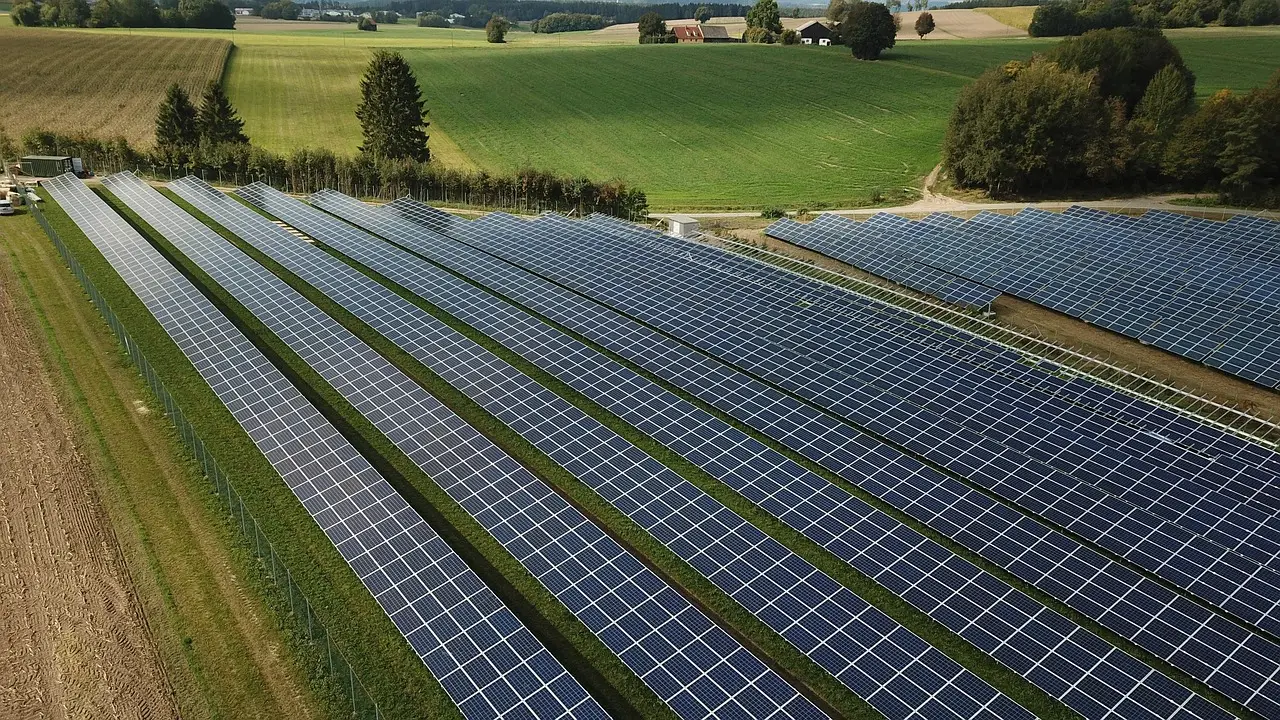
- About 20% of 258 surveyed Alabama farmers expressed interest in installing solar panels in 2025.
- Interest peaked at 27% among farmers not planning to retire and without an identified successor.
- Respondents aged 18-34 showed 35% interest; those 65 and older showed 18%.
- Only 34% of poultry producers expressed no interest, versus 59% of crop producers.
- The survey did not distinguish between panels for farm energy use and land leases for solar development.
Roughly one in five Alabama farmers expressed interest in installing solar panels on their operations, according to a 2025 survey of 258 farmers conducted by researchers Jean R. Francois, Kelli J. Russell and Mykel R. Taylor and published in Southern Ag Today. More than half of the respondents said they had no interest at all, and about one quarter stayed neutral.
The finding gives the first detailed snapshot of how farmers in the state weigh on-farm solar at a moment when the technology promises to diversify energy supplies, cut energy costs and open an additional income stream. For installers, lenders and extension services, the message is blunt: the addressable market among existing operators remains narrow, and it clusters in specific farm circumstances rather than spreading evenly across commodities.
Who is actually interested?
The researchers cross-tabulated solar interest against two questions: whether respondents planned to retire from or quit farming within the next five years, and whether they had identified a successor to take over the farm.
The pattern was consistent. Farmers planning to retire who had already named a successor showed the lowest interest, at 11%. Interest rose to 20% among retiring farmers without an identified successor, a figure similar to that of non-retiring farmers who had a successor in place. The highest interest, 27%, came from farmers who were not planning to retire and had not identified a successor. That group was also the only one in which fewer than half of respondents, 43%, reported being uninterested.
Read together, the numbers suggest solar appeals most to farmers with long personal horizons and unresolved questions about the farm's next owner. Farmers near a planned handover appear least willing to add a capital project, whatever its potential returns.
Does age explain the split?
Age tracks the same story. Respondents aged 18 to 34 expressed the highest interest at 35%, while those aged 65 or older registered the lowest at 18%. The researchers did not test the reasons behind the gap, but the direction is clear: the farmers with the most years ahead of them to recover an installation's cost are the ones most open to it.
What about different commodities?
Interest held relatively steady across farm types. Twenty-four percent of poultry producers expressed interest, against 21% of crop producers and 20% of beef cattle producers. The sharper difference appeared in the outright rejection column: only 34% of poultry producers said they had no interest, compared with 59% of crop producers and 58% of beef cattle producers.
That gap matters for anyone targeting outreach. Poultry operations, with their heavy and predictable electrical loads for ventilation and heating, leave far more respondents sitting on the fence rather than saying no. Converting undecided poultry producers may prove easier than converting crop or cattle farmers who have already closed the door.
What does the survey not tell us?
The authors flag two limits practitioners should keep in mind. First, the results are descriptive and do not explain why interest varies across groups. Second, the survey question did not distinguish between installing panels for the farm's own energy use and leasing farmland to a larger-scale solar development, so respondents may have interpreted it differently.
Those two paths carry very different arithmetic: installation costs, on-farm energy needs, expected returns, land ownership and the anticipated future of the farm all enter the calculation differently. Understanding how farmers weigh these considerations, the authors argue, may clarify when and why they view on-farm solar as a worthwhile investment.
For now, anyone selling solar into Alabama farm country should watch the under-35 segment and the poultry belt first, and expect follow-up work that separates self-generation from land-lease deals.
via oklahomafarmreport.com (Source)
More from Tom Whitfield
Show full bio
Staff writer covering regulation, policy and their impact on production farming and field operations at Arable Wire.
198 articles
Nearby records
- WJ 78Agroforestry gains ground as UK climate resilience tool, FW reportsOctober 14, 2026
- CA 38RealAgriculture Poll Asks: Is Your Farm Equipment Fleet Ageing?October 19, 2026
- DZ 86Large farms lead precision agriculture adoption, report findsSeptember 30, 2026
- LT 65Farmers for Soil Health reopens cover crop enrollmentOctober 3, 2026
- FR 44Wheat yields fall below average on 90% of farms, report findsOctober 17, 2026